- Enseignant: karim hamdaoui
- Enseignant: LAHCENE KHATTABI
- Enseignant: NADIA MOULAY
- Enseignant: karim hamdaoui
- Enseignant: LAHCENE KHATTABI
- Enseignant: karim hamdaoui
- Enseignant: LAHCENE KHATTABI
- Enseignant: SOMIA KHERBOUCHE
- Enseignant: karim hamdaoui
- Enseignant: LAHCENE KHATTABI
- Enseignant: ABDELKADER MESSAR
- Enseignant: Ilies Didi
- Enseignant: karim hamdaoui
- Enseignant: LAHCENE KHATTABI
- Enseignant: KARIMA DJEBBAR
- Enseignant: karim hamdaoui
- Enseignant: LAHCENE KHATTABI
- Enseignant: karim hamdaoui
- Enseignant: LAHCENE KHATTABI
- Enseignant: MOULAY IDRISS TABET DERRAZ
- Enseignant: karim hamdaoui
- Enseignant: MOHAMED AMINE KASMI
- Enseignant: LAHCENE KHATTABI
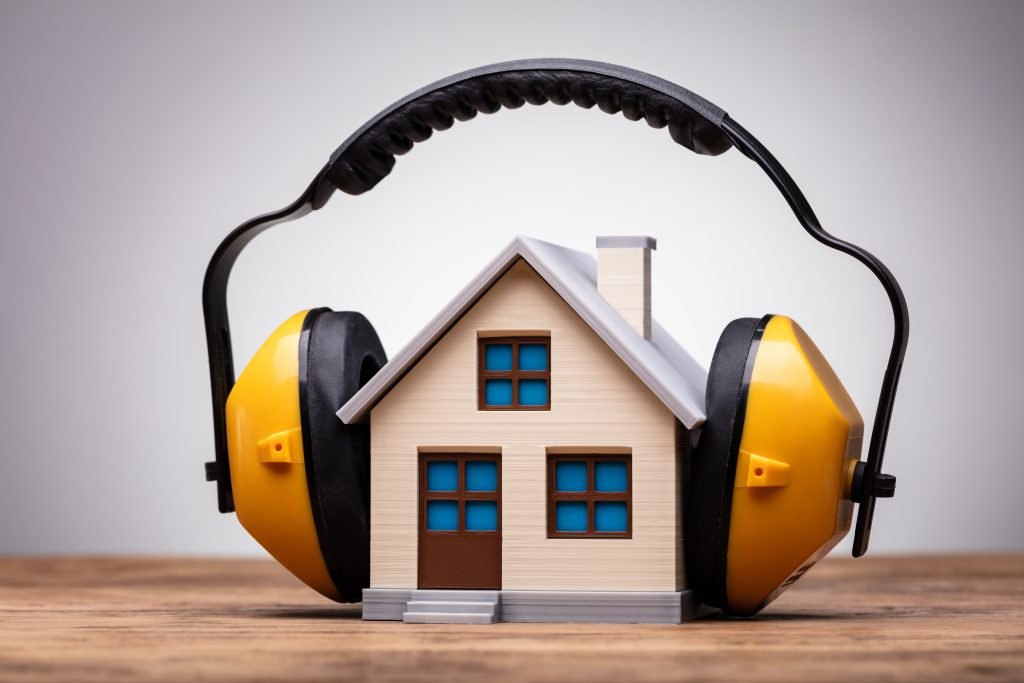
The course “Equipment 2: Acoustics”, or Architectural acoustics, aims to provide a
comprehensive understanding of sound phenomena in built environments in order to ensure acoustic
comfort adapted to the use of spaces. Its main objective is to enable students to master the
fundamental principles of sound physics, the mechanisms of sound propagation, as well as the
techniques of sound insulation and acoustic treatment in buildings. Its importance in the field of
architecture is essential, as proper acoustic design directly influences occupants’ well-being, the
quality of communication within spaces (such as classrooms or conference rooms), and protection
against external noise disturbances. This course is structured around several fundamental axes:
firstly, the characteristics of sound such as frequency, intensity, and wavelength, which help in
understanding its perception and behavior; secondly, sound propagation in open environments,
where it dissipates freely, and in enclosed spaces, where phenomena such as reflection, absorption,
and reverberation occur; and finally, sound insulation, which deals with methods used to limit noise
transmission, whether airborne or structure-borne, through building elements and structures.
Therefore, this course represents an essential foundation for designing architectural spaces that are
functional, comfortable, and compliant with modern acoustic requirements.
- Enseignant: SAMIR GUEZZEN
- Enseignant: karim hamdaoui
- Enseignant: LAHCENE KHATTABI