- Enseignant: NAIMA BADID
- Enseignant: Boulanoire El Amine ouraiba
- Enseignant: MOHAMMED NADJIB RAHMOUN
Description
This module investigates the complex triad connecting dietary habits, intestinal microflora, and immune regulation. Designed for Master’s students, it examines how nutrients shape microbial ecology and influence mucosal and systemic immune responses in both health and disease.
Students will explore the physiology of the intestinal barrier and the gut-associated lymphoid tissue (GALT), alongside microbial metabolomics ; focusing on short-chain fatty acids (SCFAs) as key immune signaling molecules. The curriculum assesses the impact of various dietary patterns, from high-fibre diets to ultra-processed foods, on systemic inflammation.
Furthermore, the module addresses how dysbiosis contributes to chronic pathologies, including inflammatory bowel diseases (IBD), metabolic disorders, allergies, and autoimmunity. Finally, students will critically evaluate biotherapeutic strategies ; such as pre-, pro-, and postbiotics, as well as fecal microbiota transplantation (FMT), backed by modern metagenomic and metabolomic methodologies.
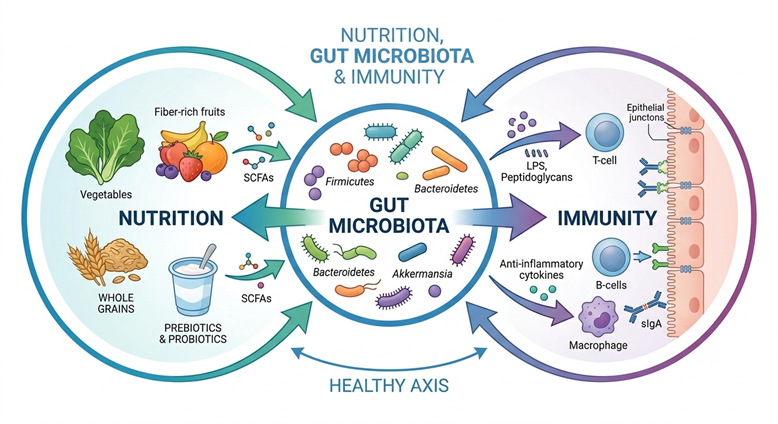
Figure : Abstract of the content of the Course NGMI
- Enseignant: NAIMA BADID
- Enseignant: Boulanoire El Amine ouraiba
- Enseignant: MOHAMMED NADJIB RAHMOUN
- Enseignant: NAIMA BADID
- Enseignant: Boulanoire El Amine ouraiba
- Enseignant: MOHAMMED NADJIB RAHMOUN