Campus Numérique UABT
Résultats de la recherche: 36
As the outline shows evidence of different levels (phonology, syntax,
morphology and semantics) of linguistics, the present paper is intended to
bring continuation of the former programme(s) in which EFL learners were
administered a whole chemistry of variables and concepts where different
schools of linguistics have been largely presented through historical
linguistic courses dealing with general linguistics and the main branches
deriving from, such as: sociolinguistics, psycholinguistics, neurolinguistics
and applied linguistics. In addition, to provide greater clarity and relevance,
the present paper tries to incorporate many changes that reflect developments
in linguistic analysis in relation to the nature of ‘human’ language first,
then dealing with analysis of linguistic levels by analysing, comparing and
contrasting the languages which students themselves are supposed to know, such
as: Arabic, French and English in terms of structure, word-building, phoneme
combinations and deeper phonological consideration shared between these
languages. In this vein, it will be clearly established that if languages share
the same phonetics properties, they can be different phonologically. Logically,
cases of assimilation, elision, linking and many other aspects related to
phonetics and phonology, like: distinctiveness and redundancy or intonation
will show discrepancies and similarities between the existing languages in the
Algerian community.
- Enseignant: BOUMEDIENE BERRABAH
The present paper is intended to bring continuation of the former programme(s) in which EFL learners were administered a whole chemistry of variables and concepts where different schools of linguistics have been largely presented through historical linguistic courses dealing with general linguistics and the main branches deriving from, such as: sociolinguistics, psycholinguistics, neurolinguistics and applied linguistics. In addition, to provide greater clarity and relevance, the present paper tries to incorporate many changes that reflect developments in linguistic analysis in relation to the nature of ‘human’ language first, then dealing with analysis of linguistic levels by analysing, comparing and contrasting the languages which students themselves are supposed to know, such as: Arabic, French and English in terms of structure, word-building, phoneme combinations and deeper phonological consideration shared between these languages. In this vein, it will be clearly established that if languages share the same phonetics properties, they can be different phonologically. Logically, cases of assimilation, elision, linking and many other aspects related to phonetics and phonology, like: distinctiveness and redundancy or intonation will show discrepancies and similarities between the existing languages in the Algerian community.
The paper incorporates a four-aspect study of language layers, split into two main parts. The first is a neat survey the main branches dealing with sounds of the language: phonetics and phonology. The first part; namely the phonological level, has gained the lion’s share due to the importance of bringing Master II EFL students to appreciate all the sound manifestations in comparing and contrasting languages. It helps to clarify the shared phonetic properties that languages have in common and at the same time gives different aspects of sound combinations whereby languages may differ. This strong focus on the phonological aspect over the other levels is meant to compensate the slimming down of the phonetic and phonology programmes to only two years (first and second undergraduate studies) with a very short time allotment of only one hour per week. Subsequently, EFL students will never come across the basic phonological aspects of the target language they are supposed to master.- Enseignant: BOUMEDIENE BERRABAH
The lectures incorporate a
four-aspect study of language layers, split into two main parts. The first is a
neat survey the main branches dealing with sounds of the language: phonetics
and phonology. The first part; namely the phonological level, has gained the
lion’s share due to the importance of bringing Master II EFL students to
appreciate all the sound manifestations in comparing and contrasting languages.
It helps to clarify the shared phonetic properties that languages have in
common and at the same time gives different aspects of sound combinations
whereby languages may differ. This strong focus on the phonological aspect over
the other levels is meant to compensate the slimming down of the phonetic and
phonology programmes to only two years (first and second undergraduate studies)
with a very short time allotment of only one hour per week. Subsequently, EFL
students will never come across the basic phonological aspects of the target language
they are supposed to master. Arguably, such courses of language and
about language give a holistic view of both the internal structure of language
(its form) and the varied uses of language in human everyday uses (its
function). For this and that, language learners should be encouraged to apply
some of the analytic procedures presented in these lectures or others to consider
some of the similarities and/or discrepancies that may exist in the study of a
native language, a second language or a completely foreign one and mainly
putting focus on different language-related issues. As the outline will show, there is evidence
of considering the different levels: phonology, syntax, morphology and semantics. These are the levels of linguistics whereby the present lectures are set to to bring continuation of the former programme(s)
in which EFL learners were administered a whole chemistry of variables and
concepts via different schools of linguistics.
- Enseignant: BOUMEDIENE BERRABAH
The English course is intended to initiate the master students to the used scientific terms in English and preparing them to be able to present their work in English.
In common agreement with the students it was agreed that this course will be used:
-First to improve their english skills.
-Second to revisit old notions learned before
-Third to learn some new ones.
(Le cours d'anglais vise à initier les étudiants en master aux termes scientifiques utilisés en anglais et à les préparer à pouvoir présenter leurs travaux en anglais.
D'un commun accord avec les étudiants, il a été convenu que ce cours sera utilisé:
D'abord pour améliorer leurs compétences en anglais
Deuxième à revisiter les anciennes notions apprises auparavant
Troisièmement d'apprendre de nouvelles .)
- Enseignant: MOHAMMED AMINE MENOUER
- Enseignant: MUASTAPHA YEBDRI
L’apprentissage profond (Deep Learning) est un sous-domaine de l’intelligence artificielle qui utilise des réseaux de neurones profonds pour analyser et apprendre des structures complexes à partir de grandes quantités de données. Il est particulièrement efficace pour des tâches telles que la reconnaissance d’images, le traitement du langage naturel et l’aide au diagnostic médical.
Ce cours, spécialement conçu pour les étudiants de deuxième année de master en Informatique Biomédicale et Hospitalière, offre une formation approfondie sur les concepts et techniques fondamentaux du Deep Learning. Il couvre les bases théoriques, notamment la propagation et la rétropropagation, ainsi que les aspects pratiques, tels que la gestion des paramètres et hyperparamètres pour optimiser les modèles. Une attention particulière est accordée aux réseaux de neurones convolutifs, essentiels en vision par ordinateur, en explorant leurs couches et architectures avancées. Le cours aborde également le transfert d'apprentissage, qui permet d’améliorer l’efficacité des modèles en réutilisant des modèles pré-entraînés. Enfin, les étudiants apprendront des techniques avancées telles que l'augmentation des données, l'optimisation et la régularisation afin de renforcer la robustesse des modèles.
En somme, ce programme offre une formation complète, alliant théorie et pratique, pour permettre aux étudiants de concevoir et d'optimiser des modèles d'apprentissage profond performants, notamment pour des applications dans le domaine biomédical et hospitalier.
- Enseignant: Sara BELAROUCI
- Enseignant: SARRA BELAROUCI
- Enseignant: LOTFI HAMZA CHERIF
- Enseignant: Mahammed MESSADI
GENERAL COURSE OBJECTIVE*:
Introduction to and acquisition of basic concepts regarding the conceptual, methodological, and logistical tools required to establish diagnostics related to the topic.
LEARNING OBJECTIVES*:
This course focuses on the methods, techniques, and use of tools used to construct diagnostics and help develop decision-making options:
- Introduction to assessment and diagnostic methods;
- Introduction to simulation and modeling software.
- Enseignant: KHADIDJA EL BAHDJA DJEBBAR
- Enseignant: karim hamdaoui
- Enseignant: LAHCENE KHATTABI
CONDITIONALS : Exercises
(by Dr. HAKEM Hadia and Dr. HEMCHE Hidaya Amina)
Conditional sentences : types 0, 1 and 2
Ex1: Put the verbs in brackets in the correct form.
1. I’ll look for your notebook and if I (find) ……………..… it, I (give) …………………. it to you.
2. Why don’t you bring your car to work? If I (have) ……………….…… a car, I (bring) ……….................... it to work.
3. I’ll wash the glasses in this nice hot water. ~ No, don’t. If you (put) …………………. them into very hot water, they (crack) ……………………..
4. If I (travel)………….………… a long way, I always (fly)…………..……….. .
5. If I (see) ………………… a tiger walking across Hyde Park, I (climb) ……………………..……. a tree. ~ That (not be) ………….…..………. any use. The tiger (climb) …………………..….…… after you.
6. If you (feel) …..………….…. too hot during the night, (turn) ……..……. down the central heating.
7. Tom: Jack is a translator ; he translates 1,000 words a day and gets £1,000 a week, which he says is not enough to live on.
Bill: Well, if he (want) ……………..………. more money, he (have) ……………………. to do more work. Advise him to translate 2,000 words a day.
8. If you (finish) ………………………. with your dictionary, I’d like to borrow it.
9. I expect it will freeze tonight. ~ If it (freeze) …………………tonight, the roads (be) …………………….. very slippery tomorrow.
10. If we (work) …………………….. all night, we (finish) …….……………… on time ; but we have no intention of working all night.
11. That book is overdue. If you (not take) ………….………….. it back tomorrow, you (have) ……………………. to pay a fine.
12. My dog never starts a fight. He never (growl) ……………………. unless the other dog (growl) …………………….. first.
13. Tom: I woke up to find the room full of smoke ;but I knew exactly what to do. Ann : If I (wake) ……..………………. up to find the room full of smoke, I (have) …………..………….. no idea what to do.
14. Husband : But I’m not going on a diet.Why should I go on a diet
Wife: If you (go) ……………………. on a diet, you (lose) ……………………. weight.
15. Ann: Your clothes are years out of date. Why don’t you throw them away ?
Mary: Don’t be ridiculous ! If I (throw) …….………………….. my clothes away, I (have) ……………….. to ask my husband for £ 10,000 to buy new ones.
16. Ann: what he (say) …………………………. if you (ask) …….………….. him for £ 10,000 ?
Mary: He (be) ……………………….. too horrified to speak at first. But when he’d recovered from the shock, he probably (start) …………..…..……………… talking about a divorce.
17. He’s staying at the Savoy in London. ~
Is he very rich? ~ I suppose he is. If he (be) ………………….……. a poor man, he (not stay) …………………….… at the Savoy.
18. But I don’t want to buy an elephant! ~ I know that. But where you (go) ……….………….…… if you (do) ……………..…. want to buy one?
Conditional sentences: types 2 and 3
Ex2: Put the verbs in brackets in the correct form.
1. It’s lucky he had his torch with him. If he (not have) …..………………. it, he (fall) ………………………..……… down the cellar steps.
2. If someone (ring) ……………………. my doorbell at 3 a.m., I (be) …………..………….. very unwilling to open the door.
3. If I (see) …………………….. a python in Picadilly, I (assume) …….…………………… it had escaped from a circus.
4. Why don’t you buy a season ticket? ~ Because I lose everything. If I (buy) ……………………..… a season ticket, I (lose) ……..………………. it.
5. The paraffin heater was perfectly safe. There (not be)……………..…………… a fire if the children (not knock) ………………….……. it over.
6. Jack: They get £ 1,500 a week.
Tom: They can’t get £ 1,500 a week. If they (do) ………..................., they (not be) ……………..……………. striking for £ 1,200.
7. Ann: George is fourteen.
Tom: He must be older than that. He’s in full-time job. If he (be) .……………….. only fourteen, he still (be) ………………………. at school.
8. He was not very happy at school because he was a bookish boy, not at all interested in games. If he (play) ……….……………... games like the other boys, he (have) ……………………….…… a much better time.
9. Prime Minister on golf course: I’m not at all worried about the situation. If I (be) ……………..….... worried, I (not play) ………………………. golf at this moment.
10. She was sent to prison only because she refused to pay the fine; if she ( pay) ………………………. the fine, she (not be) ……………………. sent to prison.
11. She didn’t tell me that she was a vegetarian till half way through the meal. If she (tell) ………………..…….. earlier, I (cook) …….………………. her something more suitable.
12. Why you didn’t say that you were short of money? If I (know) ………………..……… , I (lend) ………………………... you some.
13. This room’s freezing because the fire has only just been lit. ~ If it (be lit) ……………….……… this morning as I suggested, the room would be warm enough to sit in now.
14. It was the drug, not the disease, that killed him. He would still be alive today if he (not take) ………………..…… that drug.
Conditional sentences: mixed types
Ex3 : Put the verbs in brackets in the correct form.
1. I had no map; that’s why I got lost. If I (have) …………….……… a map, I (be) …………………….…….. all right.
2. If I (come) ………………………. across two men fighting with knives, I (call) ………………………….. the police. ~ But this is a very peaceful area.
3. The job is much worse than I expected. If I (realise) ………………………… how awful it was going to be, I (not accept) ………………………….…….. it.
4. A university degree is a useful thing. If I (have) ………..………… a university degree, I now (sit) …………….…………… in a comfortable office instead of standing at a street corner selling newspapers
5. The launching of the rocket was delayed half an hour by bad weather. If the weather (be) ……………………… good, they (launch) …………………………. it at 8.30 instead of at 9.00.
6. You’d better take day off if you (not feel) …………………….. well tomorrow.
7. I’m sorry you didn’t tell me that dogs were allowed in the hotel; if I (know) …………………., I (bring) …………..………….. my dog. He (enjoy) …………….…….…… the walk.
8. He says he refused the job, but that this was nothing to do with the salary. He (refuse) ………………… even if they (offer) …..………. him twice as much.
9. (Tom is putting his coat on.) Ann: If you (go) …………………….. out, would you buy me some eggs?
10. Unless Tom (take) ……………………….. his library book back tomorrow, he (have) ………….……….. to pay a fine.
11. You must never blow a gas light. Do you know what (happen) ………..……………. if you (blow) ………………………. out a gas light?
12. We train the children to file out of the classroom quietly, because if a whole class (rush) …………….…………. at the door, someone (get) ……………………….. hurt.
13. What time of the year do you think it is in this picture? Summer? ~ No, it must be winter. If it (be) …………………….… summer, the people (not sit) …………..……………. round that big fire.
14. I overslept; that’s why I’m half an hour late; and if my phone (not ring) ……………….…….. at nine o’clock, I might still be in bed.
15. Your notes are almost illigible. Why don’t you type them? If you (type) ……..…………… them, they (be) ………..…………… a lot easier to read.
16. If only we (have) …………….………. a light! It’s depressing waiting in darkness!
17. If the earth suddenly (stop) ……….………..……… spinning, we all (fly) ………………………….. off it.
18. I’ve hung out the clothes. It’s lovely and sunny; if it (stay) ………………….…… like this, they (be) ………………..… dry in two hours.
19. When he left school, he became fisherman. His family didn’t like it at all. They (be) ……..……..…………..… much happier if he (become) ……………………. a greengrocer like his father.
20. I can hear the speaker all right but I wish I could see him too. If he (stand) ………………………. on a barrel, we all (see) ……….………………. him and that (be) ………………………… much better.
Ex4: Rewrite the sentences using if constructions. Follow the given example.
Example: He smokes too much; perhaps that’s why he can’t get rid of his cough.
If he didn’t smoke so much, he might get rid of his cough.
Or If he smoked less, he might get rid of his cough.
1. She’s very shy; that’s why she didn’t enjoy parties.
……………………………………………………………………………….
2. It might rain. If it does, everyone can eat inside.
………………………………………………………………………………..
3. He doesn’t take any exercise; that’s why he is so unhealthy.
…………………………………………………………………………………
4. They speak French to her, not English, so her English doesn’t improve.
…………………………………………………………………………………
5. The children mustn’t go near John’s dog. It’ll bite them.
…………………………………………………………………………………
6. The shops don’t deliver now, which makes life difficult.
…………………………………………………………………………………
7. Sara may fail her driving test. But she can take it again.
…………………………………………………………………………………
8. I didn’t see the signal, so I didn’t stop.
…………………………………………………………………………………
9. You didn’t tell me we have run out of bread, so I didn’t buy any.
…………………………………………………………………………………
10. We haven’t the central heating, so the house is rather cold.
…………………………………………………………………………………
11. I haven’t a map, so I can’t direct you.
…………………………………………………………………………………
12. It rained all the time. Perhaps that’s why he didn’t enjoy his visit.
…………………………………………………………………………………
13. She didn’t speak to him, possibly because she was shy.
…………………………………………………………………………………
14. You washed it in boiling water; that’s why it shrank.
…………………………………………………………………………………
Ex5: Which word makes more sense? Put in ‘if’ or ‘unless’.
1. Rachel will be pleased …………. she passes her driving test.
2. The bus won’t stop …………… you ring the bell.
3. I can’t read your writing ………… you print clearly.
4. Emma will be upset ………….. she doesn’t get the job.
5. You can’t go into reception ………….. you’ve got a ticket.
6. Don’t bother to ring me …………… it is important.
Ex6: Rewrite these conditional sentences using ‘unless’ instead of ‘if’.
1. If you don’t isolate people with infectious diseases, the diseases will spread.
…………………………………………………………………………………
2. If Tom doesn’t take his library book back tomorrow, he will have to pay a fine.
…………………………………………………………………………………
3. I won’t wake up if I don’t hear the alarm.
…………………………………………………………………………………
4. If I don’t have a quiet room, I can’t do my work.
…………………………………………………………………………………
5. You’ll be any use to me if you don’t learn to type.
…………………………………………………………………………………
6. I wouldn’t bring the picture if I didn’t like it.
…………………………………………………………………………………
7. Don’t leave the TV on if you aren’t watching it.
…………………………………………………………………………………
- Enseignant: hadia hakem
This online course provides an introduction to machine learning in healthcare. Students will learn how to design, develop, and evaluate machine learning models for various healthcare applications.
- Enseignant: RADWANE BENALI
- Enseignant: LOTFI HAMZA CHERIF
- Enseignant: Mahammed MESSADI
This course proposes lectures in educational psychology. Some of which are learning theories, developmental psychology, classroom management, and the psychological variables of language learning such as Intelligence and motivation.
- Enseignant: ABDERRAHMANE BASSOU

This course is designed for university students so they can develop
their academic English skills for writing and communication in biology.
Learning scientific English involves developing proficiency in language
skills such as reading, writing, speaking, and listening, as well as
critical thinking and analytical skills, and building a strong
vocabulary. Academic English is important for students who need to
communicate effectively in academic or research settings.
- Enseignant: fatimazahra abiayad
- Enseignant: NOR EDDINE BENYOUB
Semestre : 6
Unité d’enseignement : UET 3.2
Matière : Entrepreneuriat et management d’entreprise
VHS : 22h30 (Cours : 1h30)
Crédits : 1
Coefficient : 1
Objectifs de l’enseignement
- Se préparer à l’insertion professionnelle en fin d’études.
- Développer les compétences entrepreneuriales chez les étudiants ;
- Sensibiliser les étudiants et les familiariser avec les possibilités, les défis, les procédures, les caractéristiques, les attitudes et les compétences que requiert l’entrepreneuriat ;
- Préparer les étudiants pour qu’ils puissent, un jour ou l’autre, créer leur propre entreprise ou, du moins, mieux comprendre leur travail dans une PME.
Connaissances préalables recommandées
Aucune connaissance particulière, sauf la maitrise de langue d’enseignement.
Compétences visées :
Capacités d’analyser, de synthétiser, de travailler en équipe, de bien communiquer oralement et parécrit, d’être autonome, de planifier et de respecter les délais, d’être réactif et proactif. Être sensibilisé à l’entrepreneuriat par la présentation d’un aperçu des connaissances de gestion utiles à la création d’activités.
Contenu de la matière :
Chapitre 1 –Préparation opérationnelle à l’emploi : (2 Semaines)
Rédaction de la lettre de motivation et élaboration du CV, Entretien d’embauche, …, Recherche documentaire sur les métiers de la filière, Conduite d’interview avec les professionnels du métier et Simulation d’entretiens d’embauches.
Chapitre 2 - Entreprendre et esprit entrepreneurial : (2 Semaines)
Entreprendre, Les entreprises autour de vous, La motivation entrepreneuriale, Savoir fixer des objectifs, Savoir prendre des risques
Chapitre 3 - Le profil d’un entrepreneur et le métier d’Entrepreneur : (3 Semaines)
Les qualités d’un entrepreneur, Savoir négocier, Savoir écouter, La place des PME et des TPE en Algérie, Les principaux facteurs de réussite lors de la création d’une TPE/PME
Chapitre 4 - Trouver une bonne idée d’affaires : (2 Semaines)
La créativité et l’innovation, Reconnaître et évaluer les opportunités d’affaires
Chapitre 5–Lanceret faire fonctionner une entreprise : (3 Semaines)
Choisir un marché approprié, Choisir l’emplacement de son entreprise, Les formes juridiques de l’entreprise, Recherche d’aide et de financement pour démarrer une entreprise, Recruter le personnel, Choisir ses fournisseurs
Chapitre 6 - Elaboration du projet d’entreprise : (3 Semaines)
Le Business Model et le Business Plan, Réaliser son projet d’entreprise avec le Business Model Canevas
Mode d’évaluation : Examen : 100%
Références :
- FayolleAlain, 2017. Entrepreneuriat théories et pratiques, applications pour apprendre à entreprendre.Dunod, 3e éd.
- LégerJarniou, Catherine, 2013, Le grand livre de l'entrepreneur. Dunod, 2013.
- PlaneJean-Michel, 2016, Management des organisations théories, concepts, performances. Dunod, 4ème éd.
- LégerJarniou, Catherine, 2017, Construire son Business Plan. Le grand livre de l'entrepreneur. Dunod,.
- Sion Michel, 2016, Réussir son business Méthodes, outils et astuces plan.Dunod ,4èmeéd.
- Patrick Koenblit, Carole Nicolas, Hélène Lehongre, Construire son projet professionnel, ESF, Editeur 2011.
- Lucie Beauchesne, Anne Riberolles, Bâtir son projet professionnel, L'Etudiant 2002.
- ALBAGLI Claude et HENAULT Georges (1996), La création d'entreprise en Afrique, ed EDICEF/AUPELF ,208 p.
- Enseignant: MUSTAPHA BENACHOUR
- Enseignant: MOHAMMED BENRAMDANE
- Enseignant: amel sichaib
Course Summary
Fundamental Immunology is the study of the immune system and is a very important branch of the medical and biological sciences. The immune system protects us from infection through various lines of defence. If the immune system is not functioning as it should, it can result in disease, such as autoimmunity, allergy and cancer. It is also now becoming clear that immune responses contribute to the development of many common disorders not traditionally viewed as immunologic, including metabolic, cardiovascular, and neurodegenerative conditions such as Alzheimer’s.
- Enseignant: NAIMA BADID
- Enseignant: LOTFI MUSTAPHA KAZI TANI
- Enseignant: Boulanoire El Amine ouraiba
- Enseignant: MOHAMMED NADJIB RAHMOUN

Medical technologies have transformed healthcare, merging engineering, physics, and information sciences with medicine to enhance diagnosis, treatment, and patient care. This course, "GB271: Medical Technologies," provides a comprehensive overview of the pivotal role of engineering sciences in advancing healthcare. It delves into medical devices, diagnostic and therapeutic techniques, ICT in health, medical imaging, and the foundational principles of medical physics.
This course designed for first-year students in the Biomedical Engineering (GBM) programme. Through this exploration, students will gain insights into the interdisciplinary nature of medical technologies, the challenges of innovation, and their applications in addressing global health needs. Whether examining the design of diagnostic devices, the integration of ICT in patient management, or the physics underpinning imaging and therapeutic modalities, this course aims to equip learners with the knowledge to contribute meaningfully to this dynamic field.
- Enseignant: yettou nor elhoda baakek
- Enseignant: LOTFI HAMZA CHERIF
- Enseignant: Mahammed MESSADI

The ICT and E-Learning course introduces students to essential digital tools for their
learning, including Microsoft Office, Google applications, free access and learning management
system platforms, email management, as well as video conferencing tools. Hence, this course aims
to bridge the necessary digital literacy gaps of students and equip them with the digital skills needed
for their university studies.
- Dr.: SOUMIA BOUHAFS
This course introduces the software and libraries used in medical image processing, focusing on practical applications. Students will learn to use C# to develop executable (.exe) and mobile (.apk) applications by leveraging .dll libraries. By the end of this course emphasizes building small applications for use on PCs or smartphones.
Course Content:
Chapter 1: Overview of existing medical image processing software.
Chapter 2: Introduction to the syntax of C#.
Chapter 3: Installation and use of libraries like Aforge and EMGU.
Chapter 4: Basics of Python and implementation with OpenCV.
By the end of the course, participants will gain hands-on experience in creating practical solutions for medical imaging.
- Enseignant: LOTFI HAMZA CHERIF
- Enseignant: Mahammed MESSADI

Le cours "Utilisation avancée d'Excel" est conçu pour les étudiants de 2ème année LMD en informatique souhaitant approfondir leurs connaissances et compétences dans l'utilisation de Microsoft Excel. Ce cours vise à fournir aux étudiants les outils et les techniques nécessaires pour exploiter pleinement les fonctionnalités avancées d'Excel et utiliser le logiciel comme un puissant outil d'analyse de données et de prise de décision.
Contenu du cours :
Révision des bases d'Excel :
- Gestion des fichiers et des feuilles de calcul.
- Formatage des données, des cellules et des graphiques.
- Utilisation des formules et des fonctions courantes.
Fonctions avancées d'Excel :
- Utilisation de fonctions logiques (SI, ET, OU, NON) pour prendre des décisions conditionnelles.
- Manipulation des dates et des heures avec les fonctions associées.
- Utilisation des fonctions de recherche et de référence (RECHERCHEV, INDEX, EQUIV, etc.) pour extraire des informations spécifiques.
Analyse de données :
- Utilisation des tableaux croisés dynamiques pour analyser et résumer les données.
- Création de graphiques dynamiques pour visualiser les tendances et les relations entre les données.
- Utilisation des outils d'analyse "Solver" et "Scénarios" pour résoudre des problèmes complexes.
Macros et automatisation :
- Introduction à la programmation VBA (Visual Basic for Applications).
- Enregistrement et édition de macros pour automatiser les tâches répétitives.
- Création de formulaires personnalisés pour faciliter la saisie et la manipulation des données.
Gestion de données volumineuses :
- Importation et exportation de données externes dans Excel.
- Utilisation des fonctionnalités de filtrage et de tri pour analyser les données.
- Techniques avancées de manipulation de données (consolidation, analyse de scénarios, etc.).
Collaboration et partage :
- Protection des fichiers et des données sensibles.
- Utilisation des fonctionnalités de partage et de collaboration en temps réel.
- Utilisation de fonctions de suivi des modifications pour gérer les versions des fichiers.
Ce cours inclura des séances pratiques et des projets pour permettre aux étudiants d'appliquer les concepts appris dans des contextes réels. À la fin du cours, les étudiants devraient être en mesure de manipuler efficacement les données, d'automatiser les tâches et de créer des analyses et des rapports avancés à l'aide d'Excel.
Veuillez noter que cette description est une suggestion et peut être adaptée en fonction du programme et du contenu spécifique de votre cours d'Excel de 2ème année LMD en informatique.
- Enseignant: SOUFIANE BELAIDI
- Enseignant: ZAKARYA ZIANI
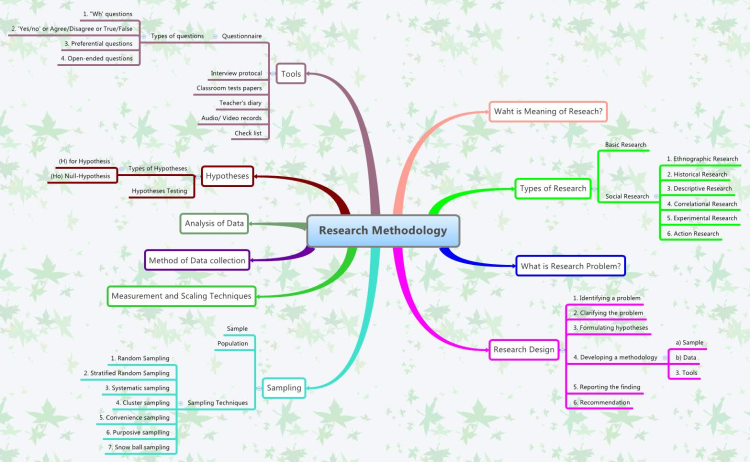
This course introduces the module of Research Methodology for classes dealing with it for the first time. It also discusses definitions, designs, strategies, and data collection methods and tools relating to research in social sciences. The basic aim of this course is to theoretically prelude students to methods of research and then make them able to practically conduct it. This course aims to guide L3 students at the Section of English in the University of Tlemcen towards achieving competence and proficiency in the theory of and practice to research. In more specific practical aims, the present course aims at:
• Enable students understand what research is and how it can be conducted.
• Make the difference between primary and secondary sources of data.
• Differentiate between theoretical background and review of related literature
• See the different methods that can be used and how to analyse the raw data gathered qualitatively and quantitatively.
• Finally, to apply all what has been acquired and learned in a practical way (thesis as a final product).

As a scientific- based discipline, the term Linguistics is one of those subjects that not many people have heard of, so you might well be wondering exactly what it is. The simplest definition of Linguistics is that it’s the science of language. In spite of its simplicity, this definition contains some significant terms that should necessarily be clarified. Initially, the term science does not necessarily mean you need a lab coat and safety goggles to do linguistics. Instead, what it means is that the way we ask questions to learn about language uses a scientific approach.
- Enseignant: YASSAMINA ABDAT
In preparing this paper, there has been a clear intention to provide Master
Two EFL students with a survey of what is known about language not only as a
system of syntax and packages of lexical items but as a set of levels, all of
which, constitute the basic components of human communication. In due course,
Master Two students have supposedly acquired all-related concepts about language in its manifold manifestations during their under-graduate studies Arguably, such courses of language and
about language give a holistic view of both the internal structure of language
(its form) and the varied uses of language in human everyday uses (its
function). For this and that, language learners should be encouraged to apply
some of the analytic procedures presented in this paper or others to consider
some of the similarities or discrepancies that may exist in the study of a
native language, a second language or a completely foreign one and mainly
putting focus on different language-related issues. As the outline shows evidence of different levels (phonology, syntax,
morphology and semantics) of linguistics, the present paper is intended to
bring continuation of the former programme(s) in which EFL learners were
administered a whole chemistry of variables and concepts where different
schools of linguistics have been largely presented through historical
linguistic courses dealing with general linguistics and the main branches
deriving from, such as: sociolinguistics, psycholinguistics, neurolinguistics
and applied linguistics. In addition, to provide greater clarity and relevance,
the present paper tries to incorporate many changes that reflect developments
in linguistic analysis in relation to the nature of ‘human’ language first,
then dealing with analysis of linguistic levels by analysing, comparing and
contrasting the languages which students themselves are supposed to know, such
as: Arabic, French and English in terms of structure, word-building, phoneme
combinations and deeper phonological consideration shared between these
languages.
- Enseignant: BOUMEDIENE BERRABAH

University: Abu Bakr Belkaid University of Tlemcen
Faculty: Letters and Languages
Department: English
Course Title: Research Methodology in the Social Sciences
Level: M1/ LC
Instructor: Prof. Faiza SENOUCI MEBERBECHE
Credit hours: 1:30 per week.
Coefficient:
UE: Methodology
This module is designed specifically for the students beginning master’s courses in LC. It provides a foundation for further learning in specific research methods related to literature and civilization. It deals with interdisciplinary research methodologies, epistemologies, and interpretations relevant to literature and civilization studies. |
- Enseignant: AHMED BACHIR
- Enseignant: kamila ghouali
- Enseignant: Khedidja hammoudi
- Enseignant: faizafouzia meberbeche
- Enseignant: meriem mengouchi

The mechanics described here relate exclusively to the mechanics of the point(or Mechanics of Particle). In practice, it concerns material objects whose spatial extension is very small: their deformations and the energy linked to their own rotational movement can also be neglected in comparison with the energies involved. Relativistic mechanics is beyond the scope of this presentation and we will only consider motions whose speed is slower than that of light ("classical" mechanics). However, the fundamental principle of dynamics will be given in the relativistic context, since its expression is very simple based on momentum. and we will deduce from it the classically used relations that are Newton's laws. We will assume that a unique time can be defined at any point in space, and that lengths, masses, times and forces are invariant to a change of reference frame. The aim is to be able to relate the movement of a body to the forces applied to it. To do this, we need to relate the forces (the resultant external force) to the acceleration. This is the fundamental principle of dynamics. Next, we will learn how to relate acceleration to speed and position, mathematical operations known as kinematics.
The competency aimed at by this course is to be able to :
· Discover the basic concepts of classical mechanics
· Define the fundamentals of Newtonian physics.
- Dr: AMEL BENMANSOUR

Introduction
Understanding electricity and its role in our society is a good first step towards examining our environmental impact and finding ways to reduce our footprint. To do this, we first need to review our relationship with electricity and its sources.
Electricity is a natural phenomenon that can be used to power electronic equipment and appliances. Everything on the planet is made of atoms, and all atoms have electrons. Basically, electricity is the flow of electrons from one atom to another. We call this flow the "current" (or "electric current"). Atoms that easily exchange electrons are called conductors. These conductors can be combined to enable us to control the flow of electricity to serve our needs.
Sources of electricity fall into two categories: renewable (such as solar energy) and non-renewable (oil).
The world's three main sources of electricity - coal, gas and oil - are non-renewable. Other widespread sources of electricity are nuclear, hydroelectric, wind and solar power.
In this course, we'll answer some of the most frequently asked questions about electricity and define some commonly used terms.
We also explain the different laws (Ohm's law, Kirchoff's law and Gauss's law) used to calculate the various quantities.
- Enseignant: SIDI MOHAMMED FAZIL DIB
- Enseignant: ZAKIA HADJOU BELAID
University: University ofAbou-Bekr Belkaid Tlemcen
Faculty: Letters and Languages
Department:English
Module:Reading Comprehension (RC)
Level:1st Year Students (L1)
Semester: One
Unit Type: UE Méthodologique
Coefficient:02
Credit:04
Class Meeting Time: Monday 14:30 to 16
Class Location: Room 02
Course Period: 1 hour and 30 minutes
Instructor Name: Dr. Assia BENETTAYEB
Email Address: benettayebassia@gmail.com
Office Hours: Thursday at 11:30.
Course Description:
‘Reading Comprehension’ is a course addressed to first year FILA and EFL students
Course Objectives:
- Reading different types of materials
- Practice guided-intensive reading
- Learn and practise reading strategies
- Practice extensive reading.
Prerequisites:
- Reading
- Reading skills
Course Programme (Outline):
Reading Comprehension ‘RC’.
Contents:
I- Sequence One: Literary English.
· Text 1: Literature
· Text 2: Literary Genres in Literature
· Extensive Reading Assignments
II- Sequence 2: Economic Themes in English Literature.
· Text 1: Wealth of Nations
· Text 2: Economic Literature
· Extensive Reading Assignments
III- Sequence Three: Legal English.
· Text 1: Legal Business Company and Partnerships
· Text 2: Company Capitalisation
· Extensive Reading Assignments.
Classroom Policies:
- Intensive reading of short to long selections.
- Reading practice
- Intensive assignments
Evaluation Method: The evaluation of students goes as follow:
- Classroom evaluation (100%) Intensive +extensive works .
- No exam.
Bibliography and Suggested Resources:
· Akdere, Ҫ., & Baron, C. (Eds.). (2017). Economics and Literature: A Comparative and Interdisciplinary Approach (1st ed.). Routledge. https://doi.org/10.4324/9781315231617.
· Austen, J. (1813). Pride and Prejudice [Project Gutenberg eBook].
· Dickens, C. (1854). Hard times: A novel (No. 192). Harper.
· Gilmour, R. (2014). The Victorian period: the intellectual and cultural context of English literature, 1830-1890. Routledge.
· Krois-Lindner, A. (2006). International Legal English. Cambridge University Press.
· Orwell, G. (1945). Animal Farm. Available at: Global Grey ebooks https://www. globalgreyebooks.com/animal-farm-ebook.html)
· Roshni, D (2015). Literature. Available at:https://openurl.ebsco.com/EPDB%3 Agcd%3A7%3A2287 /detailv2?sid=ebsco%3Aplink%3 Ascholar&id=ebsco%3Agcd% 3 A 1 02555389&crl=c)
· Sinclair, U. (1906). The Jungle. Available at: Project Gutenberg: ù=à0https:// www.gutenberg.org/ebooks/140).
· Smith, A. (1950). An Inquiry into the Nature and Causes of the Wealth of Nations,(1776). http://metalibri.incubadora.fapesp.br.
- Enseignant: AHMED BACHIR
- Enseignant: assia benettayeb
- Enseignant: assia benttayeb
TENSES
( By Dr. HAKEM Hadia and Dr HEMCHE Hidaya Amina)
Present tenses:
Ex 1: Put the verbs into the correct form, present simple or present continuous.
1. Please, don’t make so much noise. I ……………………………… (study).
2. How many languages ……………………………………….. (Tom/speak)?
3. Jean …………………...................... (not speak) any foreign language.
4. I …………………………………. (not belong) to any political party.
5. Hurry! the bus ……………………………. (come). I ……………………….. (not want) to miss it.
6. The Nile River ……………………………… (flow) into the Mediterranean.
7. The river …………………………….. (flow) very fast today. - much faster than usual.
8. ………………………………….. (it/ever/snow) in India?
9. We usually ………………………………. (grow) vegetables in our garden, but this year we ………………………………… (not grow) any.
10. A: Can you drive? – No, but I …………………………………. (learn).
11. You can borrow my umbrella. I ……………………….. (not need) it right now.
12. I …………………………….. (get) hungry. Let’s go get something to eat.
13. George is a vegetarian. He …………………………….. (not eat) meat.
14. George says he is 80 years old, but I ………………………… (not believe) him.
15. Ron is at San Francisco now. He ………………………………. (stay) at the Hilton Hotel. He ………………………………… (usually/stay) at the Hilton Hotel when he’s in San Francisco.
In these sentences, think about whether the situation is temporary or permanent.
16. My parents ……………………… (live) in Winnipeg. They were born there and have never lived anywhere else. Where ………………………………… (your parents/live) ?
17. She ……………………………. (stay) with her sister until she finds somewhere else to live.
18. The train is never late. It ………………………… (always/ leave) on time.
19. Jim is very untidy. He ……………………………….. (always/ leave) his things all over the place.
20. I can’t understand why he …………………………………….. (be) very selfish. He is not usually like that.
Ex 2: Complete each paragraph with one set of verbs, using the present simple or continuous.
belong / stay / cycle / use / enjoy - go / organise / work (×2) -
take / need / do / learn / get / be / provide/ organise
1. Simon and Sylvia ………………………………. in a cottage in the Yorkshire Dales this month. The cottage …………………………….. to a cousin of Sylvia but the cousin is away; she ……………………………….. around Norfolk for a few weeks. They really ……………………………. being in the middle of the countryside.
2. Debbie ....................... as an administrator at the university. She .................................. all the timetables and teaching schedules. She ........................................ very long hours because it’s the start of the academic year but she ................................... for a long holiday at the end of the month.
3. The International School for Languages ........................................ very well at the moment. About two hundred students .......................................... evening classes this term. Many of them .................................. to learn a new language to improve their job prospects but some of them ...................................... a new language purely for pleasure. The European languages .......................................... very popular but Japanese and Russian ................................. more popular too. The school ............................... good learning facilities and......................................... a range of study tours.
Ex 3: Complete these conversations. Put each verb in its correct form. Use the present simple or the present continuous.
Eg: A: Is Janet in, please?
B: Yes, but I think (think) she’s busy at the moment. She is washing (wash) her hair.
1. A: ……………………………… (I/ think) of buying a new computer.
B: But computers …………………………… (cost) so much money. What’s wrong with the one we have got?
A: It …………………………….. (it/get) out of date now.
2. A: Your new trousers ……………………….. (look) nice.
B: Thank you. The trouble is …………………………….. (they/ not fit) properly. I ……………………………… (not know) why I bought them really.
3. A: What …………………........ (you/do) ?
B: ……………………………… (I/weigh) this letter, ……..………………… (I/need) to know how many stamps to put on it.
4. A: ………………..………. (I/think) this road is road really dangerous. Look how fast that lorry.
B: …………………...…….. (I/agree). People shouldn’t go so fast.
5. A: ……………..……………(I/like) musicals. And this is a great show, isn’t it?
…………………..…………… (you/enjoy) it?
B: Yes, I am. ……..……………..…….. (I/love) every minute of it.
6. A: ………………………………… (I/always/fall) asleep. I just can’t keep awake.
B: What time …………………..…………… (you/go) to bed?
A: About ten o’clock usually. But…………………….…………. (it/not/make) any difference.
7. A: Could you post the goods to me. please?
B: Yes, certainly.
A: …………….…………… (I/live) at a guest house at the moment as ………………….…. (I/look) for a flat. So could you send it to my work address?
B: Yes, of course. And you’ll have the goods by the end of the week, ………………………... (I/promise).
8. A: Why ………………………………… (you/want) to change the whole plan?
B: I am just not happy with it.
A: And …………………………. (I/not/understand) why ……………………... (you/be) so difficult about it.
Ex 4: Put the verbs in bracket into the present perfect simple or the present perfect continuous.
1. A: You look hot. What 1have you been doing (you/do)?
B: I 2…………………………………………. (run).
A: Running? In this heat? How far 3………………………………… (you/run)?
B: About four miles.
2. A: What’s the problem? You look a bit preoccupied.
B: Yes, I 4………………………………. (think) about Helen.
A: Why? Is there something wrong with her?
B: Well, she 5………………………………….. (act) so strangely lately.
A: In what way?
B: Well, some days when she arrives at work, I know that she 6……………………………….. (cry). And she 7……………………………… (make) private calls when we’re all out at lunch. I just think that something is going on.
A: 8…………………………………….. (you/talk) to her about it yet?
B: Yes, a few times, and each time she 9………………………………….. (say) that there is nothing wrong, but I’m not so sure.
3. A: Where 10…………………………………….. (you/be) Simon?
B: I 11…………………………………… (talk) to Mark on the phone. He says he 12………………………………………… (try) to phone us all day.
A: Well I 13…………………………….. (be) in most of the day but I 14………………………………….. (not hear) the phone.
B: That’s strange. But anyway, he 15………………………………. (have) a phone call from Jackie’s mother and Jackie 16………………………………… (be) in some kind of accident. It’s nothing very serious but she’s got to stay in hospital overnight.
A: Oh dear. 17…………………………………………. (she/break) any bones?
B: I’m not quite sure how badly she 18…………………………………… (be hurt) but I think we should go and see her tonight.
Past tenses:
Ex 5: Choose a verb to complete the sentence. Use the present perfect or the past simple.
oversleep wear go have spend read
1. I .............................. a lot this week, but I have to get the book completely finished by this weekend.
2. A: Shall I make us some dinner? It’s already 8 o’clock. B: No, thanks. I .............................. to the dentist this afternoon and my mouth hurts too much to eat anything.
3. I ....................................... three lectures today and I still have two more later this afternoon.
4. It was so hot today that I ...................................shorts and T-shirt at work.
5. We ..................................... £200 on food this month and there’s another week to go before I get paid.
6. A: Do you want to lift home? B: No, I ................................ this morning because my alarm clock didn’t go off, so I need to work late.
Ex 6: Things that have happened today are on the radio and TV news. Give the news using the present perfect and the past simple.
1. The Prime Minister / visit Luton University / speak to students there / earlier today
The Prime Minister has visited Luton University. He spoke to students there earlier today.
2. The train drivers / go on strike / stop work /at twelve o’clock
......................................................................................................................................
3. The Queen / arrive in Toronto / fly there / in an RAF aircraft
......................................................................................................................................
4. Two men / escape from Parkhurst Prison / get away / during the night
.....................................................................................................................................
5. The actor Howard Bates / die in car accident / his car / crash into a wall
.......................................................................................................................................
6. Linda Jones / win the woman’s marathon / run it / in 2 hours 27 minutes
......................................................................................................................................
Ex 7: Write the verbs into the past simple, present perfect simple or present perfect continuous.
Jake and Michael, two friends, are talking
J: Hello, I1 ……………………………. (not see) you for ages.
M: No, it must be about two years since we last 2………………………....
(meet). What3 ………………………………… (you/do) with yourself?
J: I 4…………………………………………… (do) all sorts of things. Life
5…………………………… (be) very busy lately. I 6….……………………. (start)
a new job at the sailing centre.
M: Really! Doing what?
J: Well, I 7…………………………………… (teach) beginner’s courses to school
groups this term but when those 8…………………………………… (finish), I’ll be
teaching more advanced groups on holiday courses.
M: That sounds great. What about your old job at the tourist office then?
J: Well, I 9………………………………… (work) there for ten years and I quite
10…………………………. (enjoy) the job but I 11…………………………………
(want) to do something different. I 12………………………………… (always/enjoy)
sailing in my spare time so I 13…………………………… (think) it would be nice to
do it for a job.
M: So how long I 14….………………………….. (you/be) at the sailing centre?
J: For about two months now? I’m sure I 15………………………………… (do) the
right thing. It’s a really enjoyable job. And what about you?
M: Well, I’m still at the Rembrandt Hotel. I 16………………………………………….
(work) there for fifteen years now. But I 17………………………………. (have) a
promotion so that’s good. They 18……………………………………. (give) me the
job of head receptionist.
J: That’s good news.
M: Yes, it 19……………………………………… (make) me feel much better about
work. I mean, I 20………………………………….. (do) a lot of different jobs at the
hotel but I 21…………………………………….. (never/ have) a job with this much
responsibility before. I 22…………………………………….. (work) at the reception
desk for four years when I 23…………………………………… (start) at the hotel.
J: I’m happy for you. You should learn more languages then.
Ex 8: Write the verbs in brackets into the past simple or the past continuous.
1. Jane ………………………… (wait) for me when I ………………….. (arrive).
2. ‘What ………………………… (you/do) this time yesterday?’ – ‘I was a sleep.’
3. ‘ ……………………………….. (you/go) out last night?’ – ‘No, I was too tired.’
4. ‘Was Carol at the party last night?’ – ‘Yes, she ……………………………. (wear) a really nice dress.’
5. How fast ………………………………….. (you/drive) when the accident ……………………… (happen)?
6. John …………………………………… (take) a photograph of me while I ………………………………… (not/look).
7. We were in a very difficult position. We ……………………………. (not know) what to do.
8. I haven’t seen Alan for ages. When I last …………………………… (see) him, he ……………………………………….. (try) to find a job in London.
9. I ………………………………….. (walk) along the street when suddenly I ………………………… (hear) footsteps behind me. Somebody ………………………….. (follow) me. I was frightened and I ………………………….. (start) to run.
10. When I was young, I ……………………………. (want) to be a policeman.
Ex 9: In the following sentences put the verbs in brackets in either the past simple or the past continuous tense. Put any other words in the brackets in the correct place. Look at the example provided.
1. While the teacher was explaining (explain) the sum on the blackboard, the children were throwing (throw) paper aeroplanes around the classroom.
2. Eve ........................................ (live) in Athens when she ........................... (meet) the man who was to become her husband.....................
3. you....................... (not work) at Macllroy’s when they ............................... (have) that terrible fire?
4. I .................................... (hear) a strange noise just as I ................................ (go) to sleep.
5. When the fire alarm .................................. (go) off, we ..................................... (leave) the building as quickly as possible.
6. At the place where we ....................................... (live) before, our neighbours (always/ have) violent arguments late at night.
7. Fiona ................................... (live) in New York when her first novel ............................ (publish).
8. On looking out of the window, Dick ................................. (see) it was another dry day. The wind .................................... (blow) hard and big clouds .............................. (gather) on the horizon.
9. While the others ........................................ (lie) on the beach, poor old Gary ...................................... (work) in the office as usual.
10. When the phone ............................................. (ring), she .................................... (pick) it up and .................................... (put) it down again!
11. Beverly ....................................... (work) in a fast-food restaurant for a few months before she .............................................. (go) to college.
12. When I ........................................ (be) a lad, we .......................................... (always/go) to Heysham for summer holidays. I ......................................... (really/love) the place even though it .............................................. (often/rain).
Ex 10: Complete this text with these verbs.
was (×2) explained didn’t eat have gone had cooked hadn’t eaten
were went didn’t lock have heard had reached hadn’t locked j e ee
One of the four-year-olds in the reading group suddenly said, ‘This is the silliest story I (1) ........................ever .......................!’ I (2) .......................................... in the middle of reading Goldilocks and the three Bears to the group. We (3) ......................just ............................ the part in the story where Goldilocks goes into the bears’ house and eat some of the food from bowls on the table.
‘Where (4) ................................... the bears?’ he asked.
‘Maybe outside or playing in the woods,’ I suggested.
‘And their house was wide open? They (5) ......................even .............................. the door before going out?’
‘Well, in the old days, people (6) ............................................... their doors.’
‘And their food was on table, but they (7) ....................................... it before they (8) ........................................outside?’
‘Maybe they (9) ............................................ it because it (10) ............ too hot.’
‘If you (11) ........................................... that meal, you wouldn’t (12) ........................................
Out and left it, would you?’
‘Probably not, but it’s just a story,’ I (13) ......................................... rather weakly.
Future tenses
Ex 11:
Put the verbs in brackets into the future simple or continuous. Complete any short answer with will or won’t.
|
1 |
A : |
Would you like to come over for lunch on Saturday ? |
|
|
B : |
Well unfortunately, I 1’ll be working (work) all day Saturday. |
|
|
A : |
Oh, that’s shame. Well, you 2………………………… (have to come over) another day. I 3…………………………… (talk) to Andy about it and I 4……………………… (phone) you on Sunday. 5…………………………. (you/be) in then ? |
|
|
B : |
Yes definitely. I 6…………………………….. (recover) from my week’s work. |
|
2 |
A : |
7……………………………. (you/go) to the meeting tonight? If so, I 8………………………….. (give) you a lift there. |
|
|
B : |
Oh yes please, that would be helpful. I 9………………………………… (play) tennis until 7 o’clock but I 10…………………………….. (be) back shortly after that. |
|
|
A : |
O.K. I 11………………………………… (pick you up) at about 7.30. 12…………………………….. (you/be) ready by then ? |
|
|
B : |
Yes. Don’t worry. I 13………………………………… (wait) for you when you get here. |
|
3 |
A : |
Do you ever think about what you 14………………………………. (do) in ten years’ time ? |
|
|
B : |
Oh yes. I sometimes imagine that I 15…………………………… (do) a very important job and earning lots of money and that I 16…………………………… (live) in a beautiful big house. But to be honest, I think I 17…………………………….. (still work) here and I 18………………………………..(probably do) the same job. |
|
|
A : |
No, you 19……………………………. . You 20…………………………. (get) a better job soon, I’m sure you 21………………………………… . |
|
|
B : |
And so 22…………………………… you. |
|
|
A : |
And then we 23…………………………….. (go) on wonderful foreign holidays and we 24………………………………. (learn) to speak different languages. |
|
|
B : |
Perhaps. |
|
4 |
A : |
Oh dear, I’ve run out of stamps. I 25………………………………. (not be able to post) these letters now. |
|
|
B : |
Well, I 26……………………………… (go) to the post office later on. I 27………………………………. (take) the letters and post them for you. |
|
|
A : |
Oh thank you. I 28…………………………….. (give) you the money for the stamps. |
|
5 |
A : |
So I 29………………………………… (wait) for you when you get to the station. I 30…………………………………… (not come) onto the platform but I 31…………………………………. (see) you by the ticket office. |
|
|
B : |
O.K., that’s fine. I 32………………………………... (carry) a heavy suitcase so I think we 33……………………………………... (have to get) a taxi from the station.
|
Ex 12: Write the verbs below in the future perfect simple or continuous. If two answers are possible, write the answer which you think is best for the sentences.
1. They’ll probably be hungry because they won’t have eaten. (not eat)
2. I’ll be tired tonight because I’ll have been working all day. (work)
3. I ……………………………… the entire committee by the time I leave England. (meet)
4. I ……………………………….. for seven years when I get my degree. (study)
5. We …………………………….. here for six months by the time they find us a new flat. (live)
6. I …………………………….. for fifty-five years by 2016. (work)
7. They …………………………….. in the cold for six hours by the time we pick them up. (stand)
8. Another million people ………………………………… unemployed by this time next year. (become)
9. She ………………………………….. Prime Minister for ten years by next year. (be)
10. They ………………………………… for five hours by eight o’clock. (play)
11. We ………………………………. for two days by the time we get there. (drive)
12. They ………………………………. for twenty-four hours by twelve o’clock tomorrow. (not eat)
13. When they’ve talked to me, the police ……………………………… everybody in the office. (question)
Ex 13: Put the verbs in brackets into the present simple, future simple, future perfect simple or future perfect continuous.
1. I think she will have heard (hear) all about it by the time I see (see) her.
2. I reckon I …………………………………… (finish) this book by the weekend and then I …………………………………… (give) it to you.
3. The children ……………………….. (be) hungry when they ……………..………… (get in) because they ……………………………. ………………………… (run around) all afternoon.
4. This government …………………………………… (be) in power for eight years soon but I don’t think they ……………………………………… (win) the next election.
5. …………………………………. (you/eat) when you …………………………. (get) here? If not, I ………………………………… …. (make) you something.
6. Don’t phone them now. They …………………………………………. (not get) home yet. They ……………………………………………. (probably get back) at about half past eight.
7. I think they ………………………………………. (finish) building the house by the time the winter ……………………………… (come) and then we ……..………….. (move in) in the New Year.
8. I expect they …………………………. (be) tired when you …………………………. (see) them because they ……………………………. …………… (work) all day.
9. If I ……………… (come) and see the film with you on Saturday, I …………………… (see) it six times. But it is my favourite film of all time: I think you …………………..….. (love) it.
Ex 14: Do these sentences refer to habitual present or the future? Circle P or F for each sentence.
1. I leave home at eight, walk to the station, and catch the 8.30 train. I always get to the office before nine. P / F
2. The committee leaves Stockholm on Sunday morning, arrives in Australia on Monday and starts work on Tuesday. P / F
3. Your plane leaves London at 8.30 and arrives in Cairo at 12.00. P / F
4. I travel by the 8.30 train because it gets to London before ten o’clock. P / F
5. I travel by the 8.30 train from Berlin which connects with the night ferry from the Hook of Holland. You arrive in London an hour before your appointment. P / F
6. I always take the night train from Edinburgh which arrives in London at half-past six. P / F
7. The hovercraft leaves Felixtowe at 12.00. It takes an hour, so you get there at 14.00 French time. P / F
8. The Prime Minister arrives in India on Tuesday, spends a couple of days in Delhi, then goes on to Malaysia. P / F
Ex 15: Put the verbs into the more suitable form, present simple or continuous.
1. I …………………………….. (go) to the cinema this evening.
2. ………………………………………… (the film/begin) at 3.30 or 4.30?
3. We …………………………………….. (have) a party next Saturday. Would you like to come?
4. The art exhibition ……………………………………….. (finish) on 3 May.
5. I ……………………………… (not go) out this evening. I ……………….………… (stay) at home.
6. ‘ ………………………..….. (you/do) anything tomorrow evening?’ ~ ‘No, I’m free. Why?’
7. We ……………………………. (go) to a concert tonight. It ……………………… (start) at 7.30.
8. I ………………………………… (leave) now. I’ve come to say goodbye.
9. A: Have you seen Liz recently?
B: No, but we …………………………… (meet) for lunch next week.
10. You are on the train to London and you ask another passenger:
Excuse me. What time ………….………………………… (this train/get) to London?
11. You are talking to Helen:
Helen, I ………. ……………………. (go) to the supermarket. ……………… …….. ……………… (you/come) with me?
12. You and a friend are watching television. You say :
I’m bored with this programme. What time ………………………….. (it/end) ?
13. I ……………………………. (not/use) the car this evening, so you can have it.
14. Sue ……………………………… (come) to see us tomorrow. She ……………. …………………… (travel) by train and her train ……………………. (arrive) at 10.15.
Ex 16: Complete the text using the verbs given. Choose will (’ll) or (be) going to with each verb, depending on which is more appropriate.
1. A: I can’t come over during the day.
B: I …………………………….. you tomorrow evening, then. (see)
2. The method is quite simple, and I’m sure it ……………………………….. familiar to most of you already. (be)
3. Have you seen Karen recently? She ……………………………. another baby. (have)
4. A: Did you get the theatre tickets?
B: No, I forgot all about them. I ……………………………….. them tomorrow. (book)
5. Wherever you go in Brazil, you …………………………………. the people very friendly. (find)
6. John says he …………………………………….. a politician when he grows up – and he is only 5 years old! (be)
7. Are these new skis yours? ……………………… …………………… skiing? (you/take up)
8. It’s getting very humid. We …………………………….. a thunderstorm. (have)
9. A: We’ve got small, medium and large. What size do you want?
B: I ……………………………. a large one, please. (have)
10. A: Shall I give Ian another ring?
B: Yes, I expect he ……………………………….. home by now. (be)
11. A: What are all those bricks for?
B: I …………………………………. a wall at the side of the garden. (build)
12. I hear you ………………………………….. your car. How much do you want for it? (sell)
13. You can’t play football in the garden. I …………………………….. the grass. (cut)
14. A: What’s the matter with Paula?
B: She says she ………………………………… .
A: She ………………………………… better with some fresh air. (be sick - feel)
Ex 17: Complete this text with the most appropriate forms of the verbs, using will, be going to or the present simple.
be give have make not start not stop
I was standing at the bus stop reading my horoscope in the newspaper. It said, ‘You ……………….………… good moments and bad moments today.’ I looked up and saw the bus coming. Then I realized it 2…………………………………… because it was already full. ‘Oh, no,’ I thought. ‘If I 3……………………………….. walking fast, I 4……..………………………. …… late for my first class !’ I had just started walking when a car pulled up beside me and one of my classmates leaned out. ‘Hey Jean, get in, we 5……………………………. you a lift.’ It’s amazing how the bad moments 6………………………….….. the good moments feel so much better.
- Enseignant: hadia hakem

Bienvenue sur le cours de l'analyse de la situation financière de l'entreprise.
L’analyse financière est un ensemble de méthodes et outils qui permettent d’évaluer la
situation financière de l’entreprise pour réaliser un équilibre financier à court, à moyen et à
long terme. Elle est réalisée à partir des documents comptables : le bilan, le tableau des
comptes de résultats,… et sur des informations économiques et financières relatives et à son
activité.
Ce cours s'adresse aux étudiants de la deuxième année classes préparatoires.
Ce cours est composé d’un ensemble d’unités d’apprentissage qui vous permettent d’acquérir
des compétences en matière d’utilisation des techniques de l’analyse financière afin d’arriver
à analyser la situation financière de l’entreprise.
- Dr: sara Bouri

This course is designed for university students so they can develop their academic English skills for writing and communication in biology. Learning scientific English involves developing proficiency in language skills such as reading, writing, speaking, and listening, as well as critical thinking and analytical skills, and building a strong vocabulary. Academic English is important for students who need to communicate effectively in academic or research settings.
- Enseignant: fatimazahra abiayad
- Enseignant: MOHAMMED NADJIB RAHMOUN
- Enseignant: MAJDA SAHI

This course is designed for university students so they can develop
their academic English skills for writing and communication in biology.
Learning scientific English involves developing proficiency in language
skills such as reading, writing, speaking, and listening, as well as
critical thinking and analytical skills, and building a strong
vocabulary. Academic English is important for students who need to
communicate effectively in academic or research settings.
- Enseignant: bayachahinez guermouche
- Enseignant: MAJDA SAHI

This course is designed for university students so they can develop
their academic English skills for writing and communication in biology.
Learning scientific English involves developing proficiency in language
skills such as reading, writing, speaking, and listening, as well as
critical thinking and analytical skills, and building a strong
vocabulary. Academic English is important for students who need to
communicate effectively in academic or research settings.
- Enseignant: fatimazahra abiayad
- Enseignant: MAJDA SAHI
- Enseignant: MERIEM SAKER

This course is designed for all students wishing to learn the basics of the  software, through basic statistical concepts. The only prerequisite is the statistics course of the first year of university..
The software generates an environment for statistical analysis, graphing and numerical computation via subprograms called "packages".
is a free software, written under the GPL (General Public License), and can be downloaded from the website: www.r-project.org.
- Enseignant: Tewfik MAHDJOUB
- Enseignant: TEWFIK MAHDJOUB
- Enseignant: MOHAMMED NADJIB RAHMOUN

This course is related to methods and techniques that can help new University students know how to study in an effective way. The target learners are students of first year major in English.
This module aims at:
- Identifying the importance of some study habits at the university level.
- Recognizing some initial study skills.
- Interpreting different study skill notions and techniques.
- Enseignant: AMINA TCHOUAR
University: University of Abou-Bekr Belkaid Tlemcen
Faculty: Letters and Languages
Department: English
Module: Study Skills (STSK)
Level: 1st Year Students (L1)
Semester: Semesters 1 and 2
Unit Type: UE Méthodologique
Coefficient: 02
Credit:04
Class Meeting Time: Thursday 8:30 to 10.
Class Location: Room 32
Course Period: 1 hour 30 minutes
Instructor Name: Dr. Assia BENETTAYEB
Email Address: benettayebassia@gmail.com
Office Hours: Thursday 11:30.
Course Description:
‘Study Skills Assignments for 1st Year University Students’ is a course that exposes students to the different tasks and assignments they may come across in study skills learning. It is a synthesis of possible activities they can exercise to ensure skills learning and practice. The course is divided into six main sequences (Understanding University Study Skills, Study Skills Identification, Study Routines, Habits and Styles, Reading, Writing and Vocabulary Skills, Paragraphing and Punctuation Skills in Writing, and More Assignments) each of which comprise a set of assignments (A, B and C) and the ‘More Assignment’ sequence comprising consolidation tasks about extensive reading practice, grammar construction, and correction, using English dictionaries, tips for examination preparation and sitting.
Course Objectives:
- Knowing and understanding different skills
- Identifying skills and differentiating them.
- Practising skills in isolation and then in integration
- Identifying study routines, habits, and learning styles
- Building good studying habits
- Fixing study setting (Time/place of study)
- Learning more vocabulary (Words stem, guessing /fixing meanings)
- Practice extensive reading and preparing a book report sheet.
- Learning about correct grammar construction of a sentence
- Learning some reading, writing, and vocabulary skills
- Learning paragraphing and punctuation skills in correct writing
- Improving reading and writing skills
- Learning how to outline.
- Learning how to use different types of dictionaries
- Using and directing tips/advice about preparing and sitting for exams.
Prerequisites:
- Skills’ learning
- Skills’ identification
- Skills in practice.
Course Programme (Outline):
STUDY SKILLS ASSIGNMENTS FOR 1st YEAR
UNIVERSITY STUDENTS.
(Related Lectures are available at: https://faclettre.univ-tlemcen.dz/assets/uploads/DOCUMENTS/cours%20en%20ligne/livres/Study%20skills%20in%20practice_Benttayeb.pdf).
I- Understanding University Study Skills.
ü Assignments A
ü Assignments B
ü Assignments C
II- Study Skills Identification.
ü Assignments A
ü Assignments B
ü Assignments C
III- Study Routines, Habits and Styles.
ü Assignments A
ü Assignments B
ü Assignments C
IV- Reading, Writing and Vocabulary Skills.
ü Assignments A
ü Assignments B
ü Assignments C
V- Paragraphing and Punctuation Skills in Writing.
ü Assignments A
ü Assignments B
ü Assignments C
VI- More Assignments.
Classroom Policies:
- Exposition of the input
- Clarification of the contents
- Practice and illustrations
- Intensive assignments
- Extensive assignments
Evaluation Method: The evaluation of students goes as follow:
- Written test+ classroom evaluation
- Formal written exam.
Bibliography and Suggested Resources:
- Allan, B. (2010). Study skills handbook. Hull University Business School.
- Benettayeb, A. (2023). Study Skills Guide. Konouz Edition.
- Benettayeb, A.(2021). Study Skills in Practice (A Course for University Students). Konouz Edition. (2nd Edition).
- Carroll ,R.T. (1990). Student Success Guide- Study Skills. Sacramento.
- Yorkey, R.C. (1970). Study Skills for Students of English as a Second Language. MacGrow -Hill Book Company.
- Enseignant: assia benettayeb
- Enseignant: assia benttayeb
- Enseignant: IMAN DIB
- Enseignant: IMANE DIB
- Enseignant: kamila ghouali
- Enseignant: KHADIDJA HAMMOUDI
- Enseignant: meriem mengouchi
Le Cours d'Introduction au Système d'Information "ISI" est dispensé aux étudiants pour l'obtention du diplôme de licence en informatique. le dispositif est en blended learning. Plusieurs activités individuelles et en groupe sont organisés en travaux dirigés et travaux pratiques. En plus de la maîtrise des concepts et d'outils d'analyse et de conception d'un système d'information, le dispositif "CISI" favorise le travail de groupe et facilite l'accés aux ressources necéssaires pour la maîtrise du cours conçu autour d'une pédagogie centrée sur l'étudiant.
- Enseignant: HADJIRA BELHACHEM
- Enseignant: BELHACHEM HADJIRA

This course is designed for university students so they can develop
their academic English skills for writing and communication in biology.
Learning scientific English involves developing proficiency in language
skills such as reading, writing, speaking, and listening, as well as
critical thinking and analytical skills, and building a strong
vocabulary. Academic English is important for students who need to
communicate effectively in academic or research settings.
- Enseignant: fatimazahra abiayad
THE SUBJUNCTIVE MOODS
( EXERCISES)
(By Dr. HEMCHE Hidaya Amina and Dr. HAKEM Hadia)
Ex1: Put the verbs in brackets in the right form.
1. It’s just struck midnight. It’s hight time we (leave) …………………….. !
2. He talks as if he (do) …………………….. all the work himself, but in fact Tom and I did most of it.
3. I wish I (know) ………………… what is wrong with my car.
4. It looks like rain ; you (have) ……………….. better take a coat.
5. I wish I (ask) …………………. the fishmonger to clean these fish. (I’m sorry I didn’t ask him).
6. The cheese looks as if rats (nibble) ………………………… it.
7. It’s high time they (mend) …………………….. this road.
8. If you (tie) ………..…………. the boat up, it wouldn’t have drifted away.
9. I wish you (not give) …………..…………… my phone number. (I’m sorry you gave it to him).
10. If only he (know) ……………………….. then that the disease was curable !
11. I wish transistor radios never (be) ………………….... invented.
12. A flower pot fell off the balcony on the head of a man who was standing below. It was most unfortunate that he happened to be standing just there. If he (stand) ………………………….. a foot to the right or left he’d have been unharmed.
13. That man has brought us nothing but trouble. I wish I never (set) …………………… eyes on him.
14. If you (have) ………………….. a peep hole in your door, you would have seen who was standing outside and keep the door shut.
15. I wish I (not try) ……………………….. to repair it. I only made it worse.
16. He looks as though he never (get) ………………………….. a square meal, but in fact his wife feeds him very well.
Ex 2: Answer the following questions by expressing a preference for a different action.
Question : Can I write my essay on the back of an envelope ?
Possible answer : I’d rather you wrote it on a sheet of foolscap.
Similarly :
Can we bring our pet snake to your party ?
I’d rather you didn’t or I’d rather you left it at home.
It would also of course be possible to answer with prefer + object + infinitive :
I’d prefer you to write it on foolscap.
I’d prefer you to leave it at home.
1. Can I go alone ?
………………………………………………………………………………
2. Can we start tomorrow ?
……………………………………………………………………………….
3. Can we sleep in the garden tonight ?
……………………………………………………………………………….
4. Can we use your scissors to cut this wire ?
……………………………………………………………………………….
5. Can I leave school at sixteen ?
……………………………………………………………………………….
6. Can we come in late tomorrow ?
……………………………………………………………………………….
7. Shall I wake you up when I come in and tell you what happened ?
………………………………………………………………………………..
8. Can I clean my motocycle in the kitchen ?
…………………………………………………………………………………
9. Can I tell Tom what you have just told me ?
…………………………………………………………………………………
10. Can I go barefoot ?
…………………………………………………………………………………
11. Shall we paint your door pink with yellow stars ?
…………………………………………………………………………………
12. Shall I ring you at 3 a.m. ?
…………………………………………………………………………………
13. Shall I threaten to burn down his house ?
…………………………………………………………………………………
14. Can I park my helicopter on the roof of your house ?
…………………………………………………………………………………
15. Can we hitch-hike to Rome ?
…………………………………………………………………………………
16. Will it be all right if I write it in longhand ?
…………………………………………………………………………………
Ex 3: Rewrite the following using a wish construction (phrases in brackets should be omitted)
1. I’m sorry I don’t live near my work.
…………………………………………………………………………………
2. I’m sorry our garden doesn’t get any sun.
…………………………………………………………………………………
3. I’m sorry I called him a liar.
…………………………………………………………………………………
4. I’m sorry I don’t know Finnish.
…………………………………………………………………………………
5. I’d like Tom to drive more slowly (but I haven’t any great hopes of this).
…………………………………………………………………………………
6. I’d like you to keep quiet. (You’re making so much noise that I can’t think.)
…………………………………………………………………………………
7. It’s a pity that shops here shut on Saturday afternoon.
…………………………………………………………………………………
8. It’s a pity he didn’t work harder during the term.
…………………………………………………………………………………
9. I would like it to stop raining (but I’m not very hopeful).
…………………………………………………………………………………
10. I’d like you to wait for me (even though you are ready to start now).
…………………………………………………………………………………
11. I’m sorry I ever came to this country.
…………………………………………………………………………………
12. I’m sorry I left my last job.
…………………………………………………………………………………
13. I’d like him to stop smoking in bed (but I haven’t any great hopes).
…………………………………………………………………………………
14. Motorists in fog : It’s a pity we don’t know where we are.
…………………………………………………………………………………
15. I’m sorry I didn’t ask the fishmonger to open these oysters.
…………………………………………………………………………………
16. I’m sorry you aren’t going to a job where you could use your English.
…………………………………………………………………………………
- Enseignant: hedayatamina hemche
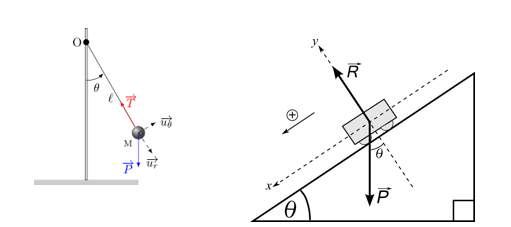
Aim of the Module
- Consolidation of theoretical knowledge acquired in Point Mechanics course (Physics 1) with the application of error calculation.
- Learning and visualization of phenomena linked to classical mechanics.
Recommended Prior Knowledge
It is recommended to have a good command of physical sciences in secondary school.
- Enseignant: LATEFA BETTADJ
- Enseignant: SIDI MOHAMMED FAZIL DIB
The Target Audience: First Year Master
The course Objectives
The students will be able to :
To identify The academic discipline of Women's Writing as an area of literary studies
To label all women writers who plays an important role in literature.
To locate the position of a woman within the literary world.
To point out mainly or exclusively on texts produced by women
The Summary
At first, literature by women was being recorded in Britain as far back as the old age (18th century). There are instances in the 18th century of catalogues of women writers, including George Ballard's Memoirs of Several Ladies of Great Britain Who Have Been Celebrated for their Writing or Skill in the Learned Languages, Arts, and Sciences (1752). Most of this literature was in the form of diaries, autobiographies, letters, protests, stories, and poems. When women noted down, they touched upon experiences rarely suggested by men, and they spoke in different ways about these experiences. They wrote about childbirth, housework, relationships with men, and friendships with other women. They spoke about themselves as girls and as mature women, as wives, mothers, widows, lovers, workers, thinkers, and rebels. They also wrote about themselves as writers and about the unfairness against them and the pain and courage with which they faced it.
However, most women literature before 1800 as Aphra Behn (1640-1689) did not see their writings as a feature of their women’s experience or an expression of it.Writing was not an acceptable profession for women.There were women who were interested in women’s writings, and women writers often knew and praised each other’s works. But all these women as Fanny Burney (1752-1840) were dependent upon men because it was men who were the critics, the publishers, the professors, and the sources of financial support. It was men who had the power to praise women’s works, to bring them to public attention, or to ridicule or to doom them, too often, to obscurity. From about 1750 English women began to make inroads into the literary market place(http://www.encyclopedia.com/), but writing did not become a recognizable profession for women until the 1840s. In 1869, John Stuart Mill claimed that women would have a tough effort to rise above the influence of the male literary tradition. If women’s literature is destined to have a different collective character from that of men, much longer time is necessary than has yet elapsed before it can emancipate itself from the influence of accepted models.