NUTRITION, GUT MICROBIOTA & IMMUNITY - M1S2- NUTRITION & PATHOLOGY
Topic outline
-
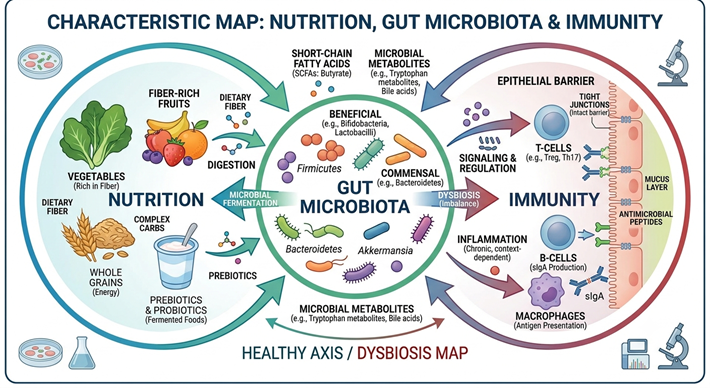
This module investigates the complex triad connecting dietary habits, intestinal microflora, and immune regulation. Designed for Master’s students, it examines how nutrients shape microbial ecology and influence mucosal and systemic immune responses in both health and disease.
Students will explore the physiology of the intestinal barrier and the gut-associated lymphoid tissue (GALT), alongside microbial metabolomics ; focusing on short-chain fatty acids (SCFAs) as key immune signaling molecules. The curriculum assesses the impact of various dietary patterns, from high-fibre diets to ultra-processed foods, on systemic inflammation.
Furthermore, the module addresses how dysbiosis contributes to chronic pathologies, including inflammatory bowel diseases (IBD), metabolic disorders, allergies, and autoimmunity. Finally, students will critically evaluate biotherapeutic strategies ; such as pre-, pro-, and postbiotics, as well as fecal microbiota transplantation (FMT), backed by modern metagenomic and metabolomic methodologies.
-
This introductory lecture establishes the biological baseline of the module. Students will understand the structural, biochemical, and cellular components of the gastrointestinal barrier and how it maintains physiological homeostasis.
The main objectives :
Identify the distinct cell lineages of the intestinal epithelium and their specialized functions.
Master the molecular structure of tight junctions and their role in paracellular transport.
Understand the pathophysiology of mucosal hyperpermeability ("leaky gut") and its relation to systemic inflammation.
1. The Gastrointestinal Interface
a) Surface Area & Challenge: The human intestinal mucosa covers ~30 m², representing the largest interface between the internal human environment and external antigens (dietary components, foreign proteins, and microbes).
b) The Dual Mandate: The intestinal barrier must execute two opposing functions simultaneously - Exclusion: Effective physical and immunological restriction of pathogens, toxins, and intact macromolecules
- Permeability: Selective absorption of essential nutrients, water, and electrolytes.2. Cellular Architecture of the Intestinal Epithelium
The intestinal epithelium is a single layer of specialized columnar epithelial cells originating from stem cells located at the base of the crypts of Lieberkühn (Figure 1 ).Absorptive Enterocytes (~80% of cells):
- Microvilli forming the apical brush border to maximize nutrient uptake.
- Express nutrient transporters and membrane-bound digestive enzymes.
Goblet Cells:
Synthesize and secrete gel-forming mucins (primarily Muc2).
Create the protective mucus layer (single layer in the small intestine; dual inner/outer layer in the colon).
Paneth Cells (located at crypt bases):
Secrete antimicrobial peptides (AMPs) including alpha-defensins, lysozyme, and phospholipase A2.
Maintain crypt sterility and protect intestinal stem cells.
Enteroendocrine Cells (~1%):
Hormone-secreting cells (e.g., GLP-1, PYY, serotonin) regulating gut motility, satiety, and metabolic signaling.
Microfold (M) Cells:
Specialized antigen-sampling cells located within the Follicle-Associated Epithelium (FAE) overlying Peyer’s patches.
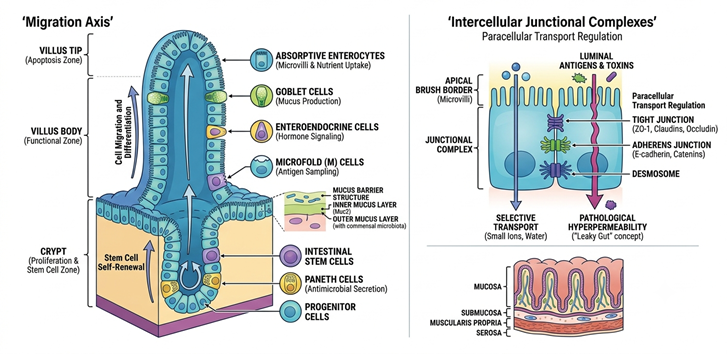
Figure 1 : Cellular Architecture of the Intestinal Epithelium
3. Junctional Complexes & Paracellular Transport
Epithelial cell integrity relies on intercellular junctional complexes located on the lateral membranes:
Tight Junctions (TJs) — The Apical Gatekeepers:
Transmembrane proteins: Claudins (pore-forming vs. sealing), Occludin, and Junctional Adhesion Molecules (JAMs).
Intracellular scaffolding: Zonula Occludens proteins (ZO-1, ZO-2, ZO-3) anchor TJ transmembrane proteins to the actin cytoskeleton.
Function: Regulate the movement of ions, water, and solutes through the paracellular pathway.
Adherens Junctions (AJs):
Composed of E-cadherin and catenins; provide structural mechanical stability.
Desmosomes:
Provide strong intercellular adhesion under physical stress.

Figure 2 : Junctional Complexes & Paracellular Transport
4. Pathophysiology: Gut Hyperpermeability ("Leaky Gut")
Mechanism: Disruption or down-regulation of TJ proteins (e.g., via inflammatory cytokines like TNF-alpha and IFN-gamma, dietary factors, or dysbiosis) leads to impaired barrier integrity.
Pathological Cascade:
Increased paracellular transport of Luminal Antigens and Lipopolysaccharides (LPS).
LPS translocation into the lamina propria and systemic circulation (Metabolic Endotoxemia).
Activation of Toll-like Receptor 4 (TLR4) on resident macrophages and systemic immune cells.
Triggering of low-grade chronic inflammation underlying metabolic and inflammatory diseases.
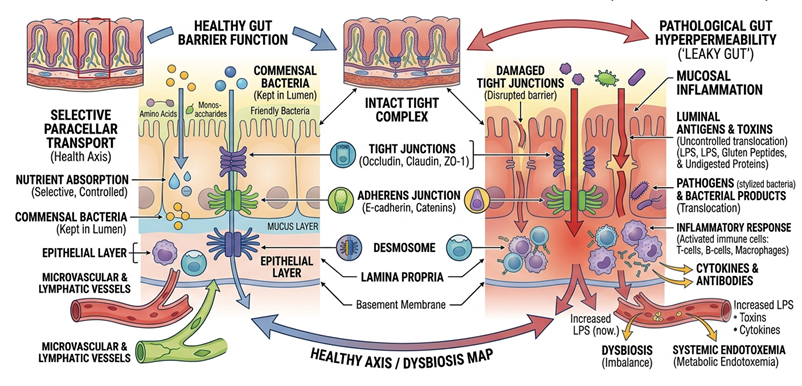
Figure 3: Pathophysiology: Gut Hyperpermeability ("Leaky Gut")5. Suggested Recommended Reading for Students
- Chelakkot, C., Ghim, J., & Ryu, S. H. (2018). Mechanisms regulating intestinal barrier integrity and its pathological implications. Experimental & Molecular Medicine, 50(8), 1–9.
https://doi.org/10.1038/s12276-018-0126-x - Vancamelbeke, M., & Vermeire, S. (2017). The intestinal barrier: a fundamental role in health and disease. Expert Review of Gastroenterology & Hepatology, 11(9), 821–834.
https://doi.org/10.1080/17474124.2017.1343143 - Fasano, A. (2011). Zonulin and its regulation of intestinal barrier function: the biological door to inflammation, autoimmunity, and cancer. Physiological Reviews, 91(1), 151–175.
https://doi.org/10.1152/physrev.00003.2008 Turner, J. R. (2009). Intestinal mucosal barrier function in health and disease. Nature Reviews Immunology, 9(11), 799–809. https://doi.org/10.1038/nri2653
-
-
Major bacterial phyla (Firmicutes, Bacteroidetes, Actinobacteria, Proteobacteria)
Microbial colonization from birth to adulthood
-
A. Major bacterial phyla (Firmicutes, Bacteroidetes, Actinobacteria, Proteobacteria) Microbial colonization from birth to adulthood
-
-
Short-Chain Fatty Acids (SCFAs): Acetate, propionate, and butyrate mechanisms via GPCRs and HDAC inhibition
Bile acid transformation and secondary bile acids
Tryptophan catabolites and the AhR (Aryl Hydrocarbon Receptor) pathway
-
Impact of Macronutrients and Microelements
Dietary fibers and non-digestible carbohydrates
Dietary fats (saturated vs. polyunsaturated fatty acids) and low-grade inflammation
Role of polyphenols, vitamins (A, D, Zinc), and trace elements
Dietary Patterns and Systemic Inflammation
The Western Diet vs. the Mediterranean Diet: Immune outcomes
Ultra-processed foods, food additives, and mucosal breach
-
-
-
Semaine 5 :
· CM (2 h) — Part 3.1 : Immunomodulatory effects of dietary fibers, saturated vs. unsaturated fatty acids, polyphenols, micronutrients (Vitamins A, D, Zinc).
· TD 4 (1.5 h) : Article discussion: High-fat diet vs. high-fiber diet impact on gut barrier integrity.
-
· CM (2 h) — Part 3.2 : Western diet vs. Mediterranean diet outcomes. Ultra-processed foods, food additives (emulsifiers), and mucosal barrier breach.
· TD 5 (1.5 h) : Mid-term Evaluation (Contrôle Continu - 1 h) + Feedback session (30 min).
-
· CM (2 h) — Part 4.1 : Pathophysiology of Crohn’s disease and Ulcerative Colitis. Loss of mucosal tolerance, dysbiosis signatures, and genetic susceptibility.
· TD 6 (1.5 h) : Clinical case analysis: Designing nutritional support strategies for IBD patients in flare vs. remission.
-
· CM (2 h) — Part 4.2 : Obesity, Type 2 Diabetes, and MASLD. Metabolic endotoxemia (LPS translocation) and low-grade systemic inflammation.
· TD 7 (1.5 h) : Clinical case study: Metabolic endotoxemia and insulin resistance link in metabolic syndrome.
-
1. Obesity, Type 2 Diabetes, and MASLD. Metabolic endotoxemia (LPS translocation) and low-grade systemic inflammation.
-
· CM (2 h) — Part 5.1 & 5.2 : Definitions and applications of prebiotics, probiotics, synbiotics, postbiotics, and medical nutrition therapies.
· TD 9 (1.5 h) : Critical evaluation of commercial probiotic formulations and clinical trial data.
-
1. Applications of prebiotics, probiotics, synbiotics, postbiotics, and medical nutrition therapies.
-
· CM (2 h) — Part 5.3 & Part 6 : Fecal Microbiota Transplantation (FMT), next-generation probiotics (Akkermansia, Faecalibacterium). Methodologies ($16\text{S}$, Metagenomics, Metabolomics, Organoids, Gut-on-a-chip).
· TD 10 (1.5 h) : Reviewing multi-omics data integration in translational microbiome research.
-
1. Fecal Microbiota Transplantation (FMT), next-generation probiotics (Akkermansia, Faecalibacterium).
-
· CM (2 h) : Synthesis of the Nutrition-Microbiota-Immunity Axis & Q/A Review Session.
· Exam Session (2 h) : Final Comprehensive Examination.