Campus Numérique UABT
Résultats de la recherche: 114

Bienvenue sur le cours Fiscalité des entreprises
Tous les événements économiques de l'entreprise ont des conséquences juridiques et
comptables, mais également fiscales. La variable fiscale impacte donc l'activité quotidienne
de tous les acteurs de l'entreprise. Cette étude est conçue pour acquérir une première
connaissance de la fiscalité des entreprises. Elle permet de mieux prendre en compte
l'incidence fiscale des différentes opérations de l'entreprise dans son activité et ainsi de mieux
dialoguer avec les fiscalistes. Elle constitue également une formation de base en fiscalité en
vue d'un perfectionnement ultérieur
Ce cours est destiné aux étudiants de la 3ème années classe supérieure
Ce cours est composé d’un ensemble d’unités d’apprentissage qui vous permettent d’acquérir
des compétences en matière d’utilisation des techniques de base et des modalités des lois
fiscaux afin de maîtriser les mécanismes de base de la fiscalité des entreprises.
- Enseignant: Imane Tabetderraz
Do Generic Drugs Have a Future?
- Vocabulary
- Forms of Drug
- Abbreviations
- Medical Expressions
- Enseignant: karima benmaamar
- Enseignant: KHELIFA MERZOUGUI

Le cours de genetique moleculaire humaine est organisé en six chapitres (voir syllabus)
Ce cours presente aux etudiants les bases et les principes de la genetique moderne, liés aux maladies genetiques, a la lumiere des decouvertes recentes concernant l'organisation du genome humain et sa regulation epigenetique.
Le cours detaille les principales causes genetiques
des maladies monogeniques et certaines pathologies notament cardiaques,
hematologiques, et cancers. Il decrit les principales lesions du genome
et les genes touchés.
Par ailleurs, Il aborde les bases moleculaires de la transmission hereditaire des maladies monogeniques en decrivant aussi bien les modes de transmission obeissants aux lois de Mendel que ceux qui s'en ecartent.
Il traite egalement les modifications epigenetiques qui affectent la transmission des maladies ainsi que les alterations epigenetiques impliquées dans certaines pathologies
Dans ce cours, vous decouvrirez le concept du polymorphisme et ses applications dans le diagnostic des maladies genetiques.
Le cours abordera egalement certaines techniques d'analyse du genome humain et de diagnostic des maladies genetiques.
- Enseignant: SAMIRA BERRAHOUI
- Enseignant: Boulanoire El Amine ouraiba
- Enseignant: MOHAMMED NADJIB RAHMOUN
OBJECTIFS GENERAUX DE LA MATIERE D’ENSEIGNEMENT
Cet enseignement est structuré en deux parties couvrant à la fois la Géographie urbaine et lagéographie de l’habitat.La géographie urbaine a pour objectif d’initier les étudiants à la lecture de la ville de l’espaceurbain et ses enjeux.La géographie de L’habitat : elle vise trois objectifs : L'étude des rapports entre l'homme et son milieu physique modifié et aménagé. L'analyse de l’habitat en fonction de ses particularités morphologiques etsociodémographiques propres. L'analyse de la structure de l'habitat à travers son échelon de base : le quartier t seséquipements.CONTENU DE LA MATIERE D’ENSEIGNEMENTPartie 1 : Géographie Urbaine :1. Les différentes formes d’organisation spatiale et fonctionnelle• Les villes traditionnelles, leurs diversités spatiales et l’héritage historique (villeseuropéennes, anglo-saxonnes, monde arabe, Algérie)• Les villes industrielles : causes motrices de la mutation (villes d’Europe, des Etats-Unis,des pays voie de développement, d’Algérie : spécificités communes : banlieusardisation)• Les villes tertiaires : nouvelles fonctions spécifiques et croissance des services(spécialisation des centres, restructurations industrielles, périurbanisation; pays développés, paysen voie de développement, Algérie)• Les transformations urbaines et leurs différentes manifestations : (Mondialisation,globalisation, métropolisation et leurs effets sur les villes, Nouvelles configurations urbaines(spécialisation, étalement, éclatement, fragmentation, relation ville/ campagne), Transformationsde l’image de la ville (problèmes d’identité et de repères, formes urbaines)Partie 2 : Géographie de L’habitatCette deuxième partie s'articule autour de trois parties :• Habitat et milieu géographiqueL’analyse du site et de ses composants comme éléments de contrainte ou d’incitation àl’implantation des activités humaines et des structures qui les portent.• Habitat et populationMécanismes et processus aboutissant à la formation de l'espace construitHabitat traditionnel rural et urbain : adaptation au milieu, typologie, classification morphologique)Habitat et population (particularités démographiques et socio-économiques, population résidenteet densités de population, TOL, TOP, indicateurs d’activité : BAE, CSP, transformations deménages et leur mobilité)- Enseignant: CHAHRAZED BOULAHYA
- Enseignant: karim hamdaoui
- Enseignant: LAHCENE KHATTABI

v Université: Tlemcen
v Faculté: Sciences de la nature et de la vie et sciences de la terre et de l’univers
v Département: Biologie
v Public cible: Master II Spécialité de Biochimie, bioactivités, analyse et Contrôle des Huiles essentielles et végétales (BAACHEV).
v Intitulé du cours: Gestion des risques et normalisation
v Crédit: 06
v Coefficient: 03
v Durée: 15 semaines
v Horaire:
v Cours : Mercredi: 10h00 - 11h30, Salle: 15
v TD : Mercredi: 11h30 - 13h00, Salle: 15.
- Enseignant: nadjet taib
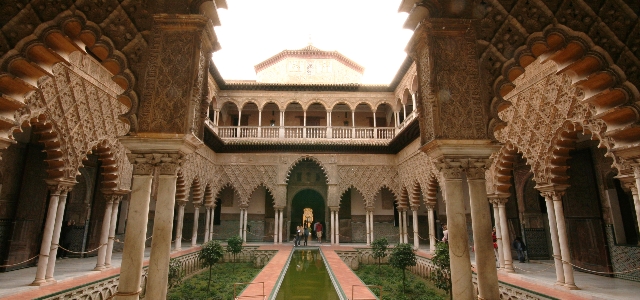
L’histoire critique de l’architecture est d’abord « Témoignage ». Elle est avant tout recherche et exposition des faits objectifs du passe, mais surtout, ordonnancement, classification et interprétation critique.
La matière histoire critique de l’architecture de la deuxième année, porte sur l’architecture et la ville dans les territoires de l’Islam. L’enseignement de cette matière, vise non seulement une connaissance événementielle et chronologique des différentes manifestations architecturales qu’une tentative de catégorisation de ces dernières liées aux différents contextes socio-économiques et culturels, participant à la constitution d’un savoir sur le projet d’architecture.
· Le public cible
DEUXIÈME ANNÉE LICENCE ARCHITECTURE
· Les objectifs généraux
L’enseignement de l’histoire pour des architectes a pour objectif principal de présenter et analyser des expériences de projets, à travers leurs formes et les processus qui les ont engendrés, qui serviront à alimenter la pensée de l’étudiant et enrichir son imagination.
OBJECTIFS GENERAUX DE LA MATIERE D’ENSEIGNEMENT
L’enseignement de l’histoire de l’architecture algérienne et de son contexte local est d’uneimportance cruciale pour plusieurs raisons. Tout d’abord, cela permet de comprendre les racineset les influences qui ont façonné l’architecture algérienne, de plus, l’étude de l’histoire del’architecture locale peut aider à préserver le patrimoine architectural du pays en sensibilisant lesétudiants à son importance. Enfin, cela peut également contribuer à une meilleure compréhensionde l’identité culturelle algérienne et de son héritage architectural, en permettant aux étudiants dese connecter plus profondément avec leur patrimoine culturel et de mieux comprendre leur placedans l’histoire et la société contemporaine et leur permettre une bonne intervention dans lecontexte local. Cet enseignement vise à : L’initiation à la connaissance de l’architecture en Algérie. L’acquisition des fondements des styles architecturaux en Algérie durant le XIXe et le XXesiècle. L’acquisition des outils conceptuels nécessaires à la lecture du langage architectural et à laformation du jugement critique sur la production architecturale en Algérie au XIXe et XXsiècle. Acquisition d’un socle culturel (architectural et historique) issu du contexte. Apporter les connaissances factuelles de base sur le développement et les mutations desvilles dans la période contemporaine (XIXe et XXe s).CONTENU DE LA MATIERE D’ENSEIGNEMENT La civilisation libyco punique :o Les Berbères : arts anciens (néolithiques) et habitations ;o Les phéniciens : comptoirs et cités au Maghreb ;o Formation de la civilisation punique et son expansion ;o Architecture funéraire Maurétanienne et numide (Le Medracen, Le mausolée royalde Maurétanie, Le mausolée royal de Syphax, Tombeau de Massinissa, Mausoléede Sabratha, Mausolée de Dougga, Les Djeddars : les pyramides du Maghreb). Éléments de l’Architecture locale (traditionnelle) algérienne (médinoise, oasienne,montagnarde, ksourienne, etc.). Le contexte urbain et médinal (Casbah d’Alger, Vieille ville de Constantine, les Cités duM'Zab, etc.) L’expérience de l’urbanisme colonial en Algérie (interventions sur les médinas, démolitions,le rôle du génie militaire, castramétation, Création ex-nihilo, etc.). Transformations coloniales (reconversion des édifices). Les différentes architectures de la période coloniale en Algérie (néo-classique, néoMauresque, art-déco, architecture moderne.)
- Enseignant: Ilies Didi
- Enseignant: karim hamdaoui
- Enseignant: LAHCENE KHATTABI


Description du cours Programmation avec Python:
Le module "programmation avec le langage Python" permet aux étudiants une initiation à l’algorithmique et à la programmation. Python est un langage de programmation développé depuis 1989 par Guido van Rossum et de nombreux contributeurs bénévoles. Il est le langage de programmation de premier choix pour les débutants en programmation car il est facile à apprendre grâce à sa syntaxe claire et cohérente, rapide à mettre en œuvre et enfin, il peut être appliqué dans de nombreux domaines comme: l'écriture d'applications pour le Web, l'élaboration de programmes de calculs mathématiques, développement d'interfaces graphiques et la programmation de scripts systèmes,etc,.............).
Le public cible:
Ce cours s'adresse à des étudiants qui débutent dans la programmation. Plus particulièrement ce cours concerne les étudiants de tronc commun c'est à dire de première année licence :sciences techniques et sciences de la matière.
Les objectifs généraux du cours:
Le cours programmation python vise à :
- Susciter l'intérêt de l'apprenant pour un sujet aussi ardu que la programmation à travers l'utilisation d'un langage moins contraignant que les autres (ex : langage C).
- Mettre en évidence les invariants de la programmation.
- Identifier les points forts et les points faible du langage python
- Situer le langage python parmi les autres langage de programmations avant la résolution d'un problème
- Mémoriser la syntaxe du langage python.
- Mettre en pratique cette syntaxe lors de l'écriture d'un programme représentant la résolution d'un problème spécifique.
- Traduire un algorithme pré-existant en programme une utilisant la syntaxe du langage python.
- Dr.: benmansour asma
Dubbing and Subtitling
DEFINITIONS
EARLY SOUND FILM AND MULTIPLE LANGUAGE VERSIONS
THE DUBBING AND SUBTITLING INDUSTRIES
SUBTITLING VERSUS DUBBING
FURTHER READING
Dubbing and subtitling are two major types of screen translation, the two most used in the global distribution and consumption of filmic media. Since their arrival with the introduction of sound to cinema, both have been seen as compromised methods of translating dialogue because they interfere in different ways with the original text, sound track, or image. Since the early 1930s, most countries have tended to favor either one mode or the other. While there are many forms of language versioning or transfer in current use in the global audiovisual industries, and any one of these might be used in some cases on its own or in combination with others, dubbing and subtitling have remained the most recognizable, as well as the most debated, methods for cinema.
DEFINITIONS
Dubbing is a form of post-synchronized revoicing that involves recording voices that do not belong to the on-screen actors, speaking in a language different from that of the source text and ideally in synch with the film image. But dubbing can also refer more generally to adding or replacing sound effects or spoken lines by the source actors themselves in the language of the film's production, often because of poor sound quality in the original recording or for the deletion of expletives from the theatrical version for release on television. While this latter form of post-synchronized revoicing is present in virtually all modern films, it is often called "looping" to distinguish it from dubbing as language translation. Another form of revoicing is the "voice-over," in which a nonsynchronous voice that does not replace the source text and language is added to the sound track but does not replace the source text and language. Popular in Russia and Poland and used more in television than in filmtranslation, voice-over is a relatively minor mode compared to dubbing and subtitling.
Subtitling, like voice-over, presents the translated and source languages simultaneously, but it transforms speech into writing without altering the source sound track. Subtitling may be either intralingual or interlingual. In the former, the written text that appears over the image is that of the source language. This kind of subtitling, for viewers who are deaf and hard-of-hearing, is often called "captioning," and it is in prevalent use in television broadcasting. Interlingual subtitling translates the source language into the target language (or languages) in the form of one or more lines of synchronized written text. These verbal messages may include not only speech, such as dialogue, commentary, and song lyrics, but also displays, such as written signs and newspaper headlines. Subtitles usually appear at the bottom of the screen, though their placement may vary among language groups. In bilingual subtitling countries such as Belgium, Finland, and Israel, film subtitles are often present in both languages.
The national preferences for subtitled or dubbed films stem from several factors, including historical and political circumstances, traditions and industries, costs, the form to which audiences are accustomed, and the generic and artistic standing of the films themselves. Before these can be considered, it is necessary to address the historical circumstances that gave rise to dubbing and subtitling and to their emergence as the preferred forms of verbal translation in film.
EARLY SOUND FILM AND MULTIPLE LANGUAGE VERSIONS
Silent films presented few problems for language transfer, though they still entailed translation for international audiences. While silent films were well suited to consumption in a variety of cultural contexts, this was due less to their status as a universal language of images than to their intertitles and the flexibility they provided. Intertitles were not simply translated from source to target languages but creatively adapted to cater to diverse national and language groups: the names of characters, settings and plot developments, and other cultural references were altered as necessary in order to make the films internationally understandable for different national audiences. By 1927, the intertitles of Hollywood films were routinely translated into as many as thirty-six languages.
With the sound film, it was no longer possible simply to replace intertitles. Subtitling and dubbing have been in use since 1929, but when the first American sound films reached Europe they did not immediately become the preferred solutions to the new problem of sound film translation. Instead, multilingual productions or multiple language versions (MLVs) experienced a period of ascendency and decline from 1929 to 1933. During this time, American film studios either brought foreign directors, scriptwriters, and actors to Hollywood or set up film production studios in Europe. Warner Bros. was the first American producer to engage in MLV production, with some European producers and all of the major Hollywood studios following suit. Paramount invested the most, building a huge studio in early 1930, at Joinville in the suburbs of Paris, that was soon producing films in as many as fourteen different languages. Films that were shot simultaneously in two or three languages usually had just one director, but for a higher number of MLVs each could have a different director. Polyglot actors might perform in more than one language version, but the norm was different casts for different versions. Sets and costumes were reused, which meant shooting versions in shifts according to a twenty-four-hour schedule. Production time was short, often less than two weeks per feature. At its peak, between March 1930 and March 1931, Joinville turned out an astonishing one hundred features and fifty shorts.
Despite such rationing of production time, MLVs meant an enormous increase in costs, and their standardized plots worked against satisfying the cultural diversity of their target audiences. Their lack of profitability, inability to meet generic requirements across cultures, and the perception that they were purely commercial products led to a precipitous decline in MLVs, with Hollywood ceasing multilingual production entirely in 1933 and Germany and France soon thereafter. Although many established and promising young directors made MLVs, few of their works are considered to be of lasting artistic value. An exception is Josef von Sternberg's Der Blaue Engel (The Blue Angel, 1930), shot in English and German versions for Ufa (Universum Film Aktiengesellschaft) and Paramount. The Blue Angel was a substantial international hit and features the same actors (Emil Jannings and Marlene Dietrich) voicing their lines in both versions.
While the MLVs are generally considered to be a failed experiment of the early sound period, multilingual versions continued to be made sporadically in Europe. Jean Renoir's Le carrosse d'or (The Golden Coach, 1953), for example, was shot at Cinecittà with a largely Italian cast, most of whom, including the star, Anna Magnani (1908–1973), played and spoke all three languages in separately shot English, Italian, and French versions. Werner Herzog's Nosferatu: Phantom der Nacht (Nosferatu the Vampyre, 1979) was double shot, with the same cast performing separate German and English versions.
THE DUBBING AND SUBTITLING INDUSTRIES
The most common explanation for the divide between dubbing and subtitling countries derives from cost: dubbing, the more expensive translation mode, is adopted by the larger, wealthier countries with significant single-language communities, subtitling by the smaller countries whose audiences comprise more restricted markets. While there is some truth to this rationale, cost alone does not dictate national choice: small Central European countries such as Bulgaria, the Czech Republic, Hungary, and Slovakia prefer dubbing, despite its high cost. Historical and political developments, along with tradition, are equally important factors.
In Western Europe, dubbing emerged in the early 1930s as the standard method of language transfer in France, Italy, Germany, and Spain (sometimes referred to as the FIGS group). In France, where the Joinville studio was converted into a dubbing center, the supremacy of dubbing derives from the nation's cultural mission to preserve and protect the French language in the face of foreign (especially American) influence, and the prevalence of French as the lingua franca for a populace accustomed to hearing it in its own films. For the other countries of the FIGS group, culture and political ideology were determining causes. Italy, Germany, and Spain, all of which faced cultural boycotts in the mid-1930s and were ruled by fascist governments, only allowed dubbed versions of foreign films. The dictators of these countries understood how hearing one's own language served to confirm its importance and reinforce a sense of national identity and autonomy. In Italy especially—where most people, including the filmmakers themselves, spoke dialect rather than the official Tuscan—dubbing forged the synthetic unity of a shared national language. As early as 1929, Benito Mussolini's government decreed that all films projected on Italian screens must have an Italian-language sound track regardless of where it was produced. Both Francisco Franco's Spain and Adolf Hitler's Germany established strict quotas regarding imports, almost all of which were dubbed. Through the quickly established and standardized dubbing industries that were built up in these nations, dubbed movies came to be seen as local productions. The highly developed and still active dubbing industries in these countries are thus remnants of their political contexts of the early 1930s, when sound film emerged.
Dubbing is a labor-intensive process. In a sound booth, dubbing actors view film segments repeatedly while voicing their lines from a prepared script. Several recording attempts may be necessary to achieve, as near as possible, the synchronization of translated lines of dialogue or other vocalizations with the lip movements of the original on-screen actors. Films are dubbed well or badly depending on the time and care taken and the resources devoted to the process. Until the 1960s, lip synchrony was held by the dubbing industry as the most important factor for sustaining the illusion of watching and hearing a homogeneous whole. Now, lip synch is considered to be of secondary importance, since research has shown that the viewer cannot discern minor slips and discrepancies in lip movements, and asynchrony is not bothersome to audiences in dubbing countries. Audio synchrony, or using voices that fit the characters on the screen, is important to the overall effect, and studios tend to employ the same dubbing actors for well-known foreign stars. This has led in some cases to voice actors achieving star power within the industry, or even becoming film actors in their own right: for example, Monica Vitti (b. 1931), the star of several Michelangelo Antonioni films in the 1960s, came to the director's notice through a dubbing assignment for his film Il Grido (The Cry, 1957). In the postwar Indian film industry (now commonly referred to as "Bollywood"), the ubiquitous song sequences are sung not by the actors but by professional singers who can become as famous as the screen stars who lip-synch their recordings during shooting.
Even in the dubbing countries there are sectors of the audience who prefer to watch subtitled films. In France these are advertised as "version originale soustitrée" ("original version with subtitles"); in Spain, cinemas increasingly offer both subtitled and dubbed versions of foreign films. Source-language countries—which means English-speaking countries, especially the United States and the United Kingdom—import few films that are not in English and so use these language transfer modes as needed and in a mixed manner. But several non-English-speaking nations, many of which import a high proportion of films, prefer subtitling, including Belgium, Croatia, Cyprus, Greece, Japan, the Netherlands, Portugal, and the Scandinavian countries.
Subtitling, more cost-effective than dubbing because it dispenses with sound recording and voice actors, is nonetheless complex work. The subtitling industry is not nationalized to the same degree as the dubbing one, since the translators are the key personnel and need not reside in the target country. But a primary issue for subtitling lies in the translation, which entails enormous cuts to the source dialogue—as much as half. While the ideal in subtitling is to translate each utterance in full, the limitation of screen space is a major obstacle. The average viewer's reading speed is 150–180 words per minute, with necessary intervals, which severely limits the duration and hence completeness of the subtitles. The final part of the process involves striking a duplicate photographic print of the master print, while simultaneously exposing it with titles to produce a new print with the titles "burned in." Companies hired to affix the subtitles to film prints face a myriad of possibilities concerning type size and typeface, background and placement, indications for extended sentences and multiple speakers, and the like. As with dubbing, films can be subtitled well or badly.
SUBTITLING VERSUS DUBBING
Many introductory film textbooks discuss a debate regarding subtitled versus dubbed prints of foreign films viewed by Anglo-American film studies students, and all state a preference for subtitling. The case against dubbing includes imperfect synchronicity between lip and audio or voice and body, flatness of performances and acoustics, and alteration or elimination of the original film's sound track and design. The quality of the acting is frequently noted as suffering in dubbed films, as the vocal qualities, tones, and rhythms of specific languages, combined with the gestures and facial expressions that mark national characters and acting styles, become literally lost in translation. While subtitling is acknowledged to have drawbacks as well—it is distracting and impedes concentration on the visuals and often leaves portions of the dialogue untranslated—it is seen to alter the source text the least and to enable the target audience to experience the authentic "foreignness" of the film.
But this position often does not acknowledge the selected acceptance of dubbing in subtitling countries or cases where dubbing makes more sense than subtitling. Foreign films and television programs aimed at children are dubbed in target countries that tend otherwise to subtitle because their viewers have not yet learned to read or cannot read quickly enough for subtitles to be effective. While serious moviegoers demand that art films be subtitled, they rarely complain that foreign films in lower, more commercial genres such as the "spaghetti western," giallo, martial arts, comedies, and anime are usually released in dubbed versions. For Italian cinema, popular or art, the authenticity argument does not hold: almost all Italian films are shot silent and then dubbed after filming has been completed, so there is no original sound track to speak of. The postwar era saw increased levels of co-production among nations, with the casts of co-produced films often coming from different countries and not speaking the same languages; their parts were thus dubbed by voice actors of the country in which the film was shot, and the international nature of what is in fact a polyglot film was erased. Federico Fellini's La strada (The Road, 1954) features two lead performers from the United States speaking English (Anthony Quinn and Richard Basehart) and one from Italy speaking Italian (Giulietta Masina). In terms of screen time and verbal utterances, the two American actors predominate; the Italian lead's lines are negligible. In spite of this, Anglo-American purists invariably judge the dubbed-in-Italian, subtitled-in-English version to be the more authentic even though the lips of two of the three main characters are clearly out of synch with their voices and the film was shot without sound.
The claim that subtitling involves the least interference with the original film is also arguable. Subtitles obstruct the integrity of composition and mise-en-scène by leading the viewers' eyes to the bottom of the frame. They focus audience attention on the translated words and the actors speaking them to the exclusion of peripheral or background dialogue, sound, or characters. They do not provide as full a translation as dubbing, and audiences of subtitled films do not experience the words and the expressions of the performers simultaneously. Subtitling may thus be regarded as undoing the synergy of performance and script, elevating selectively translated dialogue and downgrading the impact and importance of visual expression.
Although neither subtitling nor dubbing is an ideal form of audiovisual translation, recent technological developments have widened their application and reception. The number of individual sound tracks used in feature film sound design has increased (twenty-four tracks or more are now commonplace), as has the number of sound tracks used in the dubbing process. When each speaking character has a separate voice track in the film's original recording, dubbing only for language is possible, leaving the rest of the original aural expression of the film intact. For subtitling, laser processing has enabled the introduction of larger letters, outlined words, broader color ranges, and translucent background bands to increase legibility. But it is digitalization that has brought the most dramatic changes. Analyzing and resynthesizing the voices of dubbing actors make it possible for intonation, tone, and timbre to be adjusted to match those of the source actors almost identically. Asynchrony between lip movements and translated revoicings can also be corrected digitally to achieve lip synchrony, which is especially important in close-ups. The introduction of "soft titles," which are similar to the simultaneous translation one may experience with opera, has been enabled by CD-ROM technology and has allowed for high-quality subtitling for films that have no existing subtitled prints, providing a cheaper and more easily transportable solution than the expensive process of burning subtitles onto a newly struck print.
Finally, the introduction of Digital Video Broadcasting (DVB) and the Digital Versatile Disc (DVD) has produced increasing user choice and demand for television and film in other languages. Digital TV (DVB) enables transmission of a number of signals and thus live or simultaneous subtitling—a particularly important development for those countries accustomed to reading subtitles, as it means new access to foreign satellite channels. DVDs have become a crucial mode of film consumption. Their viewers can choose between dubbed or subtitled streams in a range of languages—up to four dubbing tracks and thirty-two subtitled tracks. Translations or subtitles are also required for the extra features frequently found on DVDs, such as trailers, behind-the-scenes documentaries, and biographical information on key cast members. While the subtitling versus dubbing debate is unlikely to ever be resolved, digital technologies have provided new opportunities for both modes of audiovisual translation.
SEE ALSO Dialogue;Sound;Technology
FURTHER READING
Betz, Mark. "The Name above the (Sub)Title: Internationalism, Coproduction, and Polyglot European Art Cinema." Camera Obscura 46 (2001): 1–44.
Danan, Martine. "Dubbing as an Expression of Nationalism." Meta: Journal des Traducteurs/Translator's Journal 36, no. 4 (1991): 606–614.
Egoyan, Atom, and Ian Balfour, eds. Subtitles: On the Foreignness of Film. Cambridge, MA: The MIT Press, 2004.
Ivarsson, Jan, and Mary Carroll. Subtitling. Simrishamn, Sweden: TransEdit, 1998.
Vincendeau, Ginette. "Hollywood Babel: The Coming of Sound and the Multiple-Language Version." Screen 29, no. 2 (Spring 1988): 24–39.
Whitman-Linsen, Candance. Through the Dubbing Glass: The Synchronization of American Motion Pictures into German, French, and Spanish. New York: Peter Lang, 1992.
- Enseignant: SIDI MOHAMMED BELACHOUI

Ce cours est destiné aux étudiants de 3 eme année 2 eme cycle Génie industriel.
Le cours "Initiation Aux Bases De Données" vise à :
Identifier les composantes d'une Base De Données(BDD).
Déterminer l'utilité d'un Système de Gestion de Base De Données(SGBD)
Différencier entre les trois langages : Langages de définition de données,Langage de requêtes et Langage de manipulation des données .
Utiliser le langage de requêtes structurées SQL

Description du cours :
Le cours intitulé « introduction à la topographie » est découpé en plusieurs parties. Il traite des généralités concernant la topographie, formes et dimensions de la terre, systèmes de représentation plane et les réseaux géodésique et altimétrique. Il traite aussi le nivellement et des techniques de mensuration, plus spécialement dans leurs applications au domaine routier et du bâtiment.
Ce module permet l’acquisition des connaissances théoriques où l’étudiant retrouve les notions de base : aperçu général de la topographie et des différents domaines en lien étroit avec la topographie, utilisation des outils de terrain de la topographie (niveau, théodolite, tachéomètre, GPS, etc.). Il permet aussi aux étudiants de mieux comprendre le rôle et l'importance des opérations, des moyens et des documents topographiques, ainsi que les différents procédés aboutissant à des levés planimétriques, altimétriques et tachéométriques d’une zone urbaine et/ou agricole.Public cible :
1ère et 2ème année Licence, spécialité : Géomètre Topographe.
Objectifs :
A la fin de ce cours et comme objectifs pédagogiques, les pratiquant de la topographie ( technicien ou ingénieur) doivent être capable de :
• Connaître et enrichir les notions fondamentales ayant relation directes ou indirectes avec les techniques d'ingénieur (Travaux publiques, bâtiment,etc.)
• Identifier les appareils et les instruments à utiliser dans n'importe quel cas de figure.
• Identifier et différencier les différents types de nivellement ;
• Exécuter, exploiter et contrôler les observations concernant la position planimétrique et altimétrique.
• Reporter des observations terrain sur plan ;
• Établir des levés topographiques sur terrain (principale tâche d'un géomètre topographe);

La limnologie, une discipline fascinante et multidisciplinaire, est l’étude scientifique des écosystèmes d’eau douce. De la minuscule mare au vaste lac, en passant par les rivières tumultueuses, la limnologie explore les interactions complexes entre les organismes aquatiques, leur environnement physique et les processus biogéochimiques qui régissent ces systèmes.
Dans ce cours de limnologie, nous plongerons dans les profondeurs des eaux douces, notamment des lacs pour comprendre leur importance écologique, leur diversité biologique et les défis environnementaux auxquels elles font face. Nous explorerons les principes fondamentaux de la limnologie, depuis la dynamique des écosystèmes lacustres jusqu’à l’hydrochimie, en passant par l’écologie des populations aquatiques.
À travers cette aventure intellectuelle, nous découvrirons comment les lacs abritent une vie abondante, des bactéries invisibles aux poissons majestueux, et comment ils jouent un rôle crucial dans le cycle global de l’eau, la régulation du climat et la fourniture de services écosystémiques essentiels.
Ensemble, nous aborderons les questions contemporaines telles que la pollution de l’eau et la conservation de la biodiversité aquatique.
En explorant cette discipline, nous nous engagerons dans un voyage de découverte scientifique de nos précieux écosystèmes aquatiques.
- Enseignant, Dr.: Zeyneb BENKEBIL
 Linguistics.jpg
Have you ever considered the process by which sounds transform into words, or how those words convey meaning? This course provides an in-depth exploration of the intricate mechanics of human language. It is designed for language enthusiasts, prospective educators, and individuals who seek to understand the principles of communication. We will systematically deconstruct language, examining elements from individual sounds to complete sentences. This approach is intended to be engaging, interactive, and highly informative.
Target Audience: L2 English Section and FILA2 (Applied English-International Finance)
General Objectives: This course, “Linguistics”, aims to:
- Define the different linguistic levels of analysis.
- List key tools (e.g., IPA, tree diagrams) and techniques used in linguistic analysis.
- Explain the nature and structure of human language using linguistic terminology.
- Explaining how linguistic features vary by context.
- Apply the rules of levels of analysis in language.
- Dr.: WASSILA OULDJI

Ce cours intitulé « Mécanique des fluides appliquée » permet de vous familiariser avec les outils nécessaires pour la maîtrise du comportement des fluides en différents états utilisant les principes de bases.
Le cours est scinde en plusieurs unités d’apprentissage qui vous permettent d’acquérir des compétences en matières d’utilisation des notions de base sur les fluides dans le domaine lié à votre discipline en mécanique vue en 2ème année tronc commun.
Il vous permet l’acquise des connaissances sur les propriétés des fluides, ainsi le comportement global des fluides en état de repos. Ce cours couvre les aspects essentiels de la mécanique des fluides : notion de pression, tension superficielle, etc. Essayant le plus possible d’illustrer les différentes notions par des exemples ou de simples exercices.
Visées d’apprentissage:
En terme de savoir
- Connaitre les principales actions au transport
- Définir la notion fluide.
- Décrire le comportement global d'un fluide.
- Identifier les différents paramètres qui caractérisent un fluide.
En terme de savoir-faire
- Fournir des connaissances de base de la statique des fluides.
- Apprendre à d'écrire un fluide au état de repos.
- Identifier les équations qui caractérisent un fluide.
- Expliquer la relation fondamentale de l'hydrostatique (calcul de la pression en un point).
En terme de savoir-être
Vous sensibilisez à comprendre les phénomènes importants sur les méthodes d’analyse en Mécanique des fluides appliquée. Vous allez avoir la capacité d’estimer rapidement des ordres de grandeur et aussi connaitre les méthodes de modélisation des logiciels CFD.
- Enseignant: ABDELAZIZ BEGAG
- Enseignant: MUSTAPHA BENACHOUR
- Enseignant: MOHAMMED BENRAMDANE
Description de la matière
Les Objectifs : l'étudiant pourra apprendre :
a) à trouver des repères conceptuels,
b) à chercher et sélectionner l'information utile, y compris sur Internet,
c) à traiter et exploiter l'information recueillie.
Contenu de la matière :
1-Méthode de travail pour réussir à l’université
-Définition –Enjeux – Objectifs - Principes de bases -
2-Débuter une recherche
1) Quels documents consulter ?
2) Ou se documenter ?
3) Chercher en bibliothèques
4) Dictionnaires et encyclopédies
5) Prise de notes
6) Tirer parti de sa documentation
7) Exemple de parcours
8) Chercher sur internet.
3-Comptes-rendus en TP
- Enseignant: FATIHA BARKA

University: Abu Bakr Belkaid University of Tlemcen
Faculty: Letters and Languages
Department: English
Course Title: Research Methodology in the Social Sciences
Level: M1/ LC
Instructor: Prof. Faiza SENOUCI MEBERBECHE
Credit hours: 1:30 per week.
Coefficient:
UE: Methodology
This module is designed specifically for the students beginning master’s courses in LC. It provides a foundation for further learning in specific research methods related to literature and civilization. It deals with interdisciplinary research methodologies, epistemologies, and interpretations relevant to literature and civilization studies. |
- Enseignant: AHMED BACHIR
- Enseignant: kamila ghouali
- Enseignant: Khedidja hammoudi
- Enseignant: faizafouzia meberbeche
- Enseignant: meriem mengouchi
En français
Séminaire de master 1 du deuxième semestre.
C'est un cours qui va servir aux étudiants de littérature et de civilisation dans leur approche de l'analyse des romans et récits littéraires; des notions théoriques sont mises en application pour leur permettre de s’imprégner des études narratologiques et analytiques, en premier lieu pour leur propre apprentissage et en second lieu, en prévision de leur travail de mémoire, ce qui leur permettra une réelle mise en pratique des outils d'analyse littéraire.
En español
Seminario de máster 1 segundo semestre
Son clases que van a servir a los estudiantes de literatura y civilización en su aproximación al análisis de novelas y relatos literarios; unas nociones teóricas están aplicadas para permitirles impregnarse de estudios narratológicos y analíticos, primero para su propio aprendizaje y luego, en previsión del trabajo de fines de estudios, lo que les dará una real oportunidad de poner en práctica las herramientas de análisis literario.
- Enseignant: saliha zerrouki

Apparus dès la création des premiers circuits intégrés numériques, au début des années 1970, les microprocesseurs constituent le cœur de presque toutes les réalisations électroniques ; on en trouve dans tous les domaines, notamment : l 'informatique (de la calculatrice à l 'ordinateur), l 'automobile (ABS, injection, ...),
l 'automatique (automates programmables, contrôle de processus, .. .), l 'électronique domestique (thermomètre, télécommande, car te à puce, ...) Les performances des microprocesseurs sont liées aux possibilités offertes par la technologie, en terme de capacité (nombre de portes logiques intégrées) et de vitesse, et au choix d'architectures adaptées (ou imposées pour cause de compatibilité ascendante); à l 'heure actuelle, on trouve sur le marché des microprocesseurs intégrant des millions de transistors, fonctionnant à plus de 3000 MHz et disposés dans des boîtiers de plusieurs centaines de broches, ils sont issus de différentes approches architecturales : CISC, RISC, DSP et VLIW.
En effet, la gestion des ressources internes d’un microcontrôleur impose de faire appel à de nombreuses fonctions nouvelles, spécifiques de ce type de circuit. En outre, si vous voulez pouvoir mettre au point votre application avec un maximum de chances de succès, le recours à un environnement de développement spécialisé, allant de l’éditeur de programme au simulateur en passant par le compilateur, est nécessaire.
Enfin, lorsque votre programme est prêt à être essayé en « vrai grandeur », il faut encore savoir comment le charger en mémoire du microcontrôleur. Cet ouvrage se propose de répondre à toutes ces questions avec des exemples d’applications sur des microcontrôleurs de type PIC en langage C.
Ce document constitue le support du cours et ne prétend donc ni à l 'originalité, ni à l 'exhaustivité. Ces notes doivent beaucoup aux emprunts faits à de nombreux ouvrages et à différents travaux de collègues. Ce document s 'adresse aux étudiants Master1 (Master en instrumentation Biomédicale, département de Génie Biomédical, Faculté de technologie, Université de Tlemcen.
- Enseignant: LOTFI HAMZA CHERIF
- Enseignant: Mahammed MESSADI
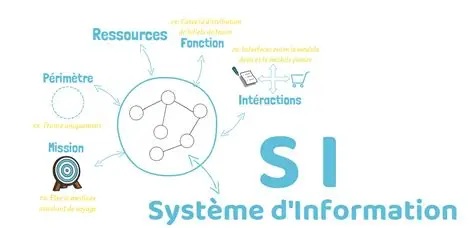
Ce cours intitulé ´n Modélisation des systèmes dinformation ˙z vise à initier létudiant à une
démarche méthodologique complète basée sur UML, allant de lexpression des besoins jusquà la
conception et au déploiement dune solution logicielle. Il sinscrit dans une approche moderne du développement
logiciel, où la qualité, la traçabilité et la structuration des systèmes sont des éléments
essentiels.
À travers ce cours, létudiant sera amené à acquérir les compétences nécessaires pour élaborer
un cahier des charges, analyser et modéliser un système dinformation, concevoir son architecture,
puis participer à son développement et à son déploiement.
Le cours est structuré en plusieurs unités dapprentissage couvrant les systèmes organisationnels,
lingénierie des besoins, lanalyse et la modélisation des systèmes dinformation, ainsi que leur
conception architecturale et leur implémentation. Des études de cas sont intégrées afin de permettre
à létudiant de mettre en pratique les concepts théoriques abordés.
Par ailleurs, ce cours permet à létudiant de développer une double compétence, à la fois conceptuelle
et technique, en tenant compte des contraintes réelles de développement telles que les exigences
fonctionnelles et non fonctionnelles, la qualité du système, les performances et les besoins
des utilisateurs.
- Enseignant: Nassima YAMOUNI KHELIFI