Physique2 (Electricité Générale_L1 Math) 25-26
Aperçu des sections
-
-
Start of electricity courses for M and MI - 2025/2026
- Classes will start on Fabuary 02, 2026 InchaAllah.
- The course session will be face-to-face on Wednesday at 1: 30 p.m .
- The duration of the tutorial session is one hour and a half for each group.
-
Contact Card
- Module coordinator: Dr Hadjou Belaid Zakia
- Contact : z_hadjou@yahoo.fr and zakia.hadjoubelaid@univ-tlemcen.dz
- Course Title: Physics 2 - General Electricity
- Specialization: LMD L1 M and MI
- Credit : 03
- Coefficient : 02
- Duration : 42 Hours
- Teaching method: Hybrid (distance learning via Moodle and Teams and face-to-face tutorials).
- Evaluation method: 40% CA + 60% FE
-
In the Continuous Assessment.
- Moodle test (CA Part 1) for 2.5 pts.
- Face-to-face test (CA Part 2) for 15 points.
- The SW grade will be out of 5 points, and is made up of the attendance grade, the grade for homework and tests on Moodle, and attendance.
-
At the end of this course, students will be able to :
- Know the origin of electricity.
- Identify the different physical quantities in electricity.
- Differentiate between the laws to be applied to point charges and continuous charge distributions.
- Apply Gauss's theorem to the calculation of the field for a well-defined continuous distribution.
- Differentiate between Ohm's law on microscopic and macroscopic scales.
- Adapt Kirchhoff's laws to different types of circuits.
-
To follow this course, students must have certain prerequisites, some of which are listed below. The student must :
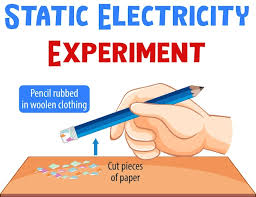
- Know some simple experiments on general electricity and their explanations.
- Know the source of electricity.
- Master some mathematical operators for calculating electrostatic fields and forces.
-
-
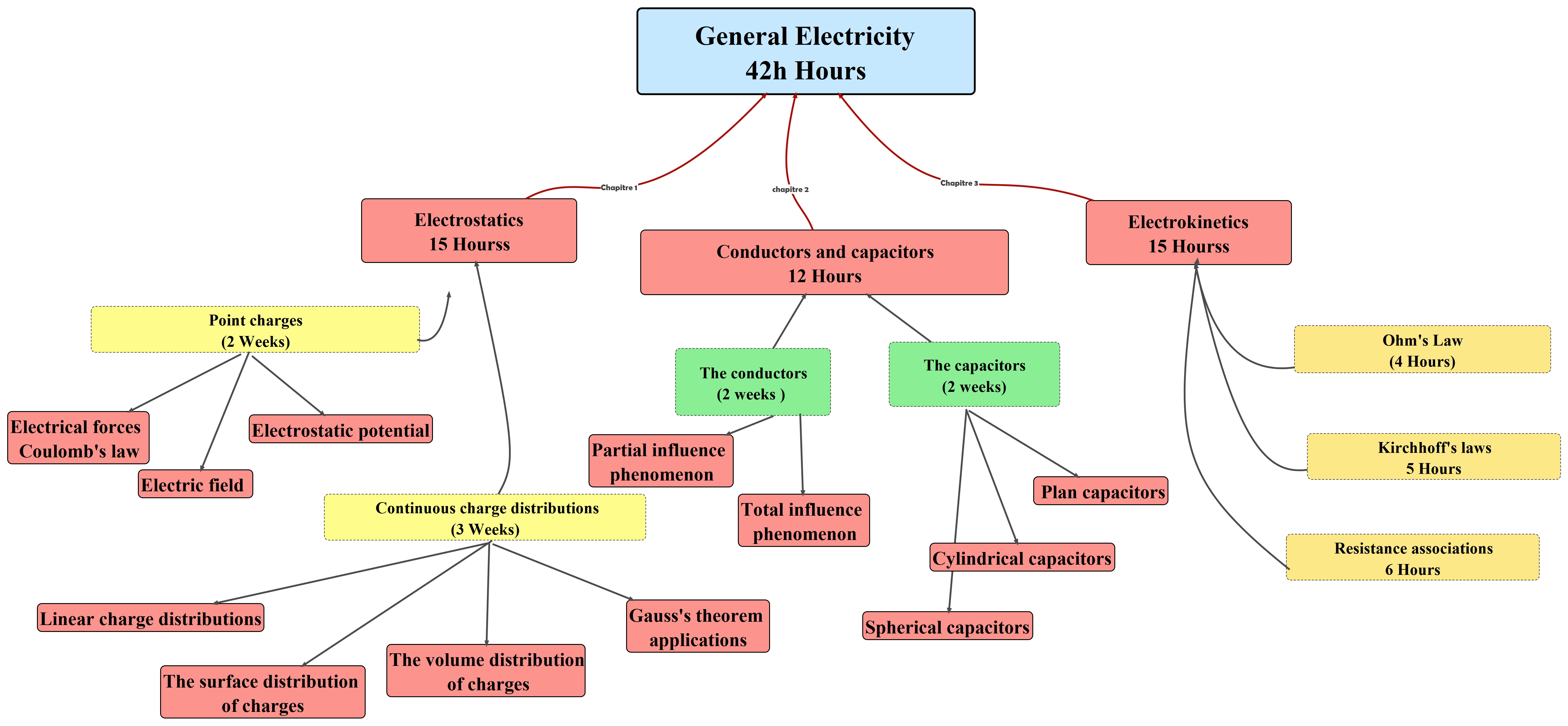
This course is divided into four chapters:
Chapter 1: Electrostatics
Chapter 2: Gauss' theorem
Chapter 3: Conductors and capacitors
Chapter 4: Electrokinetics
Chapter 5: Magnetostatic
-
-
-
If you have any questions, please send a message here so that I can get back to you.
-
Objectives of this chapter:
At the end of this course, the student will be able to :
- Know what a point charge is.
- Make the analogy between the gravitational force in mechanics and the Coulomb force in electricity.
- Calculate electrostatic force, field and potential.
- Introduce the analytical formula for the electrostatic field.
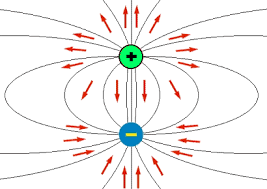
- Study the properties of electrostatic field lines using examples.
- Identify the different types of continuous charge distributions.
- Deduce the various physical quantities in electricity for a continuous charge distribution.
Pre-requisites:
In this chapter, the student needs to know about:
- Knowing some simple experiments on general electricity and their explanations.
- How to make the analogy between the law of gravitation and Coulomb's law.
- Presentation of vectors and geometric calculation (Pittagort's rule and trigonometry laws).
-
If you have any questions, please leave a message here so that I can get back to you.
-
The objectives of Chapter II are:
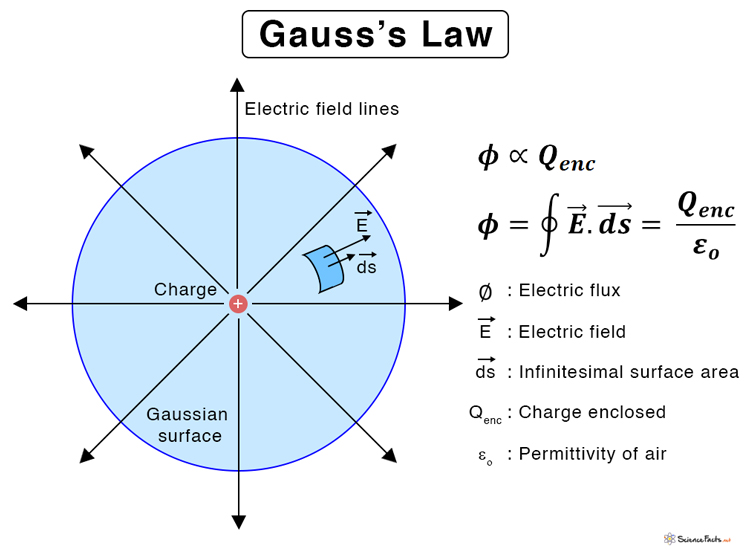
- This chapter enables the student to learn that there is another simple, indirect mathematical method for calculating the electrostatic field of a continuous charge distribution that possesses particular symmetries and invariances.
- Gauss's theorem states that the flow of the electrostatic field through a closed surface is proportional to the charge contained within that surface.
Chapter II prerequisites:
In this chapter, the student needs to know about :
- The flow of a vector field.
- The notion of a solid angle.
- Cylindrical and spherical coordinates (surface and volume).
- The principle of symmetry in a well-defined geometry.
- The relationship between electrostatic field and potential.
-
Objectives of Chapter III:
- Differentiate between the two types of materials in electricity: conductive and insulating.
- Know what a conductor in electrostatic equilibrium is.
- Know the characteristics of a conductor in electrostatic equilibrium.
- Define what a capacitor is and the different types of capacitor.
- Provide a method for calculating the capacitance of a capacitor.
- Practice the method for determining the capacitance of different types of capacitors.
Prerequisites for Chapter III:
- Know the nature of all matter.
- Differentiate between conductive and insulating media.
- Know the relationship between electrostatic field, charge and potential.

-
The objectives of chapter IV:
The aim of this module is to familiarize students with the basic concepts of electrokinetics. More specifically, at the end of this chapter, the student will be able to:
- Write the expression for the current and the current density in direct current in a conducting wire.
- Give the laws of electro-kinetics: Ohm's law, Joule's law, Kirchhoff's laws.
- Diagram equivalent circuits, giving expressions for equivalent resistances.
- Calculate currents and voltages by applying the general theorems of electro-kinetics.
Prerequisites of chapter IV:
- Knowledge of the principle of an electrical circuit.
- Knowledge of the general properties of electric current and voltage, and the main laws of electrokinetics (Ohm's law, etc…).
-
-
-
[1] Mosbah AMLOUK, Khaled RAOUADI, Said RIDENE. Cours d’électrocinétique Université virtuelle de Tunis, 2009.
[2] Jimmy ROUSSEL, Cours de physique électrocinétique. Version en ligne – https://femto-physique.fr/electrocinetique. 2021.
[3] Jimmy ROUSSEL. Conducteurs électriques. https://femto−physique.fr/ electromagnetisme /conducteurs−electriques.php. (cf.p.5,17).Fév.2016.
[4]Jimmy ROUSSEL. Séries de Fourier. https://femto−physique.fr/omp/serie−de−fourier. php. (cf.p.56, 57). Jan.2020.
[6] Étienne TISSERAND, Jean François PAUTEX et Patrick SCHWEITZER. Analyse et traitement des signaux 2eéd. Méthodes et applications au son et à l’image. Dunod, 2009.
[5]Jean PÉRICART. Cours d’électricité théorique, Tome1: Electrostatique -Electrocinétique.1962.
[7] Bendaoud MEBAREK. Électricité générale Cours & Exercices corrigés. Université Ibn Khaldoun - Tiaret . 2020.