Campus Numérique UABT
Search results: 114

''ce module vous permettra de découvrir la chronologie des plus célèbres savants et écoles, les grandes découvertes médicales et pharmaceutiques allant des plantes médicinales jusqu'aux médicaments ...... , allant de la période de la préhistoire jusqu’à nos jours en longeant les plus grandes civilisations''
"This module will allow you to discover the chronology of the most famous scholars and schools, the major medical and pharmaceutical discoveries ranging from medicinal plants to medicines…
from the prehistoric period to the present day, following the paths of the greatest civilizations."
- Enseignant: DALILA BENATTA
- Enseignant: SOUFYANE BENSAIDI
- Enseignant: bassim boukli hacene
- Enseignant: FATIMA ZOHRA MADANI
- Enseignant: KHELIFA MERZOUGUI
DESCRIPTION
This course work on understanding and expression from short, long and / or complex authentic documents relating to technological innovations, scientific discoveries or advances
This course is intended for students of Molecular Biology License , aims to improve students' knowledge and use of the academic and scientific English. It will cover some of the areas of scientific communication that students should master in order to successfully promote their research, including how to write cohesive and coherent sentences and paragraphs, how to paraphrase, how to write research papers and abstracts, and how to prepare and deliver academic presentations.
Description du cours :
Etudier les phénomènes et les mécanismes régulateurs de sénescence et de mort cellulaire propres aux cellules
immunitaires.
Prérequis :
Signalisation cellulaire, Biologie cellulaire, biologie moléculaire.
Résultats d’apprentissage :
A la fin de ce cours l’étudiant sera capable de connaitre les mécanismes régulateurs de l’apoptose et de la sénescence propres aux cellules immunitaires.
- Enseignant: mohammedtarik chaouche
- Enseignant: Zeyneb HADJIDJ
- Enseignant: wafa nouari
- Enseignant: Boulanoire El Amine ouraiba
- Enseignant: MOHAMMED NADJIB RAHMOUN
- Enseignant : Fatima Zahra MOKKEDEM
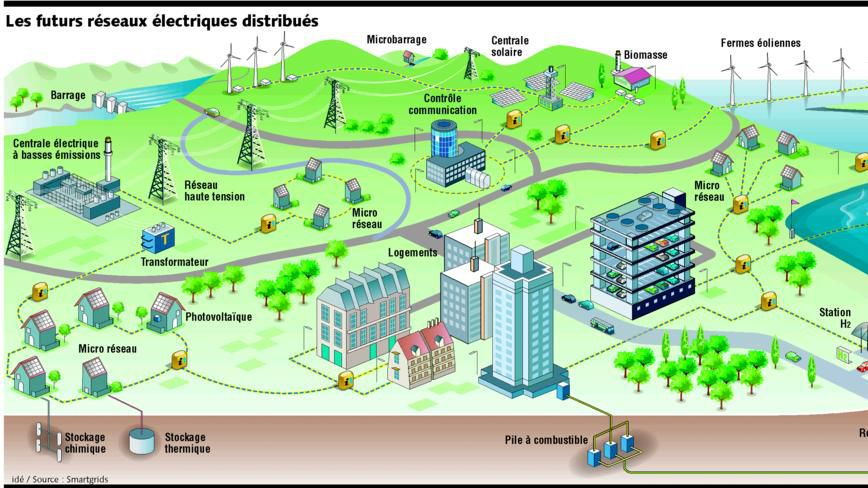
Ce document contient le cours des réseaux électriques intelligents destiné aux étudiants de cinquième année électrotechnique durant le semestre S5.
Il est structuré en cinq chapitres dont trois sont désormais disponibles, et le reste des chapitres suivra ultérieurement.
L'objectif du cours est de permettre à l'étudiant de comprendre l'évolution des réseaux électriques, avec une introduction sur les fondements des réseaux électriques intelligents et les terminologies importantes utilisées.
Ensuite, il acquerra des connaissances sur la technologies des micro-réseaux et l'intégration des énergies renouvelables et du stockage de l'énergie.
Pour terminer, l'étudiant acquerra des connaissances liées aux compteurs intelligents et l'avenir de la technologie des réseaux intelligent.
Dr. Imen BOUSMAHA
OBJECTIFS GENERAUX DE LA MATIERE D’ENSEIGNEMENT
Ce stage est une visite de découverte dont l’objectif principal est de permettre à l’étudiant de saisiret comprendre tout le processus de conception de l’œuvre architecturale, en plus de l’initiation à larédaction du rapport de stage.OBJECTIFS SPECIFIQUE DE LA MATIERE D’ENSEIGNEMENTIl s’agit d’opérer une visite de bureaux d’études publics ou privés afin de prendre connaissancede :‐ Données du projet (Programme, Choix de terrain, caractéristiques du site et del’environnement…)‐ Processus de conception (de l’idée, esquisse, expositions, consultations etdiscussions avec le maitre d’ouvrage, mise en forme avant-projet etfinale…approbation du projet…) les documents dessinés et écrits des différentesphases du projet‐ Missions des différents intervenants dans le processus de conceptionCONTENU DE LA MATIERE D’ENSEIGNEMENTVisites et découvertes au sein d’organismes techniques chargés de la conception d’œuvresarchitecturales. L’observation et l’analyse du processus de conception seront de mise. Plusieursvisites seront programmées et seront sanctionnées par un rapport de stage dans la forme d’undocument ecrit et dessiné de (25pp/30pp) y compris les photos. La formule sera en version papieren A4, autres formats appropriés, avec une copie numérisée, le tout est exposé et remis àl’enseignant chargé de la matière.- Enseignant: KARIMA DJEBBAR
- Enseignant: karim hamdaoui
- Enseignant: LAHCENE KHATTABI
University: University of Abou-Bekr Belkaid Tlemcen
Faculty: Letters and Languages
Department: English
Module: Study Skills (STSK)
Level: 1st Year Students (L1)
Semester: Semesters 1 and 2
Unit Type: UE Méthodologique
Coefficient: 02
Credit:04
Class Meeting Time: Thursday 8:30 to 10.
Class Location: Room 32
Course Period: 1 hour 30 minutes
Instructor Name: Dr. Assia BENETTAYEB
Email Address: benettayebassia@gmail.com
Office Hours: Thursday 11:30.
Course Description:
‘Study Skills Assignments for 1st Year University Students’ is a course that exposes students to the different tasks and assignments they may come across in study skills learning. It is a synthesis of possible activities they can exercise to ensure skills learning and practice. The course is divided into six main sequences (Understanding University Study Skills, Study Skills Identification, Study Routines, Habits and Styles, Reading, Writing and Vocabulary Skills, Paragraphing and Punctuation Skills in Writing, and More Assignments) each of which comprise a set of assignments (A, B and C) and the ‘More Assignment’ sequence comprising consolidation tasks about extensive reading practice, grammar construction, and correction, using English dictionaries, tips for examination preparation and sitting.
Course Objectives:
- Knowing and understanding different skills
- Identifying skills and differentiating them.
- Practising skills in isolation and then in integration
- Identifying study routines, habits, and learning styles
- Building good studying habits
- Fixing study setting (Time/place of study)
- Learning more vocabulary (Words stem, guessing /fixing meanings)
- Practice extensive reading and preparing a book report sheet.
- Learning about correct grammar construction of a sentence
- Learning some reading, writing, and vocabulary skills
- Learning paragraphing and punctuation skills in correct writing
- Improving reading and writing skills
- Learning how to outline.
- Learning how to use different types of dictionaries
- Using and directing tips/advice about preparing and sitting for exams.
Prerequisites:
- Skills’ learning
- Skills’ identification
- Skills in practice.
Course Programme (Outline):
STUDY SKILLS ASSIGNMENTS FOR 1st YEAR
UNIVERSITY STUDENTS.
(Related Lectures are available at: https://faclettre.univ-tlemcen.dz/assets/uploads/DOCUMENTS/cours%20en%20ligne/livres/Study%20skills%20in%20practice_Benttayeb.pdf).
I- Understanding University Study Skills.
ü Assignments A
ü Assignments B
ü Assignments C
II- Study Skills Identification.
ü Assignments A
ü Assignments B
ü Assignments C
III- Study Routines, Habits and Styles.
ü Assignments A
ü Assignments B
ü Assignments C
IV- Reading, Writing and Vocabulary Skills.
ü Assignments A
ü Assignments B
ü Assignments C
V- Paragraphing and Punctuation Skills in Writing.
ü Assignments A
ü Assignments B
ü Assignments C
VI- More Assignments.
Classroom Policies:
- Exposition of the input
- Clarification of the contents
- Practice and illustrations
- Intensive assignments
- Extensive assignments
Evaluation Method: The evaluation of students goes as follow:
- Written test+ classroom evaluation
- Formal written exam.
Bibliography and Suggested Resources:
- Allan, B. (2010). Study skills handbook. Hull University Business School.
- Benettayeb, A. (2023). Study Skills Guide. Konouz Edition.
- Benettayeb, A.(2021). Study Skills in Practice (A Course for University Students). Konouz Edition. (2nd Edition).
- Carroll ,R.T. (1990). Student Success Guide- Study Skills. Sacramento.
- Yorkey, R.C. (1970). Study Skills for Students of English as a Second Language. MacGrow -Hill Book Company.
- Enseignant: assia benettayeb
- Enseignant: assia benttayeb
- Enseignant: IMAN DIB
- Enseignant: IMANE DIB
- Enseignant: kamila ghouali
- Enseignant: KHADIDJA HAMMOUDI
- Enseignant: meriem mengouchi
L'objectif du cours est :
D’introduire la notion de systémique appliquée à l’ingénierie. 4 De présenter les méthodes d’analyse des systèmes et les techniques à travers les processus de design d’un système. 4 D’apprendre aux futurs managers, comment manager un système. 4 D’aider les managers à la prise de décision quand au choix d’un bon système à partir de plusieurs alternatives, en se basant sur un système d’évaluation au niveau du design.

Donner à l’étudiant les fondements de base de toutes les technologies du multimédia. L’ensemble des cours théorique et pratique permettra à l’étudiant de produire une application multimédia intégrant l’image, la vidéo, le son et le texte
- Dr: ASMA ABBES
- Dr: KARIMA BENMAAMAR
- Dr: Hana Larabi
- Dr: Salamet Mahboubi
- Dr: asma mansri
- Dr: RADJAA MEZIANE
- Dr: souaad mezianetani
- Dr: wafa nouari
- Dr: meryem sahnoune
- Dr: feyza sahraoui
Les objectifs du cours sont: D’approfondir les notions de la systémique appliquée à l’ingénierie. De s’intéresser de très prés au design pour la faisabilité opérationnelle en mettant l’accent sur les caractéristiques du design qui influence directement le succès du système en phase opérationnelle et la satisfaction du client. On s’intéresse alors à la maintenabilité , la fiabilité, l’ utilisabilité (facteurs humains), la supportabilité , la productibilité, la mise hors service (cession) et l’ abordabilité .
Dans le 2 ème partie, on s’intéresse à des outils et modèles mathématiques pour l’analyse et l’évaluation des systèmes, comme:
Optimisation dans le design et les opérations. La théorie de la chaine ou de la ligne d’attente ( queuing or waiting -line). Techniques et concepts du control .
Les travaux dirigés (TD) et les travaux pratiques (TP) en Biologie cellulaire sont des composants clés de l'apprentissage dans cette discipline fondamentale. Les TD permettent aux étudiants d'approfondir leur compréhension théorique sur la structure des cellules, les organites et les processus cellulaires tels que le métabolisme et la communication cellulaire. Ils incluent souvent des discussions sur les applications pratiques de ces concepts dans des domaines comme la médecine et la biotechnologie. Parallèlement, les TP offrent une expérience pratique en manipulant des échantillons cellulaires, observant leur structure au microscope, et réalisant des expériences pour étudier des processus comme la division cellulaire et les réponses aux stimuli. Ensemble, ces sessions permettent aux étudiants de développer à la fois leur compréhension théorique et leurs compétences pratiques indispensables pour explorer la complexité des cellules, les unités de base de tous les organismes vivants.
- Dr.: Samira MEBKHOUTI
- Dr.: Boulanoire El Amine ouraiba
- Dr.: Nassima TABTI

Ce cours intitulé le « Technologie Lairiére » permet de vous familiariser avec monde
microbien et son role important dans l’amélioration des produits alimentaire
principalement les produits laitiéres.
Le cours est scindé en un ensemble d’unités d’apprentissage qui vous permettent
d’acquérir des notions de base sur la flore technologique, les differentes types de
fermentations, l’interets de ces ferments et enfin etudier le lait et leur technologie (
fabrication de yaourt, la beurre et le fromage).
- Dr Pr: karima boumediene

Les Techniques de la recherche est un module d’unité méthodologique qui accompagne les étudiants de licence dès leur première année à l’université. Il a comme objectif faire inculquer les étudiants les différentes étapes de la méthodologie de la recherche en langue et culture hispanique. Partie qui abord en premier lieu la théorie et ensuite la méthode et la démarche. Il s’agit d’une recherche d’un caractère quantitative et qualitative.
Il permet au apprenant d’apprendre comment entamer la recherche scientifique, rédiger des articules, effectuer des questionnaires, des ateliers, voire même rédiger leurs mémoires de licence et master. C’est un module fondamental lié aux autres modules.
Informations sur le cours
Faculté: lettres et langues étrangères
Département: Espagnol
Public cible: 3eme année licence
Intitulé du cours : Techniques de la recherche
Crédit:04
Coefficient:02
Durée : 15 semaines
Horaire: Lundi: 10h30-12h00
Salle: 10
Compétences visées
La visée de ce cours est d’introduire l’étudiant
à la recherche monographique en lui donnant une idée sur les aspects théoriques
tels que délimiter son thème, choisir un sujet d’intérêt commun. Ensuite, la
première partie de ce cours sera consacrée à conduire l’apprenant pour définir
son sujet de recherche de caractère monographique, en élaborant sa
problématique, formuler son hypothèses, il apprend la méthode de collecter les
informations.
- Enseignant: wisem mahi

La TELEDETECTION est la mesure, à distance, des caractéristiques spectrales de la surface et de l'atmos phère de la Terre. Ces mesures sont normalement effectuéespar des instruments portés par des satellites ou des avions, et sont utilisées pour déduire la nature etles caractéristiques de la surface terrestre ou maritime, ou de l'atmosphère, au moment de l'observation.
Le présent cours est destinés aux étudiants de la première année master Observation de la terre & Univers, ce cour est présenté dans le premier semestre par l'enseignant du spécialité géomatique.
- OBJECTIFS D'APPRENTISSAGE
L'Objectif principal de ce cours c'est de prendre connaissance a étudiant les différents techniques
d'acquisition des données sur la surface de terre par la technique de la TELEDETECTION en
explorant tous ses processus durant l’acquisition de la données.
Abou Bekr Belkaid university 2020/2021 Mrs. HAMIDI. S
English Department Lecture 1: The Edwardian Era (1901-1915) ASCC LMD3 G5/6
ASCC Syllabus- LMD3
1. The Edwardian Era
2. Britain during WWI
3. The Inter-war Period (the 1920s / 1930s)
4. WWII
5. Post War Era (the 1950’s and the 1960’s)
Books to read: (Please check the page: Algerian Society of Readers)
Feminism and Women
Antoinette Burton, Burdens of History: British Feminists, Indian Women, and Imperial
Culture, 1865-1915 (Chapel Hill, NC: University of North Carolina Press, 1994)
Martin J. Wiener, Reconstructing the Criminal: Culture, Law, and Policy in England,
1830-1914 (Cambridge: Cambridge University Press, 1990)
Race and Nation
Catherine Hall, “‘From Greenland’s Icy Mountains…to Africa’s Golden Sand’: Ethnicity, Race, and Nation in Mid-Nineteenth-Century England.” Gender and History 5, no. 2 (Summer 1993): 212-230.
‘Britishness’
Antoinette Burton, “Who Needs the Nation? Interrogating ‘British’ History,” Journal of Historical Sociology 10, no. 3 (September 1997)
Decline
Perry Anderson, “Origins of the Present Crisis”
Michael Dintenfass, The Decline of Industrial Britain, 1870-1980 (London and New York: Routledge, 1992)
E.P. Thompson, “The Peculiarities of the English,” in the Poverty of Theory
Capitalism and Empire
P.J. Cain and A.G. Hopkins, British Imperialism, 1688-2000, 2nd Edition 2000 (Longman, 1993)
Introduction
Britain owes much of its progress to the 19th century when it enjoyed political stability and development in science and industry. Britain was the largest Empire at that time owning colonies almost all over the world. The Victorian Era is also called the Second English Renaissance and it is a time when there were strict cultural and political norms, progress in industry, and expansion. However, there were some problems such as the Irish Home Rule, the Boer and the Zulu War, and the Irish Potato Famine. Unfortunately, by the end of this period, the Industrial Revolution moved beyond Britain to reach America and Germany, which would become more developed than Britain.
The Edwardian Era in Britain is the period of King Edward’s rule, which took place from 1901 to 1910, and it was even lengthened until after his death to include the 4 years leading to W. W. I. After the death of Queen Victoria, Edward VII succeeded. He was keen on literature and art in Continental Europe, which pushed him to travel a lot as opposed to his mother Queen Victoria. This period witnessed a change in the political system and in the lives of workers and women who had been marginalized during the Victorian era. French people described it as “La Belle Époque (the Beautiful Epoch) or Fin de Siècle (the end of the century referring to the end of an era and the start of another; a period of degeneracy but also a new start!)
Society and Class System in Britain
British society was divided into three classes (upper, middle, and lower class). No change from one class to another was allowed due to the economic and social problems that GB witnessed like the emergence of Communism, poverty, and women who struggled mainly because of the poor working conditions and the Industrial Revolution. However, the wealthy class enjoyed a plentiful life full of leisure and entertainment and was getting richer while the poor were getting even much poorer. As a matter a fact, there was a clear inequity between social classes but also between men and women. Women would struggle for years to get a voice in politics (Suffrage) although they joined the field of work long before in the 1880s and 1890s, they would join college only until 1910. Additionally, young men tried to found their own families and live separately from their parents “the cult of youth” and believed that only married people mattered in society.
The Impact of King Edward VII
Fashion: King Edward was called ‘the fashionable King”. There were rapid developments in the fashion world, especially with the increasing need for more comfortable and flexible fashion, so women wore narrow corsets and long skirts. The Edwardian era was the last time women wore these "corsets," in everyday life. It is believed that the most interesting changes that followed the World War were those that influenced the world of women's fashion, and since that time, women's fashion has become shorter and shorter.
Science and technology:
Many people regarded this era as “a period of optimism” as there were many things invented so quickly such as the telephone, the sewing machine, typewriters, airplanes, motorcars, and wireless–it was believed that war would be avoided due to the excess of helpful discoveries.
Literature, Art, and Music: authors, artists, and composers we deem “modern” had their roots in the Edwardian era. The Bloomsbury Group included author E.M. Forster, whose first four novels were published between the years 1905 and 1910. Pablo Picasso moved to Paris in 1900, and Cubism was formed around 1909-1912. Authors like Galsworthy and playwrights like Shaw, Ibsen, and Pinero challenged mid-Victorian experiences, initiating themes like venereal disease, fallen women, class, etc as the topic of their plays. Live music performances both amateur and professional were popular (Henry Wood, Edward Elgar and Gustav Holst, etc
Important personalities
The influence of the Prince of Wales (later King Edward VII) dominated this period. Those who hoped to be accepted as “elite” blindly followed his style, speech, entertainment, amusements–and those with whom he socialized. He who opened the doors of society and welcomed the wealthy Anglo-, Franco-, and German-Jewish families (the Rothschild’s, Sassoon’s, and Cassel’s, etc), US millionaires, and the nouveaux riches came from Britain’s many colonies.
The economy during the Edwardian Era:
The riches of the Edwardian era was built on trade and industry of the following items and goods: mining, mainly coal, the chief supply of energy, the production of iron and steel, shipbuilding, cloth making, and other stuff from cotton and wool, producing household goods and equipment,...Etc. London was the financial capital of the world with a variety of goods more than those available were in Berlin, Paris, or NY. However, the working class started protesting for suffrage rights.
Religion and Spirituality the church no longer played as fundamental a part in the daily lives of Edwardians. Darwinism, which became popular in society in the 1850s and ’60s, joined with the quick technological progress of the era, and numerous people felt man be almost unbeatable!
Politics
Colonial wars in the Boer Republics and a rapidly growing socialist movement changed the dynamics of power in Britain. The war divided political opinion at home and asked some searching questions of Britain’s ability to govern as a colonial power. By the turn of the century, Britain’s power was both industrial and imperial. However, the future was looking more and more uncertain at a time when the German Empire was rising. While the working classes were finding a voice politically, women were still looking for suffrage. In 1903, the Women’s Social and Political Union (WSPU) was founded in Manchester by 6 women.


Conclusion
By the year 1914, the W. W. I, La Belle Époque came to an end. Thousands of British soldiers would not return to their families and Britain entered a time of war and economic disorder. To this end, we can say that the Edwardians really did enjoy a golden age.
Sources and further reading:
https://edwardianpromenade.wordpress.com/the-edwardian-era/
https://www.wikiwand.com/en/Edwardian_era
- Enseignant: SOUAD HAMIDI
THE PASSIVE VOICE
(By Dr HAKEM Hadia and Dr HEMCHE Hidaya Amina)
The passive voice is formed by using the auxiliary ‘to be’ and the past participle of the verb. The passive verb is used to say what happens to the subject (The window was broken) whereas the active verb is used to say what the subject does (The boy broke the window).
1. Transformation
a. The passive voice is formed from the active by placing the object of the active as the subject of the passive. The passive verb is formed by ‘to be’ having the same tense as that of the active verb and the past participle of the verb. All the tenses and the forms can be used in the passive with the exception of the present perfect continuous, the past perfect continuous or the future continuous for reasons of style. The following table illustrates.
|
Active voice |
Passive voice |
|
Present simple → |
am / is / are + PP |
|
Bank robbers generally wear stocking masks. |
Stocking masks are generally worn. |
|
Present continuous → |
am / is / are being + PP |
|
The police are searching every car for smuggled drugs. |
Every car is being searched for smuggled drugs. |
|
Present perfect → |
has / have been + PP |
|
The police have caught the escaped prisoner. |
The escaped prisoner has been caught. |
|
Past simple → |
was / were + PP |
|
The thieves stole her diamond necklace. |
Her diamond necklace was stolen. |
|
Past continuous → |
was / were being + PP |
|
The police were watching the house when the burglar escaped. |
The house was being watched when the burglar escaped. |
|
Past perfect → |
had been + PP |
|
The pickpocket had stolen the wallet. |
The wallet had been stolen. |
b. Modals follow the same rule of transformation into the passive (modal + be + PP)
· Parliament will pass a new law against corruption. →A new law against corruption will be passed.
· You mustn't park your car on double yellow lines. → Your car mustn't be parked on double yellow lines.
· More people ought to obey the traffic regulations. → The traffic regulations ought to be obeyed.
· Parents have to control children's aggressive behaviour. → Children's aggressive behaviour has to be controlled.
· I need to mend my broken window.→ My broken window needs to be mended.
N.B.: With need the passive is more often formed by using the gerund of the verb than the infinitive: → My broken window needs mending.
c. It is possible, as well, to use the passive voice in other verb forms, namely, infinitive and perfect infinitive, and gerund and perfect gerund.
· He expects to finish most of the work soon. → He expects most of the work to be finished soon. (Infinitive)
· She’s really excited to have been chosen to play the part. (Perfect infinitive)
· I remember my father taking me to the zoo → I remember being taken to the zoo. (Gerund)
· Tom didn’t mention having been promoted when we talked. (Perfect gerund)
d. It is also possible to form the passive form with negatives and questions.
· The judge didn't sentence the murderer to life imprisonment. → The murderer wasn't sentenced to life imprisonment. (negative form)
· Do bank robbers generally wear stocking masks? → Are stocking masks generally worn (by bank robbers)? (question form)
· Who phoned the doctor? → Who was the doctor phoned by? (question form)
2. The Use of the Passive Voice
The passive voice is used instead of the active voice in two kinds of sentences.
a. When the agent, the person doing the action, is unknown or is referred to in a vague, general way, such as they, people, someone, etc. The agent then is omitted in the passive:
· Oil is exported to European countries.
· Laws are made in Parliament.
· My handbag was stolen yesterday.
b. When the agent is known, but the action itself seems more important than the person who does it. The agent, when mentioned, is placed after the subject and the verb and preceded by ‘by’ :
· A gunman shot my friend last week. → My friend was shot last week.
· Scientists invent every day new ways for saving energy. → New ways for saving energy are invented every day.
N.B.: a. In some cases, it is necessary to mention the agent because the meaning is incomplete without it or for emphasis.
·
Shakespeare wrote Hamlet. → Hamlet was written by Shakespeare. (not Hamlet was written. - incomplete meaning)
·
Leonardo da Vinci painted the Mona Liza. →The Mona Liza was
painted by Leonardo da Vince. (not The Mona
Liza was painted. - incomplete meaning)
· Is the national anthem ‘kassaman’ written by Moufdi Zakaria or (by) Kateb Yassine? (emphasis)
b. It is also necessary to mention the agent to give information about the causes.
· A goldfish stung the little boy. → The little boy was stung by a goldfish.
· The antibiotics can’t cure this disease. → This disease can’t be cured by antibiotics.
c. Because an agent is mentioned in such sentences the preposition ‘by’ is used, but if something inanimate is mentioned other prepositions may be used, namely, ‘with’ or ‘in’.
· Gas filled the cellar. → The cellar was filled with gas.
· The food contained arsenic. → Arsenic was contained in the food.
3. Particular Cases
3.1. Objects in Passives
a. Passives are formed from transitive verbs describing actions; indeed, intransitive verbs can’t yield a passive form.
· The team wins the championship twice. → The championship is won twice. (Transitive verb)
·
They woke up late. → They were woken up
late. (Intransitive verb)

b. If a sentence has both a direct and an indirect object, then it is possible to have two passive forms:
· Someone gave me a parking ticket at lunchtime. →
a. I was given a parking ticket at lunchtime.
or b. A parking ticket was given to me at lunchtime.
But, in fact, the first of these two forms is far more usual, where the indirect object me becomes the subject I.
N.B. a. But verbs that can’t be followed by an indirect then direct object in the active, i.e. they can be followed only by a direct object, preposition and indirect object (DO+prep+IO), have only one passive form.
· She explained the situation to us. → The situation was explained to us.
Not
(She explained us the situation . → We were explained the situation.)
Such verbs are to do with reporting what was said or thought like: demonstrate, describe, announce, mention, present, report, suggest, propose, introduce.
b. Complements in active sentences can’t be the subjects of the passive.
·
They elected Clinton president twice. → Clinton was elected twice. (Not President
was elected Clinton twice.)
3.2. Phrasal Verbs
It is possible to form passives from transitive phrasal verbs, and the preposition/adverb is placed directly after the verb.
· The robbers broke into the house. → The house was broken into.
· They had thrown away the old newspapers. → The old newspapers had been thrown away.
· My friends went away. ( not possible because it’s an intransitive phrasal verb)
Even verbs followed by prepositions and objects (verb + preposition + object) can be put in the passive form.
· Meriem writes to him twice a month. → He is written to twice a month.
· You can play with these cubs safely. → These cubs can be played with safely.
3.3. Have and to be born
The verb ‘have’ cannot be used into the passive form and ‘to be born’ can only be used into the passive.
·
My grandfather has ten children. → Ten children are had. (incorrect use of the passive)
·
My aunt’s daughter was born in Malaysia. → My aunt born her daughter in Malaysia. (incorrect use of the active)
N.B. The verb ‘marry’ is usually put into the passive.
· My parents were married in 1970.
3.4. Passive with Reporting
a. Reporting sentences, i.e., sentences of the type: People said/thought…that… can have two possible passives.
· People think that Sheikh Ali is 115 years old.
→ It is thought that Sheikh Ali is 115 years old.
or Sheikh Ali is thought to be 115 years old.
· They say that she was furious against her neighbour.
→ It is said that she was furious against her neighbour.
or She is said to have been furious against her neighbour.
The infinitive construction is often preferred to the impersonal it.
N.B.: If the thought or idea refers to a previous action, then the perfect infinitive is used.
· People know that he attacked an old woman. → He is known to have attacked an old woman.
Other verbs of this type are: believe, acknowledge, assume, claim, consider, estimate, feel, find, know, presume, report, understand, expect, allege, etc.
b. The infinitive can be perfect or continuous depending on the tense of the verb in the reported clause.
· It is expected that the crisis will end soon. or The crisis is expected to end soon.
· It is said that the boy is wearing a blue jacket. or The boy is said to be wearing a blue jacket.
· It is rumored that the pilot was responsible of the ferry crash. or The pilot is rumored to have been responsible of the ferry crash.
c. ‘Be supposed to’ can sometimes have the meaning of ‘it is said to…’ but some other times it conveys the idea of duty, ‘you should’.
· Let’s go and see that film. It’s supposed to be very good. (=It is said to be very good.)
· She is supposed to know how to manage in such situations. (= It is her duty / she should know how to manage…)
3.5. Passive with 'to have'
The passive can also be used with ‘to have’ and the past participle, i.e. the construction ‘have something done’ to say that the action is done by somebody else instead of the subject himself. The order of words is important to ensure the desired meaning (i.e. have + object + past participle). It is possible to use this construction with all tenses.
· Ahmed redecorated the room. (= He, himself, redecorated the room.)
· Ahmed had the room redecorated. (= He engaged somebody else to redecorate the room for him.)
· He always has his burglar alarm tested every year.
· He is having his house re-wired.
· They have already had their passport photographs taken.
· We had the telephone installed last week.
· I will have the windows cleaned before I put up the new curtains
· They might have had the locks changed
This construction may have a different meaning. It is also used to say that something bad happened to someone or their belongings.
· My son had his arm broken. (This doesn’t mean that he arranged someone to break his arm. It just means that something not nice happened to him.)
3.6. Passives with ‘get’
It is possible to use ‘get’ with the past participle instead of ‘have’ with the past participle for events (when things happen) and for difficult or bad situations, but it is usually in informal (spoken) situations.
· Tom didn’t get invited to any of the parties. (Tom wasn’t invited to any of the parties.)
· Why does Susan get offered the job? (Why is Susan offered the job?)
· Two children fought in the street, one of them got hurt. (One of them was hurt.)
·
John got liked by everybody. (It is not an event)
We also use ‘get’ in the following expressions (which are not passive in meaning)
get married, get divorced get dressed (=put on your clothes)
get lost (=not know where you are) get changed (=change your clothes)
- Enseignant: hadia hakem
The
PASSIVE VOICE: Exercises
(By Dr HAKEM Hadia and Dr HEMCHE Hidaya Amina)
Ex1 : Put the transitive verbs into the passive voice. Do not mention the agent unless it seems necessary.
1. People steal things from supermarkets every day; someone stole twenty bottles of milk from this one last week.
…………………………………………………………………………………………………………………………………………………………………………
2. Normally men sweep this street every day, but nobody swept it last week.
……………………………………………………………………………………
3. Someone turned on the light in the hall and opened the door.
……………………………………………………………………………………
4. We serve hot meals till 10:30, and guests can order coffee and sandwitches up to 11:30.
………………………………………………………………………………………………………………………………………………………………………..
5. An ambulance took the sick man to hospital.
……………………………………………………………………………………
6. Tom had only a slight injury and they helped him off the field; but Jack was seriously injured and they carried him off on a stretcher. (Tom, who had …, but, Jack who was…)
………………………………………………………………………………………………………………………………………………………………………………………………………………………………………………………………
7. They didn’t pay me for the work; they expected me to do it for nothing.
………………………………………………………………………………………………………………………………………………………………………….
8. Who wrote it ?
……………………………………………………………………………………
9. A jelly fish stung her.
……………………………………………………………………………………
10. You can’t wash this dress; you must dry-clean it.
……………………………………………………………………………………
11. Men with slide rules used to do these calculations; now a computer does them.
…………………………………………………………………………………………………………………………………………………………………………
12. The court tried the man, found him guilty and sent him to prison.
……………………………………………………………………………………
13. The hall porter polishes the knockers of all flats every day. Well, he hasn’t polished mine for a week.
…………………………………………………………………………………………………………………………………………………………………………
14. They invited Jack but they didn’t invite Tom.
……………………………………………………………………………………
15. Has someone posted my parcel?
……………………………………………………………………………………
16. Why did no one inform me of the change of plan?
……………………………………………………………………………………
17. They have tried other people’s schemes. Why haven’t they tried my schemes?
…………………………………………………………………………………………………………………………………………………………………………
18. They frown smoking here.
……………………………………………………………………………………
19. I found that they stowed my car away. I asked why they had done this and they told me that it was parked under a No parking sign.
…………………………………………………………………………………………………………………………………………………………………………
20. People were telling me what to do all the time and I didn’t enjoy it. (I didn’t enjoy …)
………………………………………………………………………………………………………………………………………………………………………….
- 21. Nobody’s going to steal your books from this room.
……………………………………………………………………………………
22. He escaped when they were moving him from one prison to another.
……………………………………………………………………………………
23. When they have widened this street, the roar of the traffic will keep the residents awake all night.
…………………………………………………………………………………………………………………………………………………………………………
24. We have to pick the fruit very early in the morning; otherwise we can’t get it to the market in time.
…………………………………………………………………………………………………………………………………………………………………………
25. They suggested allowing council tenants to buy their houses.
……………………………………………………………………………………
Ex 2 : A young man is applying for a job. Here is what he says.
I hope the company invites me to an interview. I’m worried about them asking me difficult questions. I want them to take me seriously. I hope the company will offer me a job. I don’t mind them paying me low wages at first. I’m willing for them to re-train me. I’d enjoy if they send me on business trips abroad. I would like the boss to give me a chance.
Report what the man says. Use the passive to -infinitive or -ing form.
1. He hopes to be invited to an interview.
2. He is worried about being asked difficult questions.
3. He …………………………………………………………………………….
4. …………………………………………………………………………………
5. …………………………………………………………………………………
6. …………………………………………………………………………………
7. …………………………………………………………………………………
8. …………………………………………………………………………………
Ex 3 : If possible, complete the sentences using the pairs of verbs given. Make passive forms with past participle + -ing, past participle + to-infinitive, or past simple + being + past participle. If no passive is possible, write ‘no passive’.
1. Robert always hated being teased by other children. (hate – tease)
2. We ………………..………… our passports at the border. (ask-show)
3. You …………………. in two copies of the customs declaration. (require-fill)
4. The children ……………………….. science lessons at school. (want-enjoy)
5. Jack and Martha could ………………………… in the next room. (hear-argue)
6. He ……………………...…….. money out of the cash box. (catch-take)
7. I ………………………..… me decorate the bedroom. (need-help)
8. I ……………………………..… furious when they found out the window was broken. (anticipate-be)
9. She phoned the police and …..….…………….. outside her home. (report-attack)
10. The pop concert ……………….…… over 20,000 people. (expect-attract)
Ex4: Complete theses sentences (from an article about Shakespeare) with appropriate forms of the verbs, plus by or with where necessary.
consider establish experience fill perform not write
1. Shakespeare was born in 1564 and ………….……….. many to be the greatest English writer.
2. His early reputation ……………….… writing and appearing in his own plays.
3. His plays ……………………. interesting characters and memorable speeches.
4. Today, at the new Globe theatre, the plays ..………………………..in conditions similar to those which ………………………. audiences in Shakespeare’s time.
5. Some people have claimed that many of the plays …………………………….. Shakespeare.
Ex 5 : Make one corresponding passive sentence or two, if possible, as in 1. Look carefully at the tense in the sentences given.
1. Someone handed me a note. I was handed a note / A note was handed to me.
2. Someone offered her a second-hand bicycle. ………………………………......
3. Someone has proposed improvements to the developers. ……………………...
4. Someone suggested some interesting changes to me. …………………………..
5. Someone awarded him a prize. …………………………………………………
6. Someone will announce the President’s arrival to the waiting journalists. ……………….......................................................................................................
7. Someone had mentioned the password to the thieves. …………………………
8. Someone has lent me some skis. ……………………………………………...
9. Someone is sending him threatening letters. ………………………………...
10. Someone is going to explain the changes to the students. ……………………...
Ex 6 : If possible, make a corresponding sentence with a passive form of the underlined two- or three-word verb, as in 1. If it is not possible, write ‘No passive’.
1. Children often look up to strict teachers.
Strict teachers are often looked up to by children.
2. The company phased out the product over a period of three years.
…………………………………………………………………………………
3. The students got the information down as fast as they could.
…………………………………………………………………………………
4. The decision has deprived many people of the right to vote.
…………………………………………………………………………………
5. People often brush up on a foreign language just before a holiday.
…………………………………………………………………………………
6. John called Mrs Jones back as soon as he got home.
…………………………………………………………………………………
7. The chairman held over the last two items until the next committee meeting.
…………………………………………………………………………………
8. The farmer prevented walkers from crossing the field after he fenced it off. …………………………………………………………………………………
Ex7: Write these sentences in another way, beginning as shown. Use the underlined words each time.
1. It is expected that the strike will end soon.
The stike is expected to end soon.
2. It is expected that the weather will be good tomorrow.
The weather …………………………………………………………………...
3. It is believed that the thieves got in through a window in the roof.
The theives ……………………………………………………………………
4. It is reported that many people are homeless after the flood.
Many people…………………………………………………………………..
5. It is thought that the prisonner escaped by climbing over a wall.
The prisonner …………………………………………………………………
6. It is alleged that the man was driving at 110 miles an hour.
The man ……………………………………………………………………
7. It is reported that the building has been badly damaged by the fire.
The building …………………………………………………………………
8. a It is said that the company is losing a lot of money.
The company ………………………………………………………………
b It is believed that the company lost a lot of money last year.
The company ………………………………………………………………
c It is expected that the company will make a loss this year.
The company ………………………………………………………………
Ex8: Use the words in brackets to complete the sentences. Use the structure ‘have something done’.
1. We are having the house painted (the house/paint) at the moment.
2. I lost my key. I’ll have to …………..…………………….. (another key/make).
3. When was the last time you ………………….………………. (your hair/cut) ?
4. ………………………………….. (you/a newspaper/deliver) to your house every day, or do you go out and buy one ?
5. A : What are those workmen doing in your garden ?
B : Oh, we ............................................................... (a garage/build).
6. A : Can I see the photographs you took when you were on holiday ?
B : I’m afraid I …………………………..………… (not/the film/develop) yet.
7. This coat is dirty. I must ………………………….……………. (it/clean).
8. If you want to wear earrings, why don’t you ……………………..…… (your ears/pierce) ?
9. A : I heard your computer wasn’t working.
B : That’s right, but it’s OK now. I …………………………………... (it/repair).
10. Gary was in a fight last night. He …………………..……………. (nose/break).
11. Did I tell you about Jane ? She ………………….….......... (her handbag/steal) last week.
12. Did you hear about Peter ? He ……………………………………… (his car/vandalise) a few nights ago.
Ex 9: Complete the sentences using get/got + the following verbs (in the correct form):
ask damage hurt pay steal sting
stop
use
1. There was a fight at the party, but nobody got hurt.
2. Alex ………….…………………… by a bee when he was sitting in the garden.
3. These tennis courts don’t ……………………………very often. Not many people want to play.
4. I used to have a bicycle, but it …………….………………… a few months ago.
5. Rachel works hard but doesn’t ……….…………….………….. very much.
6. Last night I ……………………………….…… by the police as I was driving home. One of the lights on my car wasn’t working.
7. Please pack these things very carefully. I don’t want them to ………………….............
8. People often want to know what my job is. I often …………….. that question.
Ex 10: Rewrite these library rules using active verbs with you as a subject.
Reference books can only be consulted in the library. Special permission must be obtained to use them outside the library. All books should be returned on time or a fine will have to be paid. If the fine is not paid, borrowing rights will be lost. Library books may not be borrowed for others or given to others. If a book is lost, the cost of replacement must be paid.
You………………………………………………………………………………………..……………………………………………………………………………………………………………………………………………………………………………………………………………………………………………………………………………….…………………………………………………
- Enseignant: hadia hakem
THE SUBJUNCTIVE MOODS
( LECTURE)
(By Dr. HEMCHE Hidaya Amina and Dr. HAKEM Hadia)
1. Present Subjunctives
The present subjunctive is used in formal situations. It has exactly the same form as the bare infinitive, i.e., it has exactly the same form of the present simple tense but the ‘s’ is not added with the third person singular. Note that the subjunctive of to be is be.
· Long live the queen!
The present subjunctive is used to express a wish or hope in certain exclamations often with supernatural powers.
· God bless you. ~ God forgive you. ~ Heaven be praised. ~ Curse this fog. ~ So be it. ~ Suffice it to say... ~ Heaven forbid! ~ Be that as it may ...
2. Past Subjunctives
Past subjunctives are in fact unreal past tenses (subjunctives), they have the form of the past but they don’t express the past tense.
Unreal past tenses can be used after wish and if only for example, in this case the form of the verb is past but in fact it does not express the past. As for to be, were is the correct use, in formal English, with I /she/he but was is often used in conversation (oral mode).
2.1. Subjunctive after wish and if only
1. Wish can be used with a past tense to express regret about a present situation.
· I wish I had more information to give you. ( I regret the fact that I don’t have more information)
· I wish you could drive me home. ( I regret the fact that you can’t drive me home)
2. Wish can be used in the past without changing the subjunctive.
· He wished he had more information to give you.
3. Wish can be used with a past perfect tense to express regret about a past situation.
· I wish I hadn’t lost so much time. ( I regret having lost so much time)
· I wish you had showed up. ( I regret the fact that you didn’t come)
4. If only can be used with a past tense to express regret but in a more dramatic way.
· If only we found a solution to the problem.
· If only she had asked me before taking such a decision.
5. Likewise past and past perfect tenses after if express unreality or improbability.
· If I were you, I wouldn’t buy that old house. ( improbable)
· If they had known, they would have come earlier. (unreality)
2.2. Subjunctive after as if / as though
1. The past subjunctive can also be used after as if / as though to express unreality, improbability or doubt in the present.
· She behaves as if/though she were the boss. ( but she is not the boss or we don’t know whether she is the boss or not)
· He talks as if/ though he knew exactly what happened. ( but he doesn’t know what happened or we don’t know whether he knows what happened or no)
2. The verb proceeding as if / as though can be put into the past without changing the tense of the subjunctive.
· He orders / ordered me as if/though I were his employer. ( but I am not)
2.3. Subjunctive after would rather / sooner
‘Would rather/ sooner’ are used to express preference; they can be used either with a bare infinitive or with a past subjunctive.
1. Would rather / sooner are followed by the bare infinitive when the subject of would rather/sooner is the same as the following action.
· A: Would you like to leave today or tomorrow?
B: I would rather/sooner wait till tomorrow.
In this case ‘prefer’ can be used with a full infinitive. ( B: I prefer to wait till tomorrow.)
2. However, if the following action has another subject, a past subjunctive is used after would rather/sooner.
· A: Would you like him to paint the house blue?
B: I’d rather/ sooner he painted it white.
Likewise, if prefer is used, it can be followed by an object and a full infinitive (B: I prefer him to paint it white).
d. Subjunctive after it’s (high) time
It’s time can be used with a full infinitive or a past subjunctive with a little difference in meaning.
· It’s time to start revision or It’s time for us to start revision. (It states that the right time to start revision has come.)
· It’s time we started revision. (It means that we are a little late for the revision, high is added to emphasize this idea, It’s high time we started revision).
- Enseignant: hedayatamina hemche

La thermodynamique est la science qui étudie les relations entre la chaleur, le travail, la température et l'énergie. Elle repose sur quatre grands principes :
Premier principe (Principe de la conservation de l'énergie) : L'énergie ne peut être ni créée ni détruite, seulement transformée d'une forme à une autre.
Deuxième principe : L'entropie d'un système isolé tend à augmenter avec le temps, menant à un état d'équilibre thermodynamique. Ce principe explique la direction des processus naturels.
Troisième principe : À mesure que la température approche le zéro absolu, l'entropie d'un système approche une constante minimale.
Zéroième principe : Si deux systèmes sont en équilibre thermique avec un troisième système, alors ils sont en équilibre thermique entre eux.
Ces principes permettent de comprendre et de prédire comment l'énergie est transférée et transformée dans les systèmes physiques et chimiques.
- Enseignant: Soumia OURRAD