TENSES
( By Dr. HAKEM Hadia and Dr HEMCHE Hidaya
Amina)
Present tenses:
Ex
1: Put the verbs into the correct form, present simple
or present continuous.
1.
Please, don’t make so much
noise. I ……………………………… (study).
2.
How many languages
……………………………………….. (Tom/speak)?
3.
Jean
…………………...................... (not speak) any foreign language.
4.
I
…………………………………. (not belong) to any political party.
5.
Hurry! the
bus ……………………………. (come). I ……………………….. (not want) to miss it.
6.
The Nile
River ……………………………… (flow) into the Mediterranean.
7.
The river
…………………………….. (flow) very fast today. - much faster than usual.
8.
…………………………………..
(it/ever/snow) in India?
9.
We usually ……………………………….
(grow) vegetables in our garden, but this year we ………………………………… (not grow) any.
10. A: Can you
drive? – No, but I …………………………………. (learn).
11. You can borrow
my umbrella. I ……………………….. (not need) it right now.
12. I …………………………….. (get) hungry. Let’s go get something
to eat.
13. George is a vegetarian. He …………………………….. (not eat) meat.
14. George says he is 80 years old, but I ………………………… (not believe) him.
15. Ron is at San Francisco now. He ………………………………. (stay)
at the Hilton Hotel. He ………………………………… (usually/stay) at the Hilton Hotel when
he’s in San Francisco.
In these sentences, think about whether the situation is temporary or
permanent.
16. My parents ……………………… (live) in Winnipeg. They were
born there and have never lived anywhere else. Where ………………………………… (your parents/live) ?
17. She ……………………………. (stay) with her sister until she
finds somewhere else to live.
18. The train is never late. It ………………………… (always/ leave)
on time.
19. Jim is very untidy. He ……………………………….. (always/ leave)
his things all over the place.
20. I can’t understand why he …………………………………….. (be) very
selfish. He is not usually like that.
Ex
2: Complete each paragraph with one set
of verbs, using the present simple or continuous.
belong / stay / cycle /
use / enjoy - go / organise / work (×2) -
take / need
/ do / learn / get / be / provide/ organise
1.
Simon and
Sylvia ………………………………. in a cottage in the
Yorkshire Dales this month. The cottage …………………………….. to a cousin of Sylvia but
the cousin is away; she ……………………………….. around Norfolk for a few weeks. They
really ……………………………. being in the middle of the countryside.
2.
Debbie
....................... as an administrator at the university. She ..................................
all the timetables and teaching schedules. She
........................................ very long hours because it’s the start
of the academic year but she ................................... for a long
holiday at the end of the month.
3.
The
International School for Languages ........................................
very well at the moment. About two hundred students
.......................................... evening classes this term. Many of
them .................................. to learn a new language to improve
their job prospects but some of them ...................................... a
new language purely for pleasure. The European languages
.......................................... very popular but Japanese and Russian
................................. more popular too. The school
............................... good learning facilities
and......................................... a range of study tours.
Ex
3: Complete these
conversations. Put each verb in its correct form. Use the present simple or the
present continuous.
Eg:
A: Is Janet in, please?
B: Yes, but I think (think) she’s
busy at the moment. She is washing (wash) her hair.
1.
A:
……………………………… (I/ think) of buying a new computer.
B: But computers ……………………………
(cost) so much money. What’s wrong with the one we have got?
A: It …………………………….. (it/get) out of date now.
2.
A: Your new
trousers ……………………….. (look) nice.
B:
Thank you. The trouble is …………………………….. (they/ not fit) properly. I
……………………………… (not know) why
I bought them really.
3. A: What
…………………........ (you/do) ?
B:
……………………………… (I/weigh) this letter,
……..………………… (I/need) to know how many stamps to put on it.
4.
A:
………………..………. (I/think) this road is road really dangerous. Look how fast that
lorry.
B:
…………………...…….. (I/agree). People shouldn’t go so fast.
5.
A:
……………..……………(I/like) musicals. And this is a great show, isn’t it?
…………………..……………
(you/enjoy) it?
B: Yes, I am. ……..……………..……..
(I/love) every minute of it.
6.
A:
………………………………… (I/always/fall) asleep. I just can’t keep awake.
B: What time …………………..…………… (you/go) to bed?
A:
About ten o’clock usually. But…………………….…………. (it/not/make) any difference.
7.
A: Could you
post the goods to me. please?
B: Yes, certainly.
A: …………….…………… (I/live) at a guest house at the moment as ………………….….
(I/look) for a flat. So could you send it to my work address?
B: Yes, of course. And you’ll have the goods by the end of the
week, ………………………... (I/promise).
8.
A: Why ………………………………… (you/want) to change the
whole plan?
B:
I am just not happy with it.
A:
And …………………………. (I/not/understand) why ……………………... (you/be) so difficult about
it.
Ex 4: Put the verbs in bracket into the present
perfect simple or the present perfect continuous.
1. A: You look hot. What 1have you
been doing (you/do)?
B:
I 2…………………………………………. (run).
A:
Running? In this heat? How far 3………………………………… (you/run)?
B:
About four miles.
2.
A: What’s the
problem? You look a bit preoccupied.
B:
Yes, I 4………………………………. (think) about Helen.
A:
Why? Is there something wrong with her?
B:
Well, she 5………………………………….. (act) so strangely lately.
A: In what
way?
B: Well, some
days when she arrives at work, I know that she 6………………………………..
(cry). And she 7……………………………… (make) private calls when we’re all out
at lunch. I just think that something is going on.
A: 8……………………………………..
(you/talk) to her about it yet?
B: Yes, a few
times, and each time she 9………………………………….. (say) that there is
nothing wrong, but I’m not so sure.
3. A: Where 10…………………………………….. (you/be) Simon?
B: I 11……………………………………
(talk) to Mark on the phone. He says he 12………………………………………… (try) to
phone us all day.
A: Well I 13……………………………..
(be) in most of the day but I 14………………………………….. (not hear) the
phone.
B: That’s
strange. But anyway, he 15………………………………. (have) a phone call from
Jackie’s mother and Jackie 16………………………………… (be) in some kind of
accident. It’s nothing very serious but she’s got to stay in hospital
overnight.
A: Oh dear. 17………………………………………….
(she/break) any bones?
B: I’m not
quite sure how badly she 18…………………………………… (be hurt) but I think we
should go and see her tonight.
Past tenses:
Ex 5: Choose a
verb to complete the sentence. Use the present perfect or the past simple.
oversleep wear go have spend read
1.
I
.............................. a lot this week, but I have to get the book
completely finished by this weekend.
2.
A: Shall I
make us some dinner? It’s already 8 o’clock.
B: No, thanks. I .............................. to the dentist this
afternoon and my mouth hurts too much to eat anything.
3.
I
....................................... three lectures today and I still have
two more later this afternoon.
4.
It was so hot
today that I ...................................shorts and T-shirt at work.
5.
We
..................................... £200 on food this month and there’s
another week to go before I get paid.
6.
A: Do you
want to lift home? B: No, I
................................ this morning because my alarm clock didn’t go
off, so I need to work late.
Ex 6: Things that
have happened today are on the radio and TV news. Give the news using the
present perfect and the past simple.
1.
The Prime
Minister / visit Luton University / speak to students there / earlier today
The Prime Minister has visited Luton University. He
spoke to students there earlier today.
2.
The train
drivers / go on strike / stop work /at twelve o’clock
......................................................................................................................................
3.
The Queen /
arrive in Toronto / fly there / in an RAF aircraft
......................................................................................................................................
4.
Two men /
escape from Parkhurst Prison / get away / during the night
.....................................................................................................................................
5.
The actor
Howard Bates / die in car accident / his car / crash into a wall
.......................................................................................................................................
6.
Linda Jones /
win the woman’s marathon / run it / in 2 hours 27 minutes
......................................................................................................................................
Ex 7: Write the verbs into the past simple, present
perfect simple or present perfect continuous.
Jake and Michael, two friends,
are talking
J: Hello, I1
……………………………. (not see) you for ages.
M: No, it must be about two
years since we last 2………………………....
(meet). What3 …………………………………
(you/do) with yourself?
J: I 4……………………………………………
(do) all sorts of things. Life
5…………………………… (be) very busy
lately. I 6….……………………. (start)
a new job at the sailing centre.
M: Really! Doing what?
J: Well, I 7……………………………………
(teach) beginner’s courses to school
groups this term but when those 8……………………………………
(finish), I’ll be
teaching more advanced groups on holiday
courses.
M: That sounds great. What
about your old job at the tourist office then?
J: Well, I 9…………………………………
(work) there for ten years and I quite
10…………………………. (enjoy) the job but
I 11…………………………………
(want) to do something different. I 12…………………………………
(always/enjoy)
sailing in my spare time so I 13……………………………
(think) it would be nice to
do it for a job.
M: So how long I 14….…………………………..
(you/be) at the sailing centre?
J: For about two months now?
I’m sure I 15………………………………… (do) the
right thing. It’s a really enjoyable job. And
what about you?
M: Well, I’m still at the
Rembrandt Hotel. I 16………………………………………….
(work) there for fifteen years now. But I 17……………………………….
(have) a
promotion so that’s good. They 18…………………………………….
(give) me the
job of head receptionist.
J: That’s good news.
M: Yes, it 19………………………………………
(make) me feel much better about
work. I mean, I 20…………………………………..
(do) a lot of different jobs at the
hotel but I 21……………………………………..
(never/ have) a job with this much
responsibility before. I 22……………………………………..
(work) at the reception
desk for four years when I 23……………………………………
(start) at the hotel.
J: I’m happy for you. You
should learn more languages then.
Ex
8: Write the verbs in brackets into the past simple or
the past continuous.
1.
Jane
………………………… (wait) for me when I ………………….. (arrive).
2.
‘What
………………………… (you/do) this time yesterday?’ – ‘I was a sleep.’
3.
‘
……………………………….. (you/go) out last night?’ – ‘No, I was too tired.’
4.
‘Was Carol at
the party last night?’ – ‘Yes, she ……………………………. (wear) a really nice dress.’
5.
How fast
………………………………….. (you/drive) when the accident ……………………… (happen)?
6.
John
…………………………………… (take) a photograph of me while I ………………………………… (not/look).
7.
We were in a
very difficult position. We ……………………………. (not know) what to do.
8.
I haven’t
seen Alan for ages. When I last …………………………… (see) him, he ………………………………………..
(try) to find a job in London.
9.
I
………………………………….. (walk) along the street when suddenly I ………………………… (hear) footsteps
behind me. Somebody ………………………….. (follow) me. I was frightened and I
………………………….. (start) to run.
10. When I was
young, I ……………………………. (want) to be a policeman.
Ex 9:
In the following sentences put the verbs in brackets in either the past simple
or the past continuous tense. Put any other words in the brackets in the
correct place. Look at the example provided.
1. While the teacher was explaining (explain) the
sum on the blackboard, the children were throwing (throw) paper
aeroplanes around the classroom.
2.
Eve
........................................ (live) in Athens when she
........................... (meet) the man who was to become her
husband.....................
3.
you.......................
(not work) at Macllroy’s when they ............................... (have) that
terrible fire?
4.
I
.................................... (hear) a strange noise just as I
................................ (go) to sleep.
5.
When the fire
alarm .................................. (go) off, we .....................................
(leave) the building as quickly as possible.
6.
At the place
where we ....................................... (live) before, our neighbours
(always/ have) violent arguments late at night.
7.
Fiona
................................... (live) in New York when her first novel
............................ (publish).
8.
On looking
out of the window, Dick ................................. (see) it was another
dry day. The wind .................................... (blow) hard and big clouds
.............................. (gather) on the horizon.
9.
While the
others ........................................ (lie) on the beach, poor old
Gary ...................................... (work) in the office as usual.
10. When the phone .............................................
(ring), she .................................... (pick) it up and
.................................... (put) it down again!
11. Beverly ....................................... (work)
in a fast-food restaurant for a few months before she
.............................................. (go) to college.
12. When I ........................................ (be) a
lad, we .......................................... (always/go) to Heysham for summer holidays. I
......................................... (really/love) the place even though
it .............................................. (often/rain).
Ex 10: Complete
this text with these verbs.
was (×2)
explained didn’t eat have gone had cooked hadn’t eaten
were went didn’t lock have heard had reached hadn’t locked j e ee
One
of the four-year-olds in the reading group suddenly said, ‘This is the silliest
story I (1) ........................ever .......................!’ I (2)
.......................................... in the middle of reading Goldilocks
and the three Bears to the group. We (3) ......................just
............................ the part in the story where Goldilocks goes into
the bears’ house and eat some of the food from bowls on the table.
‘Where
(4) ................................... the bears?’ he asked.
‘Maybe
outside or playing in the woods,’ I suggested.
‘And
their house was wide open? They (5) ......................even ..............................
the door before going out?’
‘Well,
in the old days, people (6) ...............................................
their doors.’
‘And
their food was on table, but they (7) .......................................
it before they (8) ........................................outside?’
‘Maybe
they (9) ............................................ it because it (10)
............ too hot.’
‘If
you (11) ........................................... that meal, you wouldn’t
(12) ........................................
Out
and left it, would you?’
‘Probably
not, but it’s just a story,’ I (13) .........................................
rather weakly.
Future tenses
Ex 11:
Put the verbs in brackets into
the future simple or continuous. Complete any short answer with will or won’t.
|
1
|
A :
|
Would you like to come over for lunch on Saturday ?
|
|
|
B :
|
Well unfortunately, I 1’ll be working (work) all day Saturday.
|
|
|
A :
|
Oh, that’s shame. Well, you 2…………………………
(have to come over) another day. I 3…………………………… (talk) to Andy
about it and I 4……………………… (phone) you on Sunday. 5…………………………. (you/be) in
then ?
|
|
|
B :
|
Yes definitely. I 6……………………………..
(recover) from my week’s work.
|
|
2
|
A :
|
7…………………………….
(you/go) to the meeting tonight? If so, I 8………………………….. (give) you
a lift there.
|
|
|
B :
|
Oh yes please, that would be helpful. I 9…………………………………
(play) tennis until 7 o’clock but I 10…………………………….. (be) back
shortly after that.
|
|
|
A :
|
O.K. I 11………………………………… (pick you up) at about 7.30. 12…………………………….. (you/be) ready
by then ?
|
|
|
B :
|
Yes. Don’t worry. I 13………………………………… (wait) for you when you
get here.
|
|
3
|
A :
|
Do you ever think about what you 14………………………………. (do) in
ten years’ time ?
|
|
|
B :
|
Oh yes. I sometimes imagine that I 15…………………………… (do) a
very important job and earning lots of money and that I 16……………………………
(live) in a beautiful big house. But to be honest, I think I 17……………………………..
(still work) here and I 18………………………………..(probably do) the same
job.
|
|
|
A :
|
No, you 19…………………………….
. You 20…………………………. (get) a better job soon, I’m sure you 21………………………………… .
|
|
|
B :
|
And so 22……………………………
you.
|
|
|
A :
|
And then we 23…………………………….. (go) on wonderful foreign
holidays and we 24………………………………. (learn) to speak
different languages.
|
|
|
B :
|
Perhaps.
|
|
4
|
A :
|
Oh dear, I’ve run out of stamps. I 25………………………………. (not be
able to post) these letters now.
|
|
|
B :
|
Well, I 26……………………………… (go) to the post office later on. I 27……………………………….
(take) the letters and post them for you.
|
|
|
A :
|
Oh thank you. I 28…………………………….. (give) you the money for
the stamps.
|
|
5
|
A :
|
So I 29………………………………… (wait) for you when you get to the
station. I 30…………………………………… (not come) onto the platform but I 31………………………………….
(see) you by the ticket office.
|
|
|
B :
|
O.K., that’s fine. I 32………………………………... (carry) a heavy
suitcase so I think we 33……………………………………... (have to
get) a taxi from the station.
|
Ex 12:
Write the verbs below in the future perfect simple or continuous. If two
answers are possible, write the answer which you think is best for the
sentences.
1.
They’ll probably be hungry
because they won’t have eaten. (not eat)
2.
I’ll be tired tonight because
I’ll have been working
all day. (work)
3.
I
……………………………… the entire committee by the time I leave England. (meet)
4.
I ……………………………….. for seven
years when I get my degree. (study)
5.
We …………………………….. here for six
months by the time they find us a new flat. (live)
6.
I …………………………….. for fifty-five
years by 2016. (work)
7.
They …………………………….. in the cold
for six hours by the time we pick them up. (stand)
8.
Another million people
………………………………… unemployed by this time next year. (become)
9.
She ………………………………….. Prime
Minister for ten years by next year. (be)
10. They ………………………………… for five hours by eight o’clock. (play)
11. We ………………………………. for two days by the time we get
there. (drive)
12. They ………………………………. for twenty-four hours by twelve
o’clock tomorrow. (not
eat)
13. When they’ve talked to me, the police ………………………………
everybody in the office. (question)
Ex 13:
Put the verbs in brackets into the present simple, future simple, future
perfect simple or future perfect continuous.
1.
I think she will have heard (hear) all about it by the time I see (see) her.
2.
I reckon I ……………………………………
(finish) this book by the weekend and then I …………………………………… (give) it to you.
3.
The children
……………………….. (be) hungry when they ……………..………… (get in) because they
……………………………. ………………………… (run around)
all afternoon.
4.
This government ……………………………………
(be) in power for eight years soon but I don’t think they ……………………………………… (win) the next election.
5.
………………………………….
(you/eat) when you …………………………. (get) here? If not, I ………………………………… …. (make)
you something.
6.
Don’t phone
them now. They …………………………………………. (not get) home yet. They …………………………………………….
(probably get back) at about half past eight.
7.
I think they
………………………………………. (finish) building the house by the time the winter
……………………………… (come) and then we ……..………….. (move in) in the New Year.
8.
I expect they
…………………………. (be) tired when you …………………………. (see) them because they …………………………….
…………… (work) all day.
9.
If I ………………
(come) and see the film with you on Saturday, I …………………… (see) it six times.
But it is my favourite film of all time: I think you …………………..….. (love) it.
Ex 14: Do
these sentences refer to habitual present or the future? Circle P
or F for each sentence.
1.
I leave home at eight, walk to
the station, and catch the 8.30 train. I always get to the office before nine. P / F
2.
The committee leaves Stockholm
on Sunday morning, arrives in Australia on Monday and starts work on Tuesday. P / F
3.
Your plane leaves London at
8.30 and arrives in Cairo at 12.00. P / F
4.
I travel by the 8.30 train
because it gets to London before ten o’clock. P / F
5.
I travel by
the 8.30 train from Berlin which connects with the night ferry from the Hook of
Holland. You arrive in London an hour before your appointment. P / F
6.
I always take the night train
from Edinburgh which arrives in London at half-past six. P / F
7.
The hovercraft leaves
Felixtowe at 12.00. It takes an hour, so you get there at 14.00 French
time. P / F
8.
The Prime Minister arrives in
India on Tuesday, spends a couple of days in Delhi, then goes on to
Malaysia. P / F
Ex 15:
Put the verbs into the more suitable form, present simple or continuous.
1.
I
…………………………….. (go) to the cinema this evening.
2.
…………………………………………
(the film/begin) at 3.30 or 4.30?
3.
We
…………………………………….. (have) a party next Saturday. Would you like to come?
4.
The art
exhibition ……………………………………….. (finish) on 3 May.
5.
I
……………………………… (not go) out this evening. I
……………….………… (stay) at home.
6.
‘
………………………..….. (you/do) anything tomorrow evening?’ ~ ‘No, I’m free. Why?’
7.
We ……………………………. (go) to a
concert tonight. It ………………………
(start) at 7.30.
8.
I
………………………………… (leave) now. I’ve come to say goodbye.
9.
A: Have you
seen Liz recently?
B:
No, but we …………………………… (meet) for lunch next week.
10. You are on the train to London and you ask another
passenger:
Excuse
me. What time ………….………………………… (this train/get) to London?
11. You are talking to Helen:
Helen,
I ………. ……………………. (go) to the supermarket. ……………… …….. ……………… (you/come) with
me?
12. You and a friend are watching television. You say :
I’m
bored with this programme. What time ………………………….. (it/end) ?
13. I ……………………………. (not/use) the car this evening, so you
can have it.
14. Sue ……………………………… (come) to see us tomorrow. She …………….
…………………… (travel) by train and her train ……………………. (arrive) at 10.15.
Ex 16:
Complete the text using the verbs given. Choose will (’ll) or (be)
going to with each verb, depending on which is more appropriate.
1.
A: I can’t come
over during the day.
B: I
…………………………….. you tomorrow evening, then. (see)
2.
The method is quite simple,
and I’m sure it ……………………………….. familiar to most of you already. (be)
3.
Have you seen
Karen recently? She ……………………………. another baby. (have)
4.
A: Did you get
the theatre tickets?
B: No, I
forgot all about them. I ……………………………….. them tomorrow. (book)
5.
Wherever you go in Brazil, you
…………………………………. the people very friendly. (find)
6.
John says he
…………………………………….. a politician when he grows up – and he is only 5 years old!
(be)
7.
Are these new
skis yours? ……………………… …………………… skiing? (you/take up)
8.
It’s getting
very humid. We …………………………….. a thunderstorm. (have)
9.
A: We’ve got
small, medium and large. What size do you want?
B: I
……………………………. a large one, please. (have)
10. A: Shall I give Ian another ring?
B: Yes, I
expect he ……………………………….. home by now. (be)
11. A: What are all those bricks for?
B: I
…………………………………. a wall at the side of the garden. (build)
12. I hear you ………………………………….. your car. How much do you
want for it? (sell)
13. You can’t play football in the garden. I …………………………….. the grass. (cut)
14. A: What’s the matter with Paula?
B: She says
she ………………………………… .
A: She
………………………………… better with some fresh air. (be sick - feel)
Ex 17:
Complete this text with the most appropriate forms of the verbs, using will, be
going to or the present simple.
be give have make not start not stop
I was standing at the bus stop
reading my horoscope in the newspaper. It said, ‘You ……………….………… good moments and bad moments
today.’ I looked up and saw the bus coming. Then I realized it 2……………………………………
because it was already full. ‘Oh, no,’ I thought. ‘If I 3………………………………..
walking fast, I 4……..………………………. …… late for my
first class !’ I had just started walking when a car pulled up beside me
and one of my classmates leaned out. ‘Hey Jean, get in, we 5…………………………….
you a lift.’ It’s amazing how the bad moments 6………………………….….. the
good moments feel so much better.















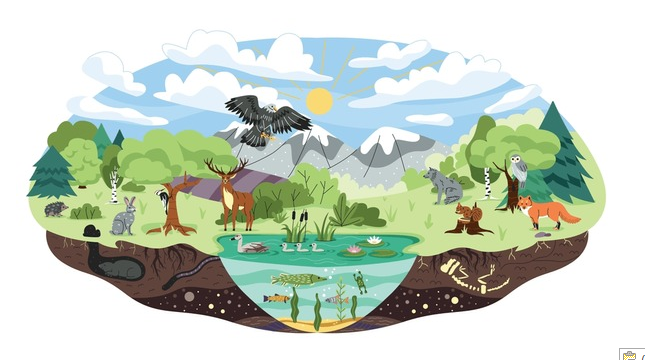
 En termes de
connaissances, à vous apprendre les notions de base permettant la définition,
concept, structure d’un système donné à la population avec son environnement en
se basant sur la notion des unités de conception.
En termes de
connaissances, à vous apprendre les notions de base permettant la définition,
concept, structure d’un système donné à la population avec son environnement en
se basant sur la notion des unités de conception.